
If there’s one thing the handbag industry has made abundantly clear over the better part of the past decade, it’s that what’s old can still feel remarkably new. Vintage-inspired, archival revival, heritage reissue: these have become some of the defining phrases in luxury fashion. And in 2026, the fascination shows little sign of disappearing.
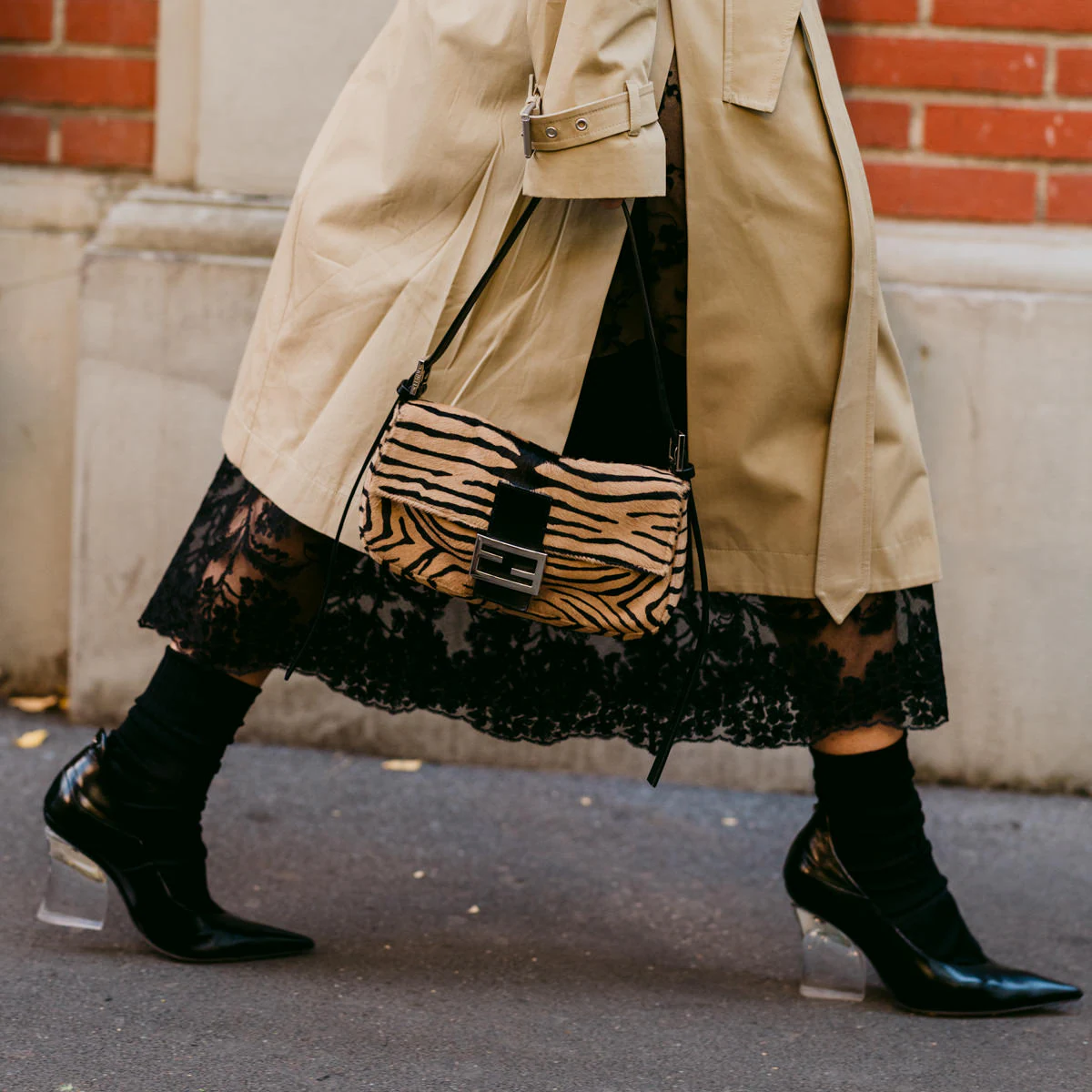
From Dior’s iconic newsprint designs and the return of Chloé’s Paddington to Fendi revisiting its beloved Baguette, luxury brands have increasingly turned to their archives for inspiration. Rather than constantly chasing the next entirely new design, many are rediscovering the power of the bags that helped define their identities in the first place.

And it’s easy to understand why.
For brands, archival revivals offer an opportunity to reconnect with existing customers while attracting a new generation of luxury consumers. They bring back recognizable designs with established cultural significance, often generating excitement that an entirely new silhouette might struggle to achieve. They also allow brands to meet demand for coveted vintage styles without relying solely on the limited supply available through the luxury resale market.
But the business side of it only tells part of the story.
Why, as consumers, are we so drawn to the handbags of yesterday? Why does a design from 20 years ago suddenly feel just as desirable, if not more so, than something brand new?
One word: nostalgia.
The Feel-Good Factor: Why Nostalgia Works
Nostalgia is generally defined as a sentimental longing for the past, often associated with particular periods, places, or experiences. But it’s more than simply remembering what came before. Nostalgia is closely tied to emotion, memory, and our desire to reconnect with experiences that made us feel good.
Research published in the journal Psychology & Marketing in 2023 offers some insight into nostalgia’s enduring appeal. A meta-analysis of 22 experimental studies, involving nearly 10,000 participants, found that nostalgia can enhance positive feelings, strengthen our sense of connection to our past selves, and positively influence our attitudes and behavioural intentions.
In other words, looking back can make us feel good in the present, which may help explain why we’re so drawn to products and styles that are evocative of a bygone era.
It’s part of what makes the past so appealing. We aren’t necessarily longing to relive every aspect of another era. Instead, we’re drawn to the feelings and associations attached to it.

This becomes particularly relevant during periods of uncertainty and change. When the present feels overwhelming or unpredictable, familiar references can offer a sense of comfort and continuity. Fashion, with its ability to transport us through different eras, provides an especially accessible way to experience that feeling.
It’s perhaps no coincidence that nostalgia has become such a powerful force in fashion and popular culture over the past decade. From the resurgence of Y2K aesthetics to the renewed appreciation for early-2000s designer handbags, consumers have repeatedly gravitated toward familiar styles and cultural touchstones.
And while individual trends come and go, our relationship with nostalgia is hardly new. In many ways, it is one of fashion’s most reliable constants.
The Emotional Connection: When Fashion Makes Us Feel Good
Fashion has always been about more than simply getting dressed. What we wear, carry, and collect often reflects how we see ourselves, how we want to be perceived, and how we connect with the world around us.
Handbags, in particular, have a unique emotional significance. They can mark milestones, represent personal achievements, evoke memories, or remind us of a particular period in our lives. Some bags are coveted because of their craftsmanship or design, while others carry a cultural significance that extends far beyond their original purpose.
This is where nostalgia becomes such a powerful force for luxury brands.
An archival handbag isn’t simply a product being brought back into production. It carries an established identity, a story, and a sense of history. For consumers who remember the original release, it can bring back memories of a particular time. For Gen Zers and younger shoppers who were babies or not yet born when many of these designs first appeared, discovering them for the first time offers an opportunity to participate in a fashion moment that has since become part of fashion history.


And then there’s an interesting phenomenon happening among even younger consumers. Gen Alpha and younger Gen Zers may never have experienced life before smartphones and social media, or firsthand witnessed some of the fashion moments they’re now embracing. Yet archival revivals and vintage-inspired designs can evoke a sense of nostalgia for a time they weren’t old enough to remember.
Perhaps it’s a form of borrowed nostalgia: longing for an era experienced through photographs, pop culture, music, and fashion rather than personal memories.
That combination is incredibly compelling.
In an increasingly crowded luxury market, where new collections and products are constantly competing for attention, familiarity can be just as powerful as novelty. A recognizable archival design offers something consumers already understand, while a fresh interpretation gives them a reason to want it now.
Perhaps our continued fascination with vintage fashion isn’t really about wanting to go backwards. It’s about finding something meaningful, familiar, and comforting in a world that often feels increasingly divisive and uncertain.
And if the past has taught the handbag industry anything, it’s that a truly great design never really goes out of style.



