
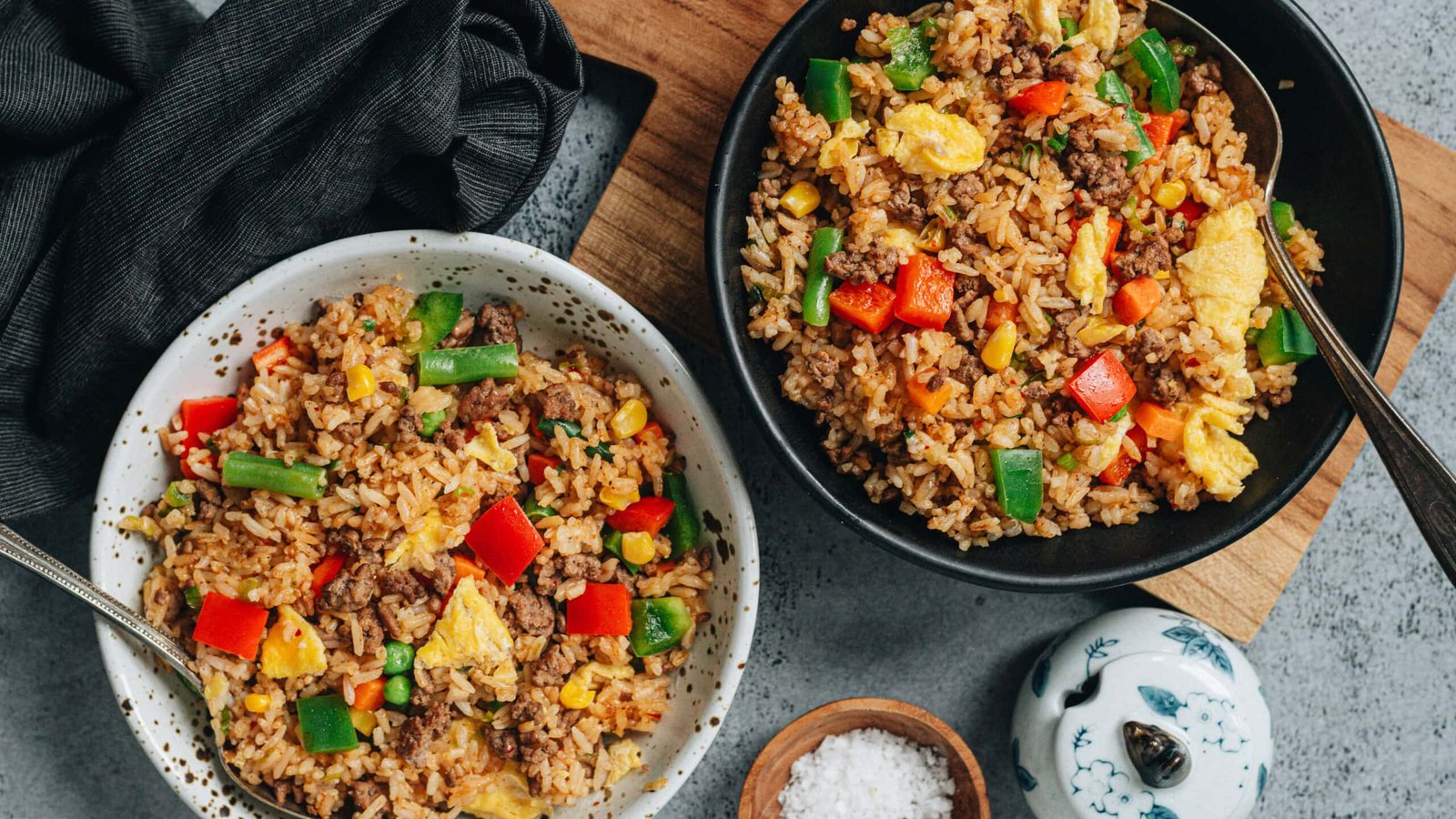
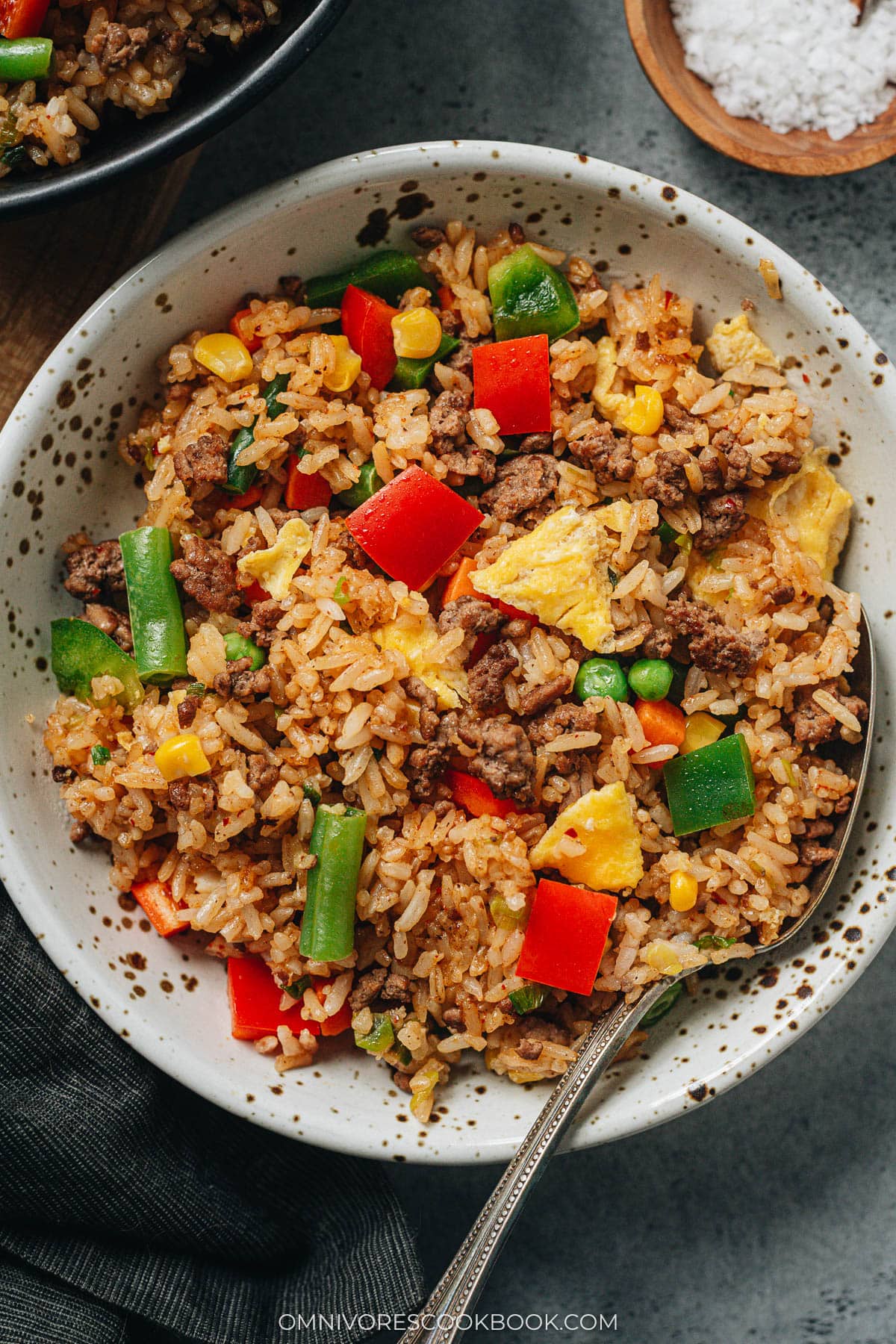
Beef fried rice is a one-pan rice dish that treats cold rice, browned beef, and scrambled egg as a full meal rather than a side. The seasoning here comes from Xinjiang cooking in western China, where cumin and dried chili season lamb and beef more than soy sauce does, which is what sets this apart from a plain soy sauce fried rice. I would say it is similar to my cumin lamb, but moved onto a bed of rice.
Growing up in China, I developed a special love for fried rice, and to this day, it is something I could happily eat at any time of day! I’ve lost count, but I think I already have more than 10 authentic Chinese rice recipes on my blog, and somehow, that’s still not enough! One thing all my fried rice recipes have in common is simplicity. After all, fried rice is meant to turn leftovers and whatever you have in your fridge into a quick, easy, and satisfying meal.
Today I want to share my favorite beef fried rice recipe. I simply scramble the eggs first and pull them out, brown the beef in a thin layer, then toast cold rice in the pan before the egg goes back in. Cumin, chili flakes, and soy sauce go in with the beef and again with the rice so the seasoning reaches every grain.
This recipe brings together one of my favorite flavor combinations from Xinjiang cuisine: aromatic cumin and spicy chili peppers. I’m absolutely obsessed with how delicious it is, and I have a feeling you’ll love it just as much once you give it a try. Enjoy!
Ingredients you Need
Here is everything you’ll need to make this easy and flavorful Beef Fried Rice (牛肉炒饭) at home:
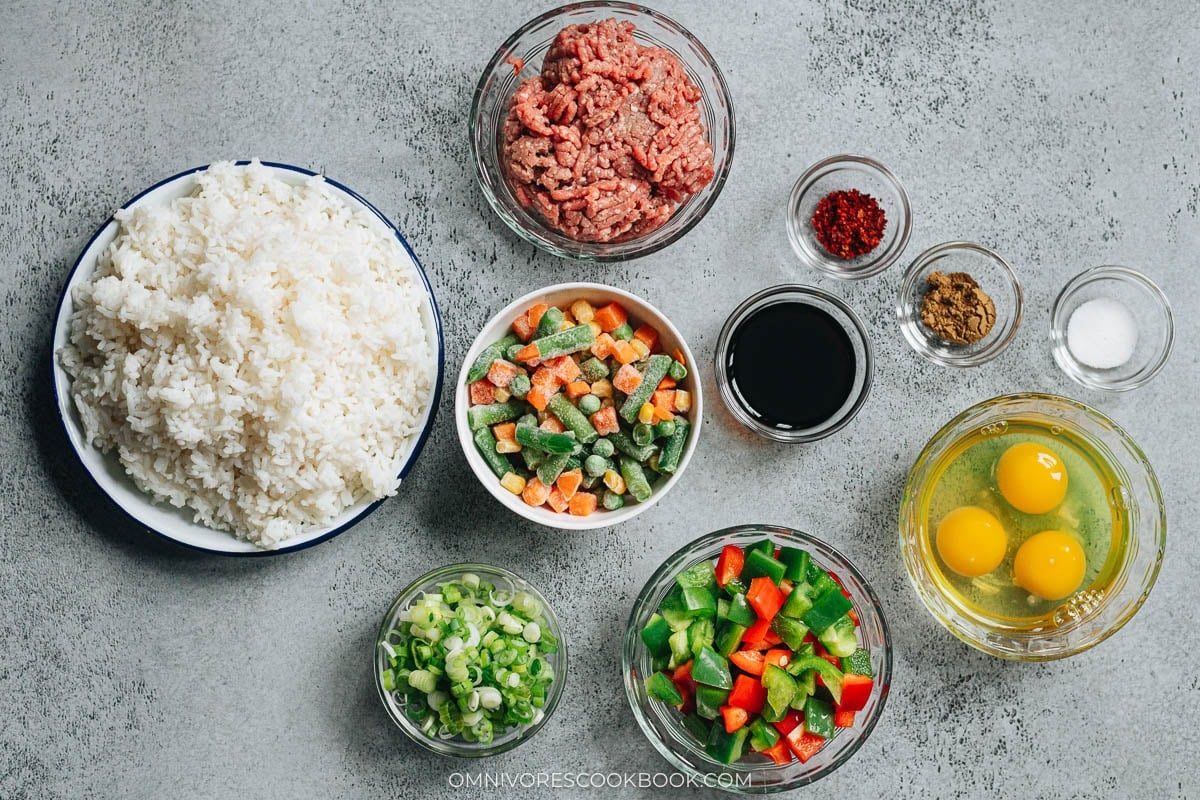
Eggs: I beat the eggs with a pinch of salt before anything else goes in the pan.
Cumin and chili flakes: I season with ground cumin and dried chili flakes, the pair that makes this taste like Xinjiang rather than a takeout fried rice.
Soy sauce: I use soy sauce as the only liquid seasoning, split in two so some goes on the beef and some on the rice. For a gluten-free plate I swap in tamari or coconut aminos.
Vegetables: I use a handful of frozen mixed vegetables, diced bell pepper, and chopped green onion.
Why I prefer ground beef
Sliced or diced beef might seem like a great option for beef fried rice. And yes, it does give the dish a more appetizing look. But when it comes to fried rice, I always use ground meat. The advantages of ground meat are:
- It doesn’t require any prep. No slicing or marinating needed.
- You won’t overcook it by leaving it in the pan. Unlike sliced beef, which usually needs to be removed from the pan during the cooking to prevent overcooking.
- Ground beef is an affordable option that adds tons of flavor to fried rice. Unlike sliced beef, ground beef releases more of its savory juices as it cooks, seasoning the rice throughout and giving the dish a richer, more umami-packed taste.
My trick for cooking ground beef is to keep some bigger bits intact without separating the meat into tiny flakes. It adds amazing texture to the dish and it almost feels like you’re eating a burger when you bite into the bigger pieces.
How to make beef fried rice
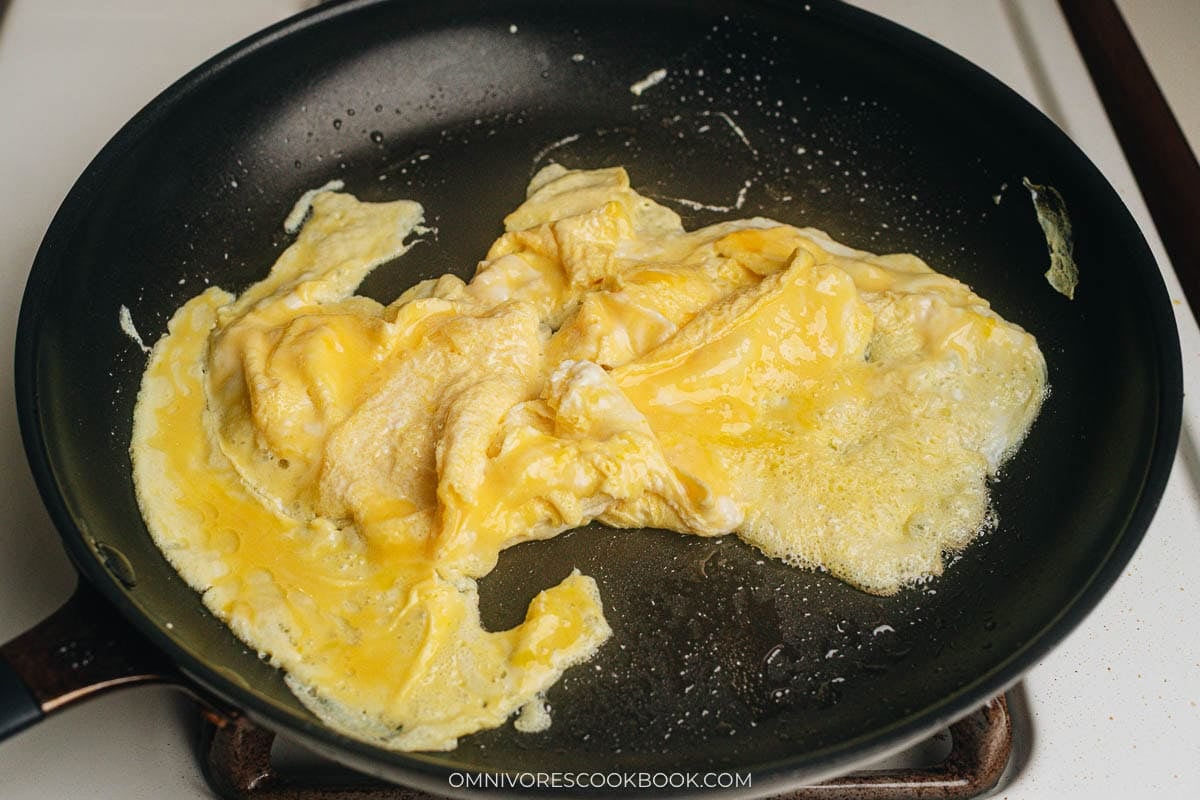
1. Scramble the eggs first: Heat a little oil in a large nonstick or carbon steel pan over medium-high heat until hot. Add the beaten eggs, let the bottom set, then scramble until just cooked and move them to a plate. Pulling them out now keeps them tender, since leaving egg in the pan through the rest of the cooking is what makes it rubbery.
2. Brown the beef in a thin layer: Add more oil and the ground beef, then press it across the pan in a thin layer and leave it undisturbed for 2 to 3 minutes. Leaving it untouched is what produces a browned crust and the savor that flavors the rice, so resist stirring until the bottom has colored deep brown.
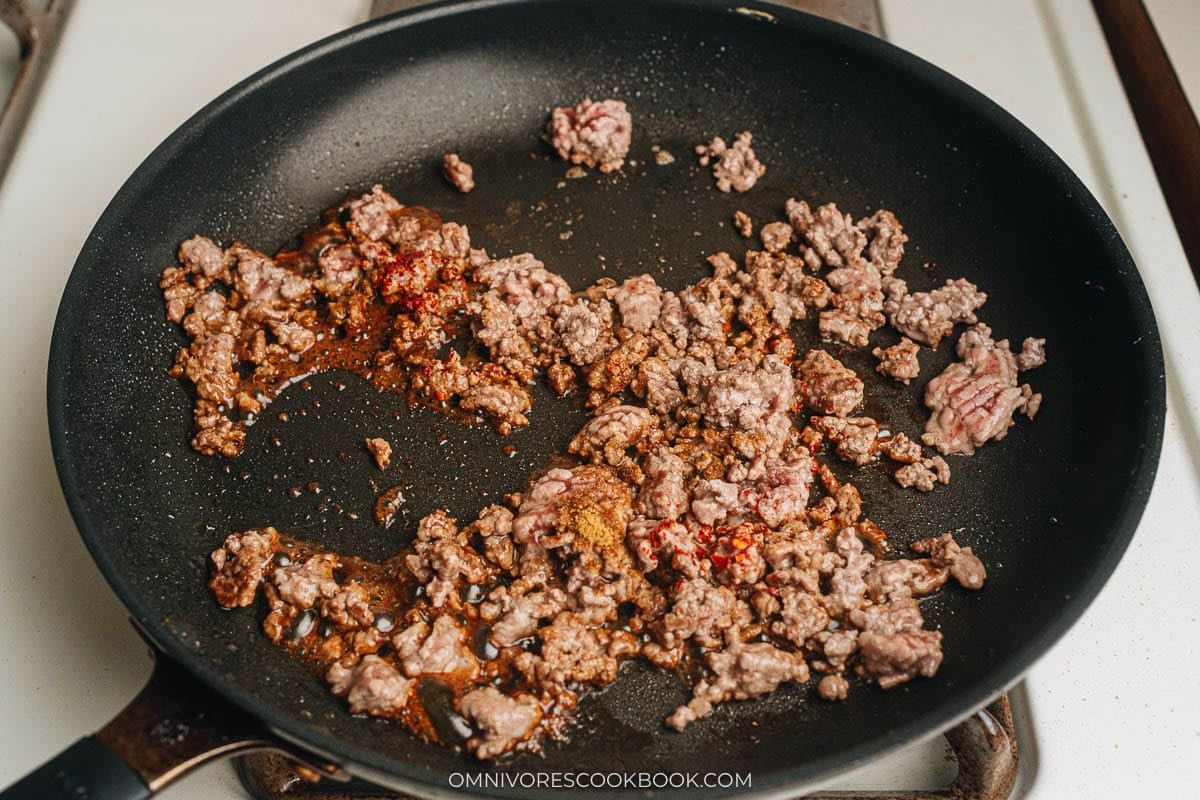
3. Season and break up the beef: Sprinkle on a pinch of salt with half the cumin and chili flakes, drizzle with half the soy sauce, then flip the beef and chop it into smaller pieces. Reduce the heat if needed to prevent the spices from burning. I like to leave some larger pieces intact rather than breaking the beef into fine crumbles, so it retains more texture and flavor.
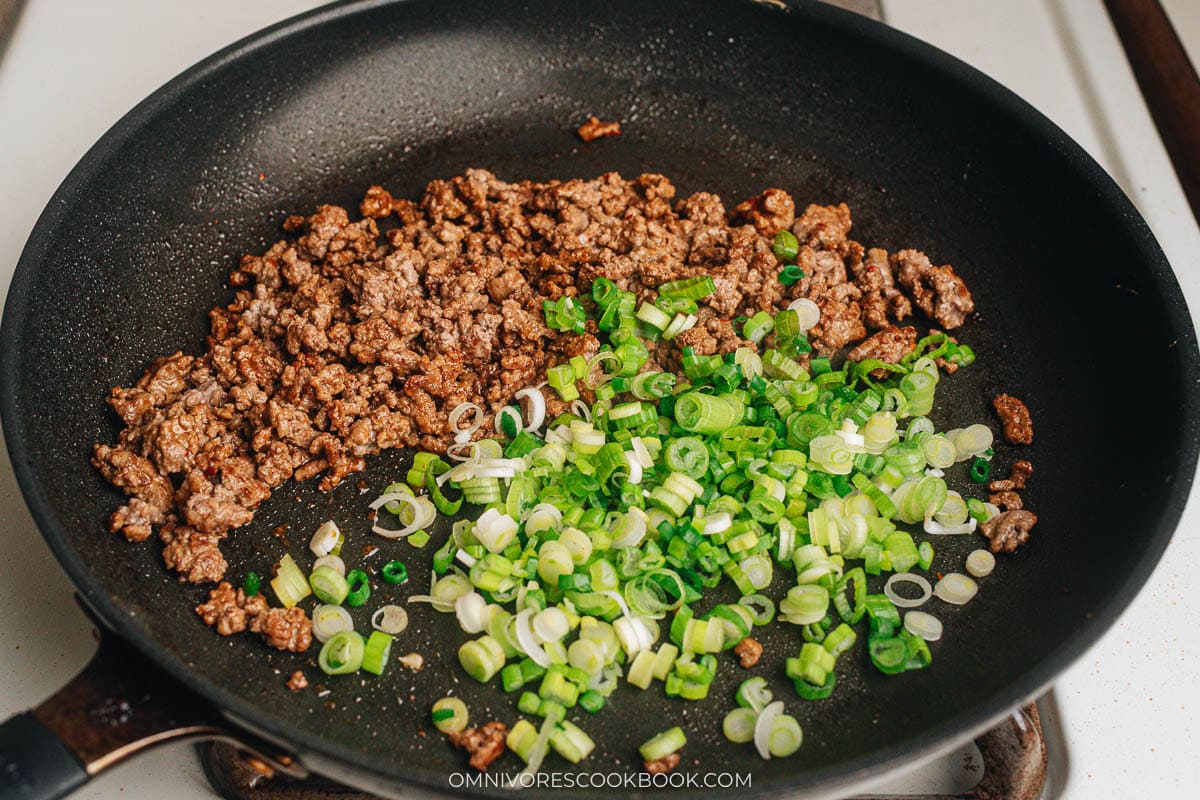
4. Cook the green onion: Add the chopped green onion and stir a few times until the fragrance comes up. This takes only seconds, so keep everything moving to stop the onion from scorching.
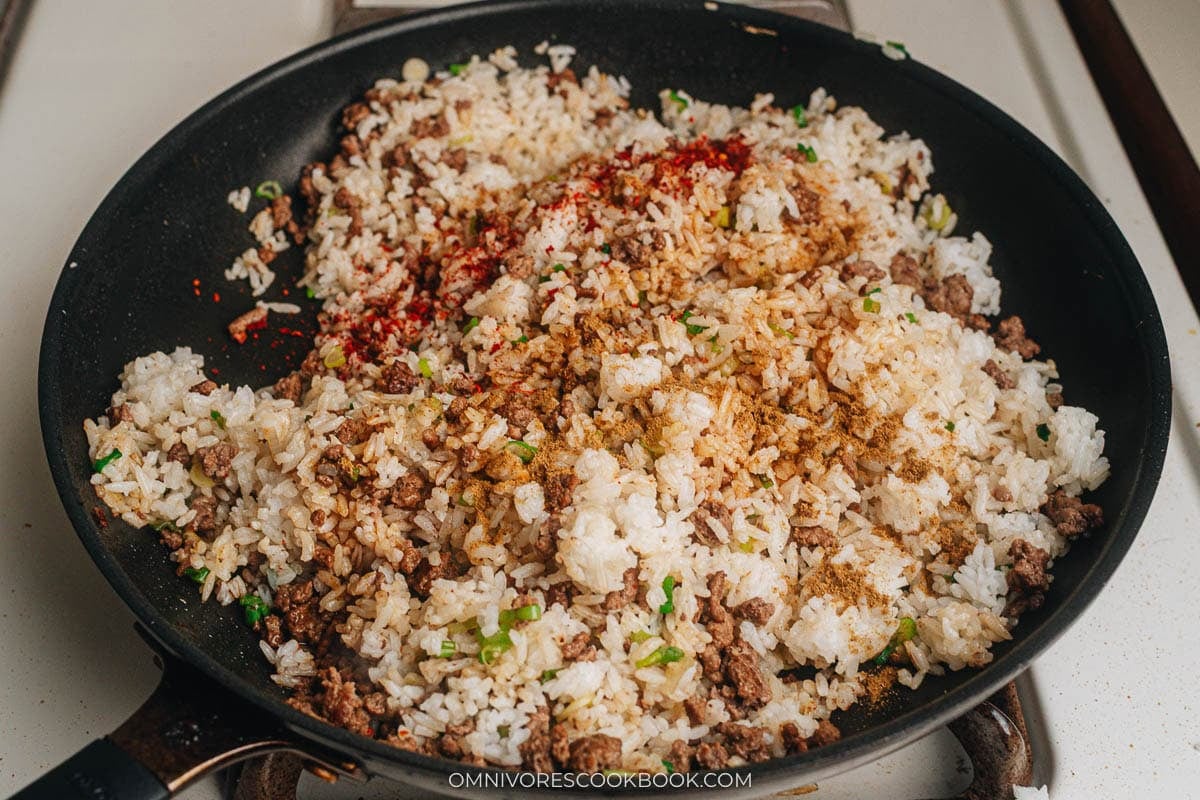
5. Toast the rice: Add the cold rice and pour oil over it, tossing to coat before adding the rest of the soy sauce and the remaining cumin and chili flakes. Stir and cook 2 to 3 minutes until the seasoning reaches every grain, letting the rice rest on the hot pan between stirs so it crisps instead of steaming.
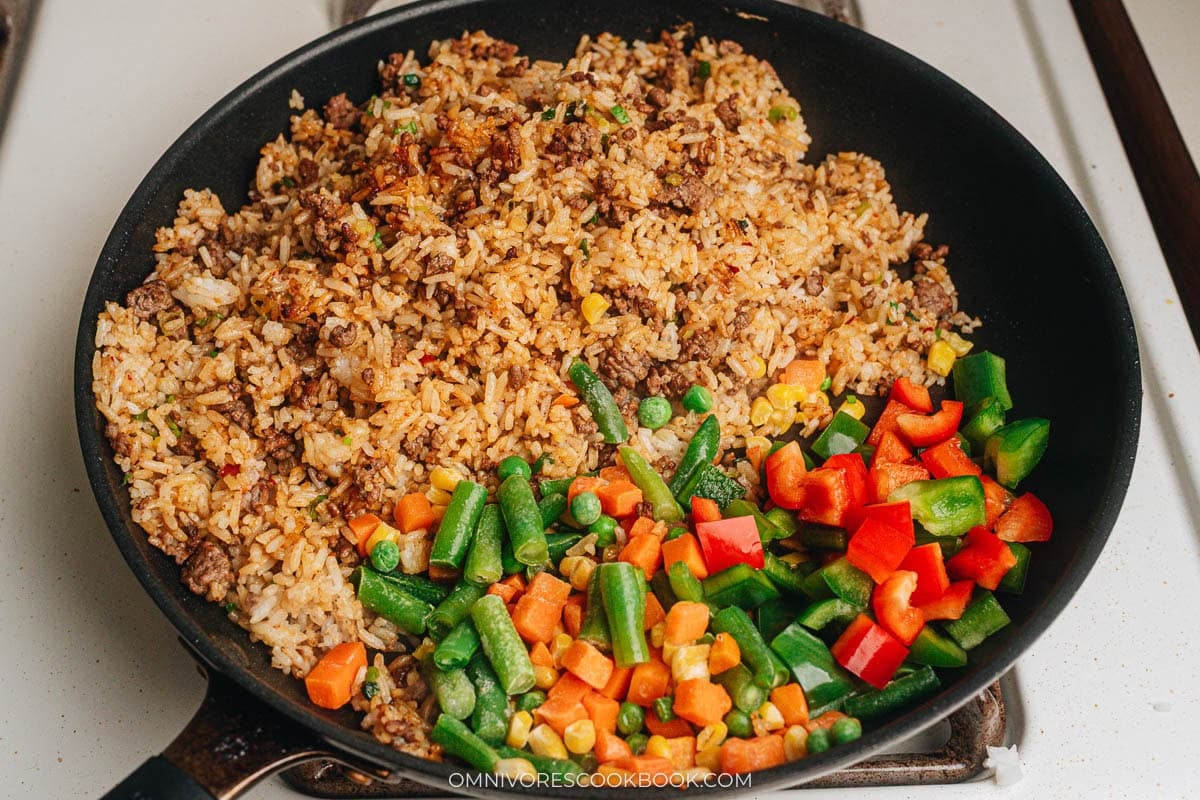
6. Add the vegetables: Push the rice to one side, add a little oil to the empty side with the frozen vegetables and bell pepper, and cook a minute before mixing everything together. Cooking them fast on their own keeps the pepper crisp and the frozen vegetables bright rather than watery.
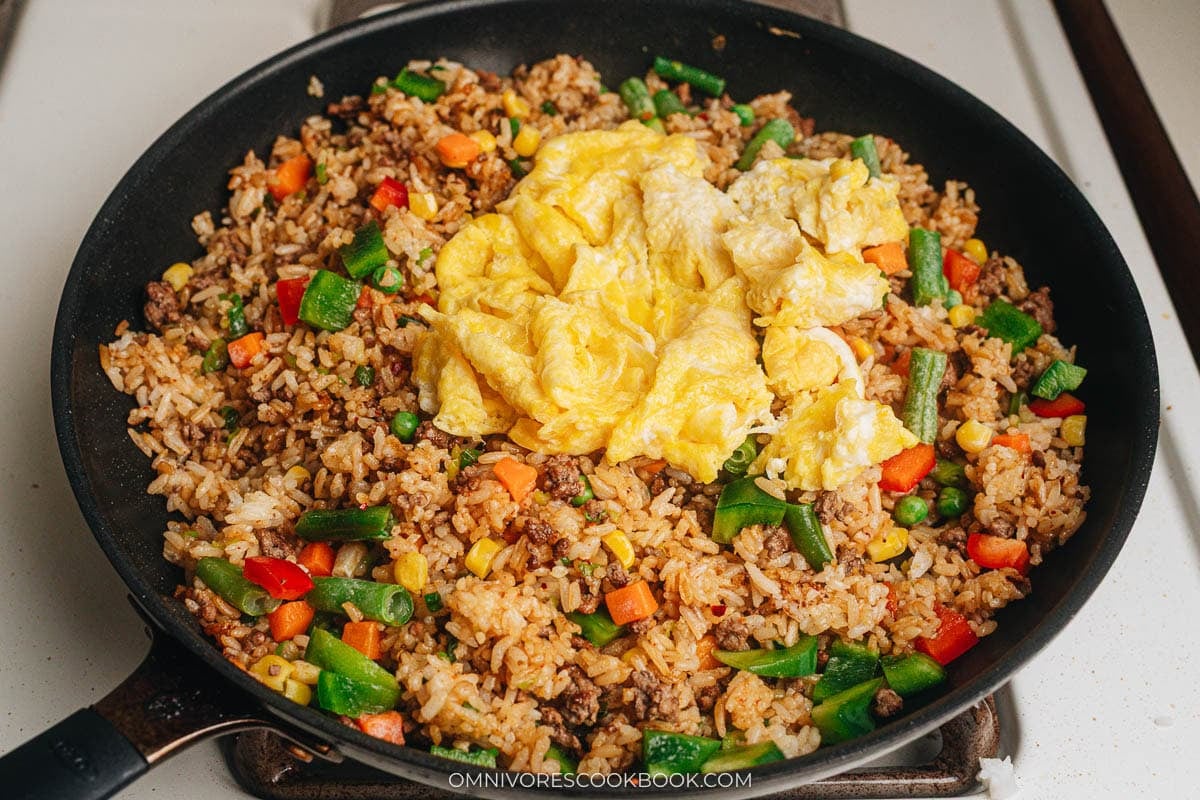
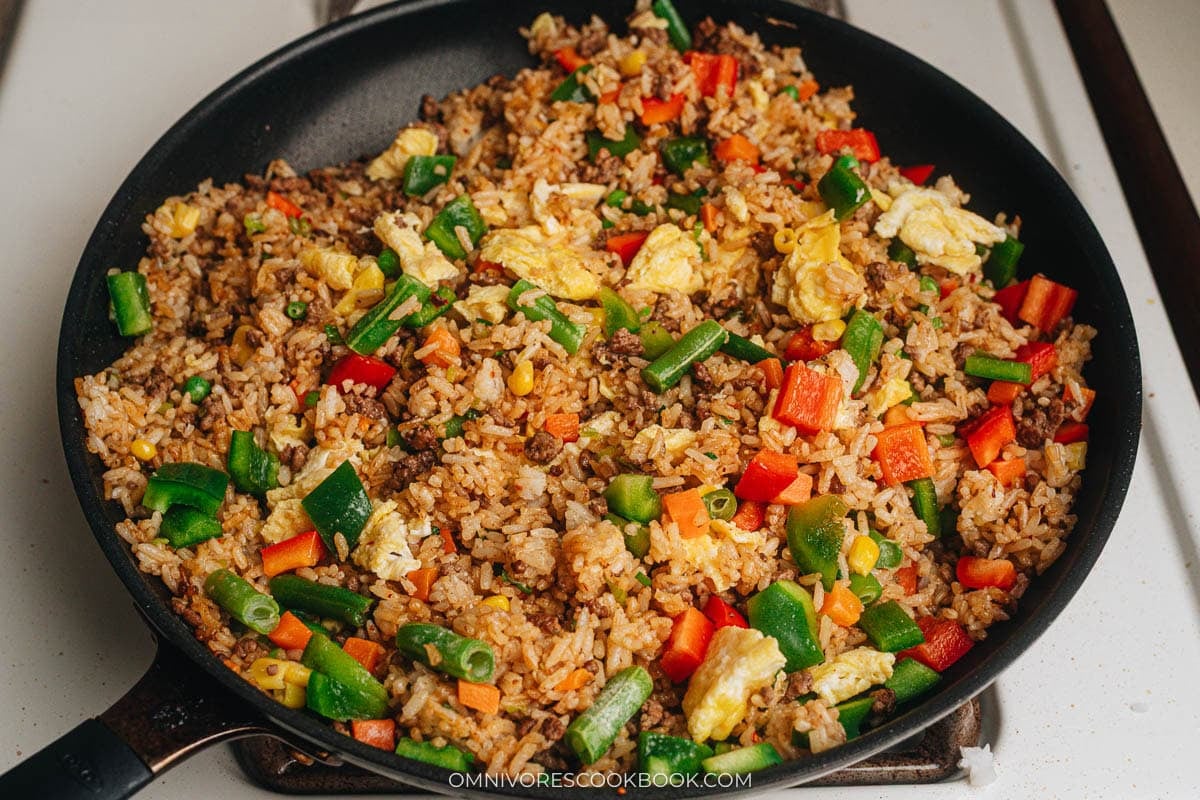
7. Return the eggs: Add the cooked eggs back, stirring everything together while cutting the egg into smaller pieces.
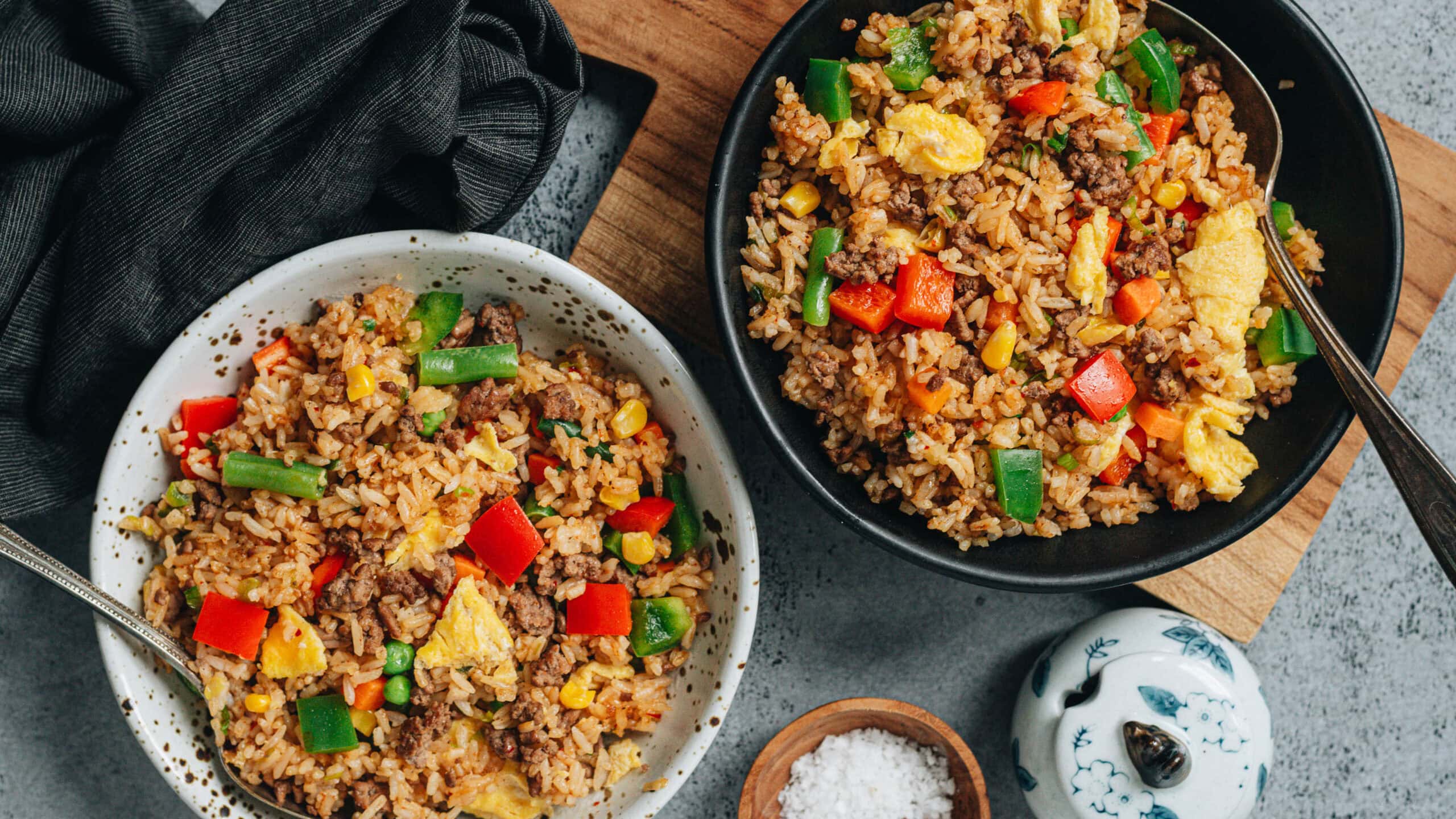
8. Serve: Transfer to a plate and serve hot as a main or a side.
Cooking Notes
Stir the rice less than you think: The trick to fried rice with real crust is to let the rice rest on the hot pan instead of tossing it constantly. Stirring too much steams the grains soft, so I leave each layer long enough to crisp before I move it, especially in a nonstick pan.
Use cold rice, or cheat with fresh: Day-old rice chilled in the fridge is drier and separates in the pan instead of clumping. When I crave this and have none, I steam a batch on the firm setting, scatter it across a plate to cool fast, then chill it in the fridge while I prep the rest.
Keep the beef in bigger bits: When I chop the browned beef, I stop before it becomes fine crumbles. The larger pieces give the rice more chew and more of a meaty bite, almost like catching a piece of burger in the spoon.
Season in two stages: I split the cumin, chili, and soy sauce between the beef and the rice rather than dumping it all at once. Seasoning the beef flavors the meat directly, and seasoning the rice reaches the grains the beef juices never touch.
Use a heavier pan for more char: A nonstick pan lets me cook with less oil, but my carbon steel pan browns the rice to a deeper char. If I cook in carbon steel, I add a little more oil so the rice does not stick while it crisps.
Serving and Storing
My beef fried rice contains a good amount of protein, vegetables and starch, so I sometimes eat it as a light meal. For dinner, I love serving the fried rice as the starch and set different textures around it. For a simple pairing, I pick a light soup like my bok choy soup or a vegetable stir fry such as broccoli with garlic sauce to serve on the side. When I have time, I like to add my crispy air fryer chicken wings to my table.
Check out my vegetable-forward fried rice if you want a side dish, and save the showier pineapple fried rice or Yang Zhou fried rice for a party when fried rice is meant to be the centerpiece.
It keeps well in the fridge for about 4 days, and I make it ahead on purpose because it reheats well in a hot skillet with a small splash of water to loosen the rice. It also freezes for up to 2 months, though the egg and vegetables soften a little after thawing, so I reheat it straight from frozen in a skillet rather than the microwave.
Your Questions Answered
What rice works best for beef fried rice?
I use jasmine or another medium-grain rice, chilled from the day before. Cold rice loses some of its surface starch in the fridge, so the grains stay separate and dry in the pan instead of clumping into a sticky mass.
My fried rice came out mushy, what went wrong?
Mushy rice comes from two habits: warm fresh rice that still holds moisture, and stirring the pan too much. Start with cold day-old rice and let each layer rest on the hot pan a few seconds between stirs, so the grains crisp on the bottom instead of steaming into a soft clump.
Should I use a nonstick or a carbon steel pan?
I’ve discussed the best ways to set up your home stir-fry station. Long story short, the most convenient setup is to use your electric stove (or a typical home gas stove) with a large pan, such as the 12” OXO nonstick fry pan or 12” Debuyer Carbon Steel Pan. Both provide enough surface area against the heating element to heat up your pan well, while they’re also deep enough to hold the ingredients during cooking.
The benefit of using a nonstick pan is that you can use less oil without the food sticking to the pan. That happens a lot when you cook starchy foods such as fried rice. On the other hand, I do prefer my heavier carbon steel pan when it comes to fried rice, to give the rice a better char. Like a cast iron pan, a carbon steel pan becomes quite nonstick once it’s well seasoned. However, in this case, you will need to add a bit more oil to prevent the rice from sticking.
Want to Save This Recipe?
Enter your email below & we’ll send it to your inbox. Plus get great new recipes from us every week!
This beef fried rice is seasoned Xinjiang-style, with aromatic cumin, chili flakes, ground beef, and a splash of soy sauce for extra flavor. I love that it is ready in just 20 minutes using one pan. Serve it as a hearty main dish for dinner, pack it in your lunchbox for meal prep, or add it as a flavorful side to your next Chinese dinner party.
Prevent your screen from going dark
Heat 1/2 tablespoon of oil in a large nonstick (or carbon steel pan) over medium-high heat until hot. Add the beaten eggs. Let cook until the bottom is set, then gently scramble until just cooked. Transfer to a plate.
Add 1/2 tablespoon of oil and the ground beef. Spread the beef across the pan with your spatula to form a thin layer. Let the bottom cook until browned, 2 to 3 minutes. Sprinkle with a pinch of salt, plus half of the cumin powder and chili flakes. Drizzle with 1 tablespoon of soy sauce. Flip the beef and chop it into smaller pieces with your spatula. Cook until the beef is browned.
Add the green onion. Stir a few times to release the fragrance.
Add the rice and pour 1 tablespoon of oil over the rice. Toss a few times to coat with the oil. Pour the remaining 1 tablespoon of soy sauce over the rice. Sprinkle the rest of the cumin powder and chili flakes. Stir and cook until evenly mixed, 2 to 3 minutes.
Move the rice to one side of the pan. Add the remaining 1/2 tablespoon of the oil to the other side, along with the frozen veggies and bell pepper. Stir and cook for a minute to quickly saute the vegetables. Then mix everything together.
Add back the cooked eggs. Stir everything together while cutting the eggs into smaller pieces. Transfer everything to a plate and serve hot as a main or side dish.
Ingredient Substitution Guide
Serving: 1serving, Calories: 426kcal, Carbohydrates: 61.7g, Protein: 13.6g, Fat: 13.4g, Saturated Fat: 2.9g, Cholesterol: 147mg, Sodium: 664mg, Potassium: 331mg, Fiber: 2.7g, Sugar: 2.9g, Calcium: 65mg, Iron: 6mg

Did you make this recipe?
I’d love to hear how it turned out for you! Please take a moment to leave a 5-star rating ⭐️ and share your thoughts in the comments further down the page. It really helps others discover the recipe too.



