
More than ever, Madrid said, Latino leaders bear the responsibility of delivering for voters. The two most populous states, Texas and California, will be governed by Latinos. The Congressional Hispanic Caucus will have an unprecedented fifty-five members seated. “Our people are now rising into power,” Madrid said. “I’ve definitely seen the anxiety, and I have also seen the aspiration, but I’ve never seen all three together. That’s what I think is a real powder keg.”
What makes this new phase unpredictable is that the Latino electorate is changing at extraordinary speed. Every year, about a million Latino citizens in America turn eighteen, yielding a million potential new voters. “Because we are younger, because we have more immigrant ties, those things are keeping the water fresh all the time,” Stephanie Valencia, a co-founder of the research group Equis, told me. Electoral maps are also changing: half the Latinos who voted in Texas this year did not do so in 2022.
Key counties across Texas saw dramatic increases in Latino turnout. The same was true in Georgia, Florida, Pennsylvania, and Wisconsin. “It felt, for the first time, that there was a proportional consequence to Trump’s actions,” Valencia said. But, if voters are united in disapproval of the current Administration, that doesn’t necessarily mean they agree on everything else; Valencia’s data showed that more than a third of Latinos sat in the persuadable middle. “They’ve moved in both directions, and they’ve consistently done so more than other groups,” she said. Democrats are in a “golden moment” with these voters, she argued. They have less than eighteen months to deliver, or else the pendulum could swing back.
Millions of Latino voters were not old enough to vote when Barack Obama arrived at the White House. She believes that the Democratic Party has to reintroduce itself to these voters, first by offering an urgent response to economic concerns, with such policies as universal child care and a twenty-five-dollar minimum wage, and, second, by addressing immigration head on. “We’ve been scared of our own shadow on this issue,” Valencia said. “Voters have actually been clear on what they want: order, fairness, and a sense of security. Security isn’t just about borders—it’s about knowing that ICE isn’t going to shoot them in the back.”
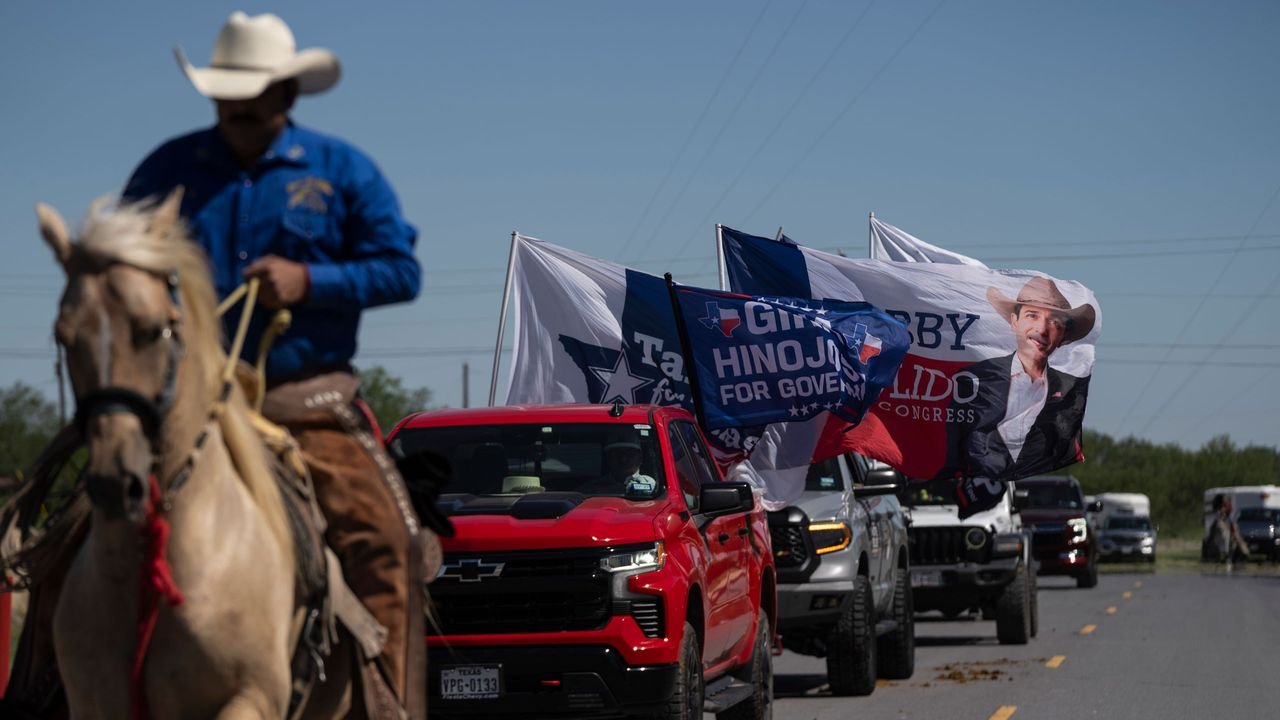
The dynamics that Madrid and Valencia identified—the sense of threat, the mix of voters’ concerns, the fragility of the coalition—played out with striking fidelity in Texas, where Latinos ended decades of Republican control. According to UnidosUS’s polling, Latino voters there favored Democratic candidates—James Talarico for Senate and Gina Hinojosa for governor—two to one. The closer the county was to the southern border, the bigger the swing: Since 2024, Starr County, in the Rio Grande Valley, shifted more than seventy points to the left to elect Talarico. Hidalgo, a neighboring county, also came out in force.