
new video loaded: A.I. Shakes Up China’s Entertainment Landscape
transcript
transcript
A.I. Shakes Up China’s Entertainment Landscape
New A.I. tools are changing China’s entertainment industry and transforming one of its most popular genres: the microdrama.
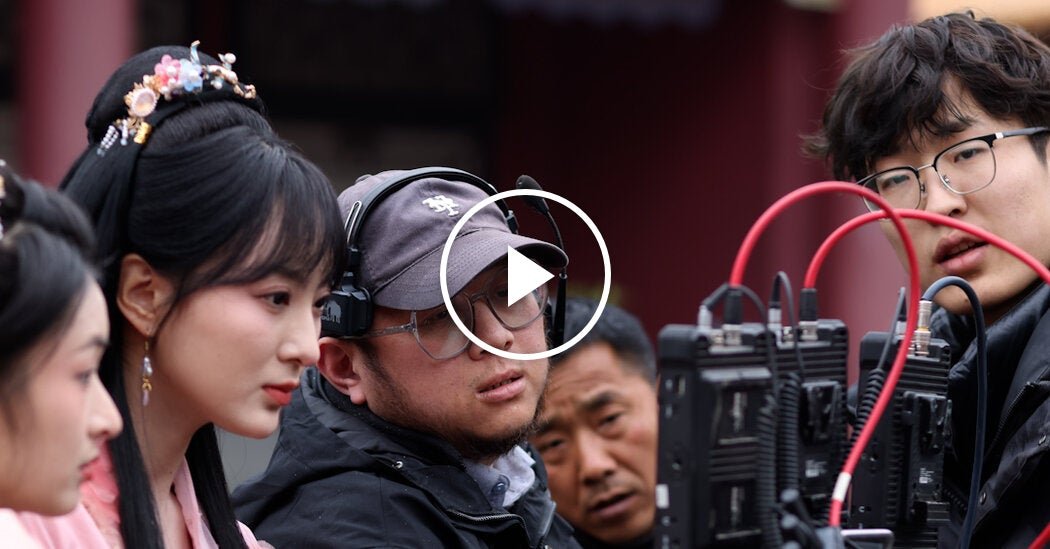
A.I. is changing China’s entertainment industry, and transforming one of its most popular genres: the microdrama. Microdramas are short, serialized shows made for the phone, that use rapid plot developments to hook viewers. The addictive bite-sized videos have become increasingly popular, creating a 14 billion dollar industry in China. Powerful new A.I. tools are making it faster and cheaper to create episodes. But as A.I.-generated dramas take off, some feel that they’re being left behind. This actress and director shared videos with The New York Times of their experiences in a changing industry. Xing Enran has been a microdrama actress since 2023, taking on supporting roles, and often playing the seductress. She said every day was busy, but rewarding. Wang Yushun started his career as an independent filmmaker. But he struggled to find an audience for his work. So Wang decided to direct his first microdrama. A month after the shoot, his episodes were online and people were paying to watch them. Since then, Wang has created over 50 microdramas and set up his own production company with around 100 employees. But things quickly changed for Wang and Xing in February when a new A.I.-video model called Seedance made it possible to create cinematic videos like this one showing Brad Pitt and Tom Cruise in a multi-camera fight scene. At the same time, microdrama streaming platforms began demanding higher quality. So Wang tested what he could do with Seedance. Wang says A.I. has helped him cut production time and costs on special effects. It also opened up his creativity, allowing him to design complex sci-fi characters. But this has come at the expense of his staff. Wang said he laid off around 50 people including field crew and producers. Actors like Xing aren’t safe either. Xing said she used to work about 20 days a month, but these days, she spends a lot of time at home. All this has forced her to think about what’s next for her career.
By Jiawei Wang, Ben Laffin and Rafaela Balster
May 3, 2026



