
 WASHINGTON — New Jersey will receive about $280 million worth of federal funding, through an intricate yearly process that spans 12 bills, scads of amendments and dozens of votes.
New Jersey’s 14 lawmakers in Congress obtained $279,998,986 worth of earmarks — federal funding for local or state projects — for the latest budget cycle. Overall, 280 projects were included in a dozen spending bills that became law, according to an NJ Spotlight News tally based on documents from the House and Senate appropriations committees and records from congressional offices.
Once Congress approves its annual spending bills, earmarked money flows through federal agencies and into municipalities and counties. Every New Jersey lawmaker in Washington submitted requests and received earmarks.

“When we give back to the community it lessens the burden on New Jerseyans,” Rep. LaMonica McIver (D-10th), who obtained her first round of earmarks since joining Congress, said in an interview with NJ Spotlight News. McIver obtained $10,734,000 across 14 earmarks.
The injection of funding marks a sharp reversal from last year, when the Republican-majority Congress voted to cancel earmarks nationwide as part of a deal to fund the federal government.
That decision cost New Jersey about $217 million in expected funding across more than 200 projects.
Flooding, sewer systems
Dominating the list of approved projects this cycle was money for flood mitigation, water purification, sewer systems and lead pipe cleanup. Also common was funding for police stations, schools, transportation projects and pedestrian bridges.
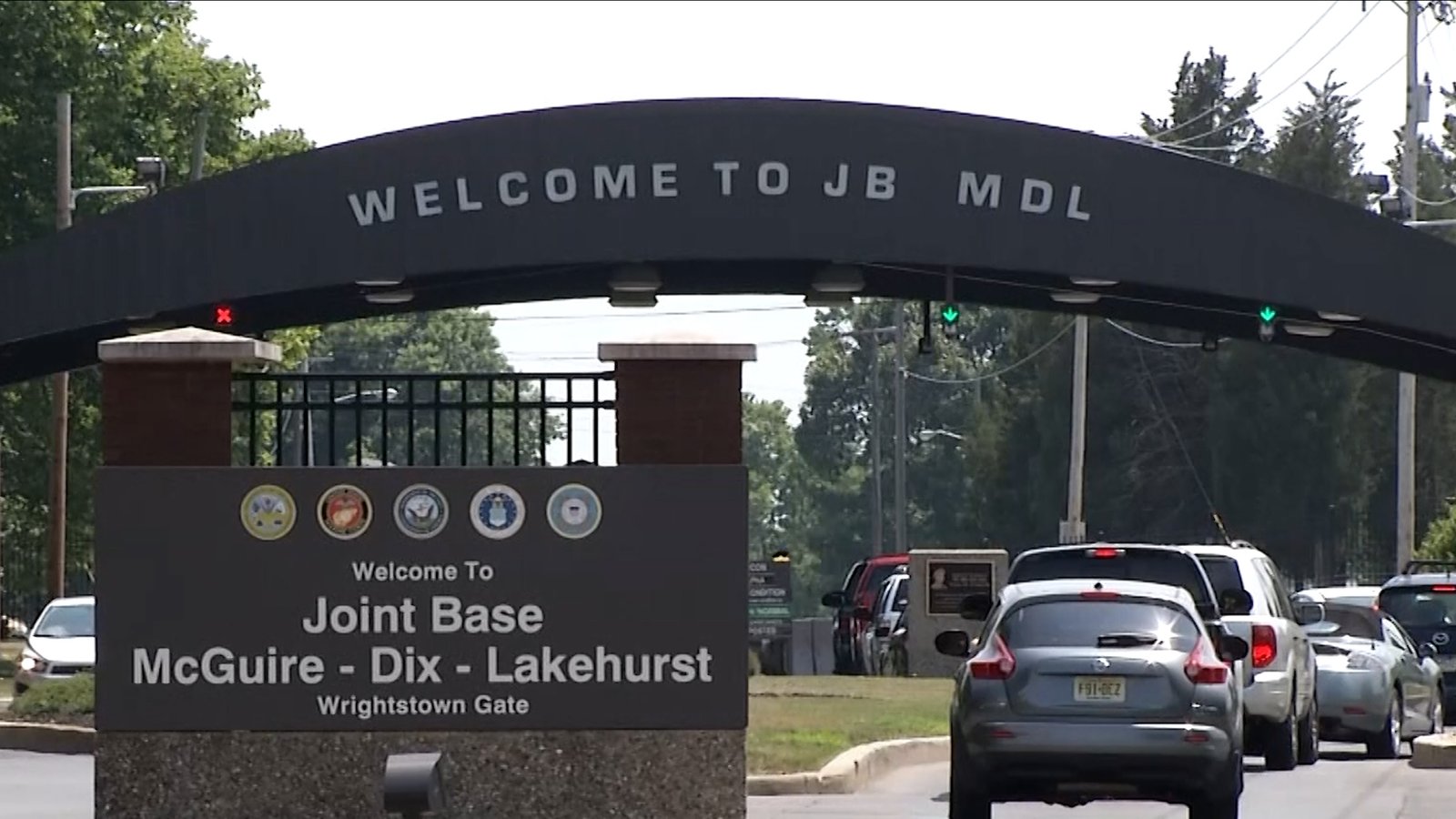
The top earmark was $14 million to clean the Hudson Raritan Estuary, between New Jersey and New York. Across the House and Senate, members secured earmarks to build a hangar at Naval Weapons Station Earle, design a control tower at Joint Base McGuire-Dix-Lakehurst and construct a fighter operations center for the Air National Guard at the Atlantic City airport.
This cycle starts in the spring, when congressional offices alert their home districts and states to these pockets of funding, which lawmakers alternatively call “community project” funding. Towns, counties, schools, libraries and charitable groups are among the organizations that apply for funding.
“You hear from the local officials what they need and you try to make that fit,” Rep. Donald Norcross (D-1st) said in an interview with NJ Spotlight News. “Few people get through that process.”
Once they have picked their projects, members of Congress try to shepherd them through the appropriations projects and into law — a timeline that can take a year or longer.
Norcross obtained funding for 15 projects — the maximum per member — worth $11.9 million. Senators can submit hundreds of proposed earmarks.
“They are about one of the most wonderful things that a member of Congress can deliver if done correctly,” said Norcross, who got $850,000 for Camden leaders to clean up their city. “It’s not real sexy. But we were able to get Camden new recycling containers,” he said. “What a difference that makes.”
Banned, then back
Sen. Cory Booker (D-NJ) obtained 139 earmarks worth roughly $129 million, and Andy Kim, New Jersey’s other senator, secured approximately $102.6 million across 103 projects. Who gets credit for what is far from an exact science, because multiple members, across and within the House and Senate, can affix their names to a given project.
After a 2010 ban of earmarks, following a series of scandals, Democrats revived them in 2021 with a new disclosure system.
 Credit: (Benjamin J. Hulac/NJ Spotlight News)
State lawmakers have a similar process, though it is significantly less transparent and skews heavily toward Democrats, who dominate the Legislature.
“We should have never stopped it — what we should have done is make it transparent,” Norcross said.
It’s hard to narrow the list to 15, the limit under House rules, said McIver. “All of the projects are important. I definitely can’t pick and choose,” she said. “We wish we had another 10, 15, $20 million to give away because we know that our communities need the money.”
Projects she picked include an emergency center for Linden, a support group at Seton Hall University’s law school for victims of violence and a smart traffic light for Union Township.
Working it
Congressman Jeff Van Drew (R-2nd), who represents much of South Jersey, has a knack for obtaining the funding. This cycle, he obtained $19.3 million across 12 earmarks.
It pays to show up at events the House Appropriations Committee holds for members to explain why they want certain projects funded, Van Drew said.
At a so-called “member day” in March about funding for agriculture and rural programs, Van Drew was one of eight House members — no one else from New Jersey came — who pitched members of an appropriations subcommittee about projects they want to become law.
“You have to make your case,” Van Drew said in an interview with NJ Spotlight News, adding that “it’s helpful” to go to these subcommittee meetings. “If you can’t make them, then you advocate to the chairman or the members individually.”
“Sometimes you even speak to people” at the White House budget office, he said. “It’s a multifaceted arc. You have to work at it in all directions.”
At the March hearing, Van Drew requested money for fire trucks and sluice gates to control the flow of water in Salem County. “This is a top priority for Salem County, one of the most rural areas in New Jersey, because it would deliver flood mitigation benefits to thousands of rural households and farms,” Van Drew said in testimony to the panel.
Van Drew said he also works with Rep. Bonnie Watson Coleman (D-12th), New Jersey’s lone member of an appropriations committee, to get money for his district. “She’s really a good, faithful member of the subcommittee as well,” he said. “That’s where you do find some bipartisanship.”
For next budget year, Van Drew wants $2.6 million for his district to buy four firetrucks. “If you need a firetruck, a firetruck’s a firetruck. If you need to replenish a beach, I don’t know of any Republican or Democrat beaches.”



