
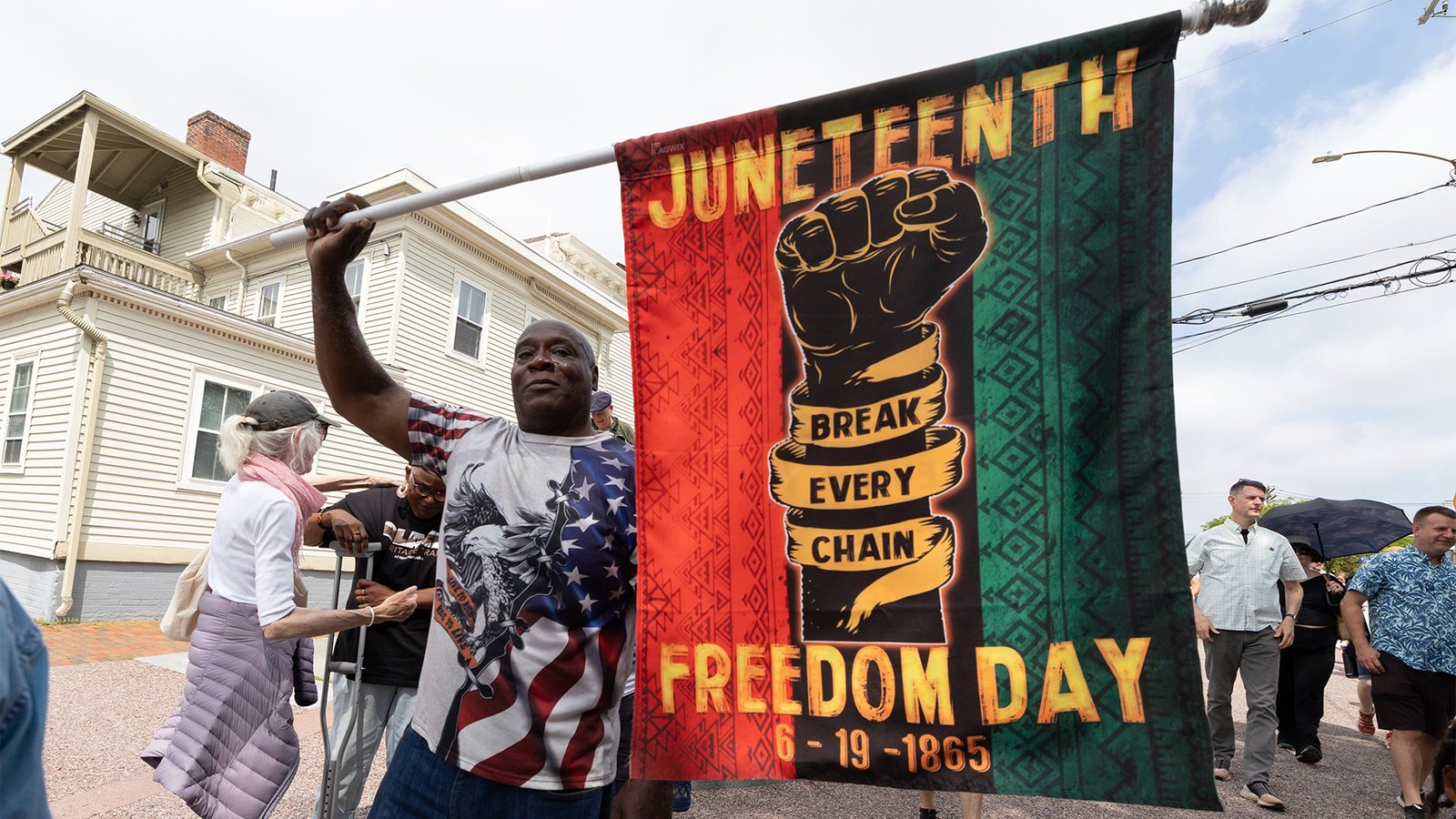
Friday marks five years since Juneteenth was recognized as a federal holiday, and celebrations are planned in New Jersey and around the country.
On June 19th, 1865, federal troops arrived in Galveston, Texas, to enforce the Emancipation Proclamation, issued by President Abraham Lincoln more than two years earlier. While the country on July 4 will celebrate the 250th anniversary of the signing of the Declaration of Independence, many Americans view Juneteenth as the true day of freedom and liberty for all.
“That delay between the explanation and announcement of freedom and actual freedom — it is very much a symbol or metaphor for Black freedom here in the United States,” said Jean-Pierre Brutus, senior counsel for the Economic Justice Program at the New Jersey Institute for Social Justice and convener of the New Jersey Reparations Council.
While Juneteenth is a celebration, it is also a reminder of how much Black people have suffered in this country. New Jersey is known as the “slave state of the North” in part because it was the last state above the Mason-Dixon line to ratify the 13th Amendment. The reparations council has recommended 93 steps to address injustice to Black people in New Jersey, including cash payments, environmental remedies and broader access to education.
“What we mean by repair is repairing all of the harms of slavery,” Brutus said. “The harms of Jim Crow and segregation, and the ongoing harms that continue to persist that reproduce inequalities.”
New Jersey has one of the largest median household wealth gaps in the country, with white families’ at $662,600 and Black/Latino families’ lower than $20,000, according to a 2025 report released by the Institute for Social Justice.
“We are living in a world made by slavery,” Brutus said. “And we want to live in a world made by reparations, in a New Jersey made by reparations.”
We’re in this together.
For a better-informed future.
Support our nonprofit newsroom.



