
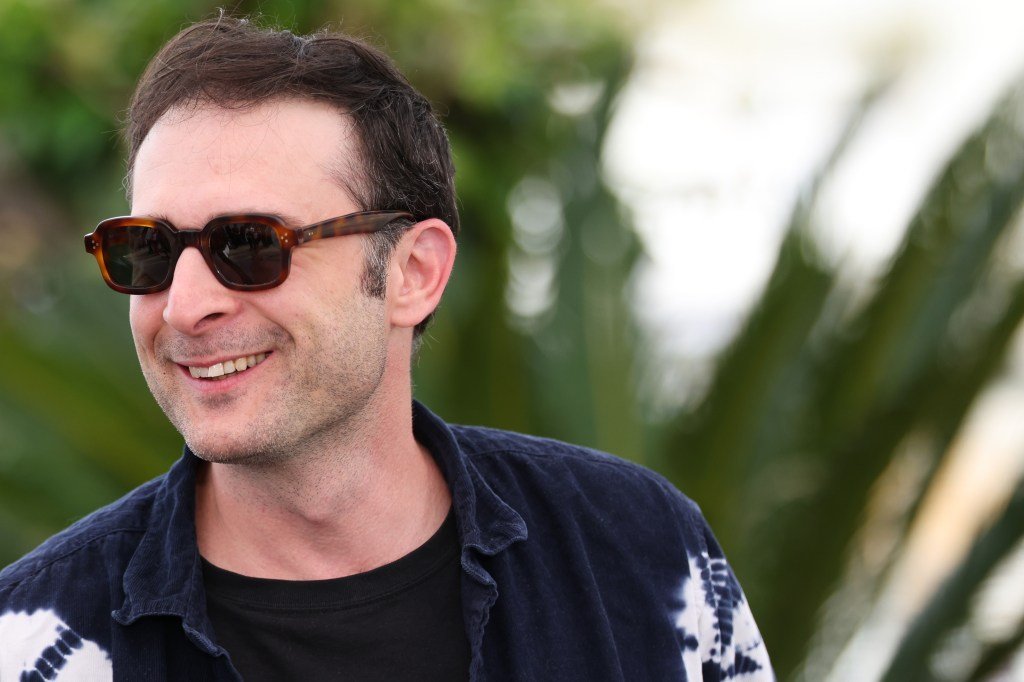
French director Arthur Harari stood by his signing of an open letter sounding the alarm over tycoon Vincent Bollore’s growing influence on the French media and entertainment sectors at the press conference for his Cannes Competition film The Unknown on Tuesday.
He emphasized, however, that the action and his related comments in an interview with the Libération newspaper were not directed at the Canal Plus teams.
“I can only reiterate what I said. It seems to me that we must call things by their name when they exist. I was talking about reality, a reality that is forcing itself upon us. We are in a moment that, it seems to me, must be named,” he said.
“There are elections in a year. There has never been such a strong possibility that the far-right party will govern France… something had to be said about the situation of this group [Canal Plus], which is fundamental to the financing of French cinema, not just French cinema; it’s one of the life bloods of European cinema,” he continued.
He noted that while he had not agreed with all aspects of the open letter he stood by its overriding message concerning Vincent Bolloré’s growing influence on French media and entertainment via the Bolloré Group.
The group is the main shareholder in Canal Plus with a 30% stake, while the latter’s control of the French cinema sector is growing due to its recent acquisition of a 34% stake in French mini-major UGC, with an option to buy it outright in 2028.
“The fact Canal Plus, which is the guarantor and has contractual commitments to the diversity of cinema, is part of a larger conglomerate owned by Vincent Bolloré, which is increasingly concentrating a rather staggering number of media outlets, newspapers, and television channels, and whose orientation is very clearly far-right, that had to be named, when something isn’t spoken, it festers,” he said.
“That’s why I signed, not necessarily because I agreed with every single word of the open letter,” he continued. “I’ll reiterate what I’ve said before: the Canal Plus teams, the Canal Plus management, the Canal Plus editorial policy, which is in favor of diversity, has more than my respect; I think it’s at its very core, just like the existence of the CNC (National Center for Cinema and the Moving Image), which is now directly threatened by the proponents of the National Rally party, who say they want to dismantle the CNC, they say it outright. What will happen if we don’t start thinking about this today?”
Harari’s comments come two days after Canal+ CEO Maxime Saada announced that his group would no longer work with the some 600 cinema professional signatories of the letter, titled “Time to Switch-Off Bolloré” and published on the opening night of the Cannes Film Festival.
Saada’s Canal Plus ban comments have sparked uproar in the French film world as well as questions over the group’s long-term editorial independence.
Harari was given a special mention in Saada’s comments due to the director’s allusion to Bolloré as “a crypto-fascist” in an interview with Libération newspaper last week explaining his reason for signing the letter.
“If some go so far as to call Canal+ ‘crypto-fascist’, then I cannot agree to collaborate with them. That’s the line. It is not acceptable that there is no consideration for the work of our teams,” said Saada.
Adapted from Harari’s graphic novel ‘The Case of David Zimmerman’, co-written with brother Lucas Harari, The Unknown revolves around David (Schneider), a reclusive photographer who wakes up to find himself in the body of a woman (Seydoux) with whom he had a strange encounter at a party the previous night.
The production required a leap of the imagination for both Schneider and Seydoux who play characters, who have remained the same in spirit, but are now locked in the bodies of somebody of the opposite sex and whose previous life is a mystery.
“The challenge is so crazy to play a man possessing a woman’s body. We’re in the realm of pure fantasy, pure fiction, and precisely because we’re in that realm of fantasy, it allows us to invent everything,” said Seydoux.
“When I started filming, I remember the first scene I shot, I thought to myself, there you go, I am David. David, that’s me. A bit like Flaubert when he said, “Madame Bovary, that’s me.” I thought to myself, ‘David, that’s me’.”



