
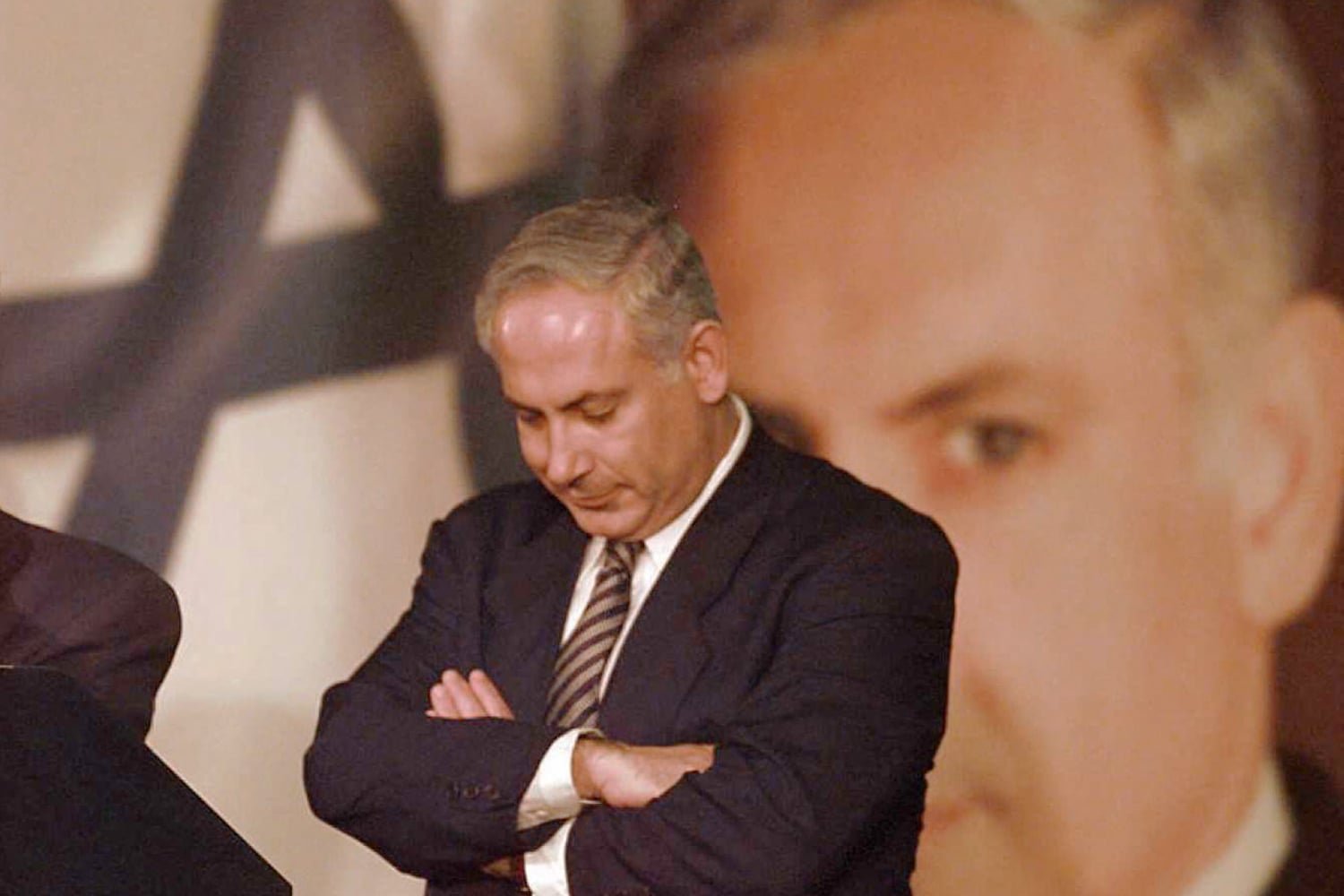
May 29 will mark 30 years since Benjamin Netanyahu first became prime minister of Israel. Israelis born around the 1996 elections have grown up, completed their education, served in the military, and started families of their own—all while Netanyahu has remained the dominant figure in Israeli politics.
Netanyahu’s contested and troubled legacy will be discussed by scholars of world politics for years to come—whether the focus is Iran, the Palestinians, the Abraham Accords, or the long arc of Israel’s international standing. But this is also a useful moment to examine a narrower but no less consequential aspect: how Netanyahu fundamentally reshaped Israeli society and the electoral logic driving its politics.
May 29 will mark 30 years since Benjamin Netanyahu first became prime minister of Israel. Israelis born around the 1996 elections have grown up, completed their education, served in the military, and started families of their own—all while Netanyahu has remained the dominant figure in Israeli politics.
Netanyahu’s contested and troubled legacy will be discussed by scholars of world politics for years to come—whether the focus is Iran, the Palestinians, the Abraham Accords, or the long arc of Israel’s international standing. But this is also a useful moment to examine a narrower but no less consequential aspect: how Netanyahu fundamentally reshaped Israeli society and the electoral logic driving its politics.
The core of the transformation was this: It is often assumed that to build an electoral majority politicians must capture the median voter—that is, the centrist voter located in the middle of the ideological spectrum. That was largely Netanyahu’s approach in the mid-1990s. Yet, over the years, his political strategy shifted. Instead of aiming to position himself closer to the ideological center, he now seeks to obliterate the center—leaving only two opposing camps with such deep animosity between them that no voter can even conceive of switching to the other side.
An ultra-Orthodox Jew passes by electoral posters for Netanyahu in a central market in Jerusalem on April 29, 1996. Manoocher Deghati/AFP via Getty Images
The usual explanations for Netanyahu’s long-term dominance of Israeli politics are familiar enough. According to one version, he simply surfed into office time and again on a wave of demographic change, as higher birth rates among ultra-Orthodox Jews gradually tilted the electorate toward the right. An alternative story suggests that “King Bibi” endured because Israelis have come to admire Netanyahu. Both accounts contain some truth. Neither gets to the heart of the matter.
The electoral share of ultra-Orthodox parties was higher in the late 1990s than it is today, suggesting that demography matters. But this is far from political destiny. And Netanyahu did not remain in power because the overwhelming majority of Israelis loved him. Polls show they didn’t in the 1990s and they don’t today.
Our analyses of Israel National Election Studies data collected since the early 1990s reveal a country not steadily falling in love with Netanyahu, but rather one increasingly divided between two opposing camps. While Netanyahu retains an enthusiastic base of support, he has become increasingly loathed by his political opponents. When asked about their feelings on a scale from zero (cold and negative) to ten (warm and positive), the share of Israelis enthusiastic about Netanyahu almost halved over this 30-year period, from around 35 percent to 15 percent. At the same time, the share of Israelis who loath Netanyahu increased from around 28 percent in 1996 to almost 39 percent in 2025. And yet, he persists in power.
How, then? The answer, in fact, lies in those polarized numbers—and in Netanyahu’s changing theory of how to secure an electoral majority.

A torn poster for Netanyahu lies on a Jerusalem street on May 18, 1999, a day after his opponent, Labor Party leader Ehud Barak, was elected to become Israel’s new prime minister. Gilles Delmas/AFP via Getty Images
Netanyahu was never a centrist: At the core of his worldview, formed in a Revisionist family, lies deep suspicion of compromise between Israel and the Muslim world. But his election campaigns in the 1990s suggested an understanding that while the right was his natural home, the center was where elections were won.
His first campaign for premiership in 1996 captured this balance. “Netanyahu: Making a Secure Peace” was a slogan designed precisely for voters who wanted reconciliation but feared terrorism. Netanyahu harshly criticized the dovish policies of Shimon Peres, his opponent from the Labor party, but he also promised to respect the Oslo agreements signed between the Israeli government and the Palestinians in the early 1990s. After winning by a razor-thin margin, he signed additional agreements with the Palestinian Authority (the Hebron Protocol and the Wye River Memorandum), accepting limited territorial withdrawals from the West Bank.
This was Netanyahu the triangulator; but then came 1999. After his efforts to court the center, Netanyahu lost elections after only three years in office. He left the office of prime minister with a clear lesson that would shape the next quarter century of Israeli politics: Governing with the aim of appealing to moderates was dangerous. In his efforts to capture the median voter, Netanyahu let the right down but also failed to earn support from the left.
In the new theory of winning elections that began to emerge, moderation was not a bridge but a trap. If compromise alienated the base and still failed to win over hostile opponents, then why compromise? In a society with a natural majority of self-defined right wingers, better to bind supporters emotionally and make defection feel like betrayal—that is, to convince voters that the alternative on the left was not merely wrong but illegitimate.
This was the beginning of Netanyahu 2.0: winning not by moving to the center, but through destroying the social legitimacy of crossing over to the other side.

Netanyahu gives a campaign speech in Tel Aviv on Jan. 5, 2014. Jack Guez/AFP via Getty Images
The shift was gradual. When Netanyahu returned to power in 2009, he still practiced parts of the old politics. He invited partners from the center-left to join his government. He accepted, at least rhetorically, the idea of a demilitarized Palestinian state and governed as a risk-averse conservative whose chief aim was to prevent any dramatic change.
But beneath the surface, the architecture of a new politics was taking shape. Netanyahu increasingly treated the left not as a normal electoral opponent but as a hostile entity: un-Jewish, naïve, foreign-funded, aligned with Arabs, indifferent to security. The media were no longer merely critical; they were actively mobilized against the people. Civil society protesters were not democratic dissenters; they were radicals refusing to accept election results.
The decisive moment was 2015.
With his party facing possible defeat in legislative elections, Netanyahu ran one of the most memorable campaigns in Israeli history. In the final hours of election day, he released a video clip in which he warned that Arab voters were going to the polls “in droves,” aided by left-wing organizations. The message was brutally effective, distilling the Netanyahu style into one short appeal: Voting for the right was emergency mobilization against a leftist threat from within.
Netanyahu’s decisive victory signaled a change that went beyond one video, away from the center and toward the base. Data collected by Varieties of Democracy, which monitors the quality of democracy across the globe based on experts’ surveys, shows that around this time, Netanyahu’s Likud party changed. Specifically, it shifted its stance toward more intense demonization of political opponents, adopted an anti-pluralist view of politics and a rejection of minority rights, and railed against “elites” who purportedly work against the “real people.”
Other data sources support this view of political change in the Netanyahu 2.0 era. Another dataset that compares political parties cross-nationally, the Chapel Hill Expert Surveys, indicates that Likud today looks less like a European mainstream conservative party and more like the radical-right populist parties of Europe: anti-elite, majoritarian, hostile to institutional checks, and built around a leader who claims to embody the people.
The consequences for Israeli democracy were profound. Israel was never a fully liberal democracy. The occupation and the unequal status of Palestinian citizens of Israel, including the frequent exclusion of their parties from government, always made Israeli democracy flawed. But Netanyahu’s later project attacked the liberal elements that did exist: judicial independence, professional bureaucracy, active civil society, and the basic norm that political rivals are loyal opponents rather than enemies of the nation.

Netanyahu sits at the door of a military helicopter during a visit to the Palmachim Airbase near the city of Rishon LeZion, Israeli, on July 5, 2023. Jack Guez/AFP via Getty Images
In 2023, Netanyahu’s sixth government sought to advance a major judicial overhaul intended to concentrate power in the hands of the executive by severely weakening the system of checks and balances, primarily by undermining the courts. This was the culmination of close to a decade of mobilization against political opponents and state institutions. Mass protest soon followed, as deep divisions spread across Israeli society, including its military.
Against this backdrop came the horrors of Oct. 7, 2023, the deadliest day for the Jewish people since the Holocaust. This catastrophe was widely believed to spell the end of Netanyahu’s time in office. How could any leader withstand the worst security failure in the country’s history happening under their watch?
Not only did Netanyahu survive in office, he used the following months to hone his us-against-them style of governing. Everything about the war in Gaza—from Netanyahu’s unwillingness to take personal responsibility for the failures that led to the Hamas attacks, to his wartime strategy, and even his scuttling of hostage negotiations—was presented to the public through the binary prism. This narrative cast true patriots (Netanyahu’s base) against those who try to undermine Israel’s standing (everyone else, including ideological right-wing figures who reject Netanyahu’s leadership, such as former Prime Minister Naftali Bennett).
Our analysis of survey data collected in the aftermath of the Oct. 7 attack and the war that followed shows that the public remains deeply polarized about Netanyahu. Among his opponents, he is not merely disliked but intensely reviled; among his supporters, he continues to command deep loyalty, even admiration. He did not benefit from the “rally ’round the flag” effect that leaders often expect during wartime, a sign of how profoundly many Israelis reject him. But crucially, he also did not lose his base. His core supporters largely stayed with him, underscoring the powerful grip he continues to exert over his political camp.
Netanyahu’s career offers a broader lesson for democracies beyond Israel. In many ways, he foreshadowed a political approach later seen in Hungary, India, the United States, and elsewhere. The most successful leaders of his type do not always win by persuading a majority that they are admirable. They win by persuading enough voters that the alternative is intolerable. Their grip on power does not require maximizing affection. Instead, it relies on establishing an insurmountable emotional divide such that no voter on their side would consider defecting to the other side. But Netanyahu’s case also suggests that such strong emotions are a double-edged sword: They rally an admiring base but also mobilize an opposition that passionately loathes the strongman leader.
Whether the balance of intense emotions turns in favor of or against Netanyahu will soon be put to a test as Israelis go to the polls in October. Whatever the outcome, perhaps the most profound legacy of Netanyahu’s 30 years in power is the transformation of his electoral bloc into an illiberal political force. Regardless of who wins the coming elections, this illiberalism will likely persist. Netanyahu’s long shadow will thus haunt Israeli democracy for years to come.



