
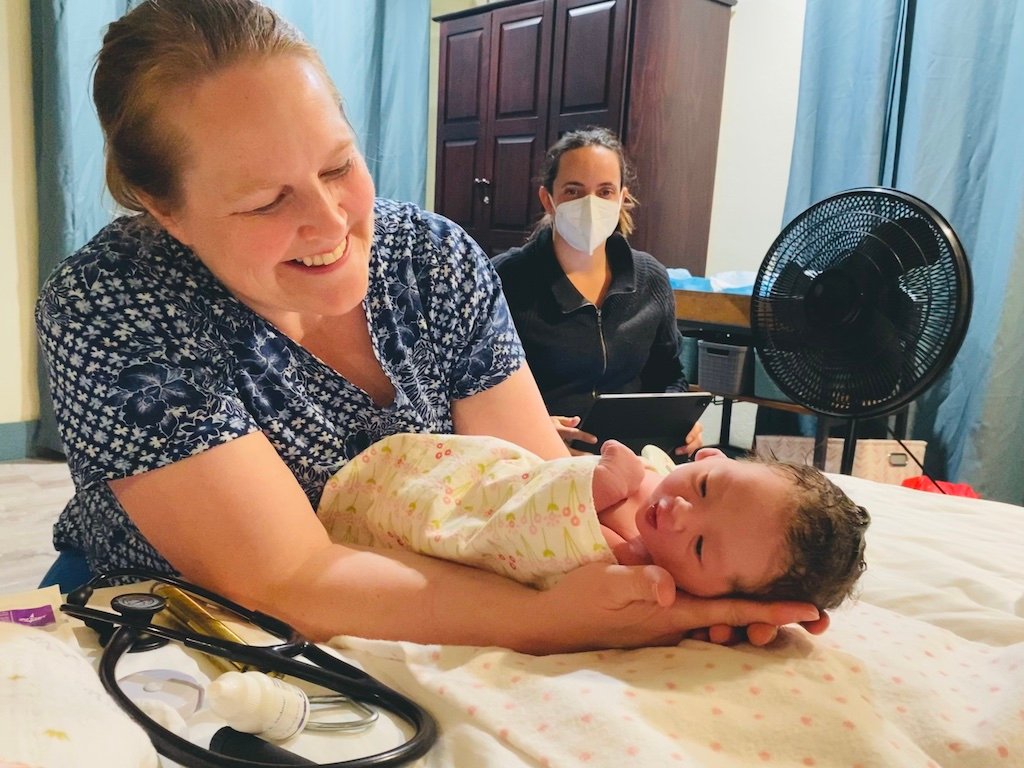
A proposal to modernize New Jersey’s 19th-century midwifery laws and give midwives more say over their work passed a legislative panel Monday, three years after it was first introduced.
The Senate Commerce Committee approved the bill to create a state midwifery board to oversee licensing and credentialing of these professionals with three Democratic votes alone. Sen. Jon Bramnick (R-Union) voted no and Sen. Robert Singer (R-Ocean) abstained.
Sen. Britnee Timberlake (D-Essex), who championed the bill when she was in the Assembly, chastised Singer for the way he questioned some of the midwives who testified about their credentials. She told the all-male committee that she had midwives for the births of all four of her children and more women deserve the options she enjoyed.
“This here is about choice and access to care. I ask the committee members, how many of you have dilated 10 centimeters?” Timberlake said.
Midwives are currently overseen by the state Board of Medical Examiners, which also licenses doctors. Kel McGowan, representing the Association of Certified Midwives, noted to the committee that 11 states — including New York, where many New Jersey midwives are also licensed — now have a dedicated midwifery licensing board.
“We are experts in midwifery and are therefore best situated to create and enforce midwifery regulations,” McGowan said.
Midwives ask state to end physician oversight as home births rise
Midwives are trained primary care providers who specialize in care for women before and during pregnancy and delivery and for women and newborns in the post-partum period. Their work, which dates back centuries, has been shown to lower maternal and infant mortality, improve breastfeeding rates, and reduce the need for medical interventions.
“Midwifery being regulated by the Board of Medical Examiners means we’re regulated essentially by a competing profession that has little incentive to support regulations that would promote the midwifery workforce in the state,” McGowan said.
Only three states — Pennsylvania, Delaware, and North Carolina — use a “competing” board to oversee midwifery, she said.
Under New Jersey’s legislation, sponsored by Sen. Joe Vitale (D-Middlesex), the health committee chairman, the board would include 13 members, including a public representative, government official, two OB-GYNs, and seven midwives, at least one of them a midwife educator. There is no Assembly version currently.
The board would be responsible for creating a modern licensing process, administering that process, enforcing the licensing rules, and determining the standards needed for midwife education.
Multiple midwives told lawmakers the change is long overdue and needed to attract more fellow clinicians to New Jersey, which has fewer than 500 practicing midwives, according to a 2022 report from the New Jersey Health Care Quality Institute that urged the state to do more to support the profession.
New Jersey needs another 150 midwives to effectively serve its population, according to bill supporter Shakira Williams-Linzey, a regional representative for the March of Dimes, a national maternal and infant health organization.
Julie Blumenfeld, a certified nurse midwife, educator, and leader with the midwifery program at Rutgers School of Nursing, said the need for more midwives is particularly acute given New Jersey’s above-average maternal mortality rate and state data showing that Black women are nearly seven times more likely to die during pregnancy, childbirth, or postpartum — and Hispanic women nearly 3.5 times more likely — than white moms.
“However, this solution — the growth and expansion of the midwifery workforce — to critical problems in our maternal health system, is limited because of an antiquated midwifery statute and regulatory structure here in New Jersey,” Blumenfeld said.
Several other midwives urged the panel to wait, with one suggesting more midwives need to be engaged in the conversation about such drastic change.
Kathy Gater, a certified midwife, questioned the need, noting that the bill itself does not expand the workforce or make birthing practices safer. Almost all midwife-assisted births in New Jersey take place in hospitals, she said, and midwives work closely with doctors, nurses, and other healthcare providers every day. A separate licensing board doesn’t reflect this integration, she said.
“Safe maternity care depends on collaboration, not isolation. A low-risk pregnancy can become a high-risk emergency in a matter of minutes. When that happens, mothers and babies depend on midwives, physicians, nurses, hospitals, and emergency teams working together seamlessly,” she said.
Multiple physician networks also opposed the bill, but did not testify.
The legislation would also create a new path for midwives to receive government approval to administer medications, a separate training process, and add a midwife to the state Board of Medical Examiners. The medical board now relies on a seven-member liaison committee of midwives to provide input on related regulation, speakers said.
Timberlake said reforming the midwife board is the next needed step in New Jersey’s ongoing journey to improve maternal care, particularly for Black women.
“We have taken hard stances here in Trenton regarding the health and wellness of Black and infant mortality rates in mothers and babies. It’s me. Hello, hi, I am the Black woman who is birthing currently, asking for these bills to be passed, because the choice meant everything for me,” she said.
GET THE MORNING HEADLINES.



