
In 2017, the Japanese independent zombie comedy “One Cut of the Dead”, directed by Shinichiro Ueda, became an unexpected box office phenomenon in Japan. Made on a very low budget with a cast of unknown actors, the film followed a chaotic film crew shooting a zombie horror movie in a single continuous take for live television. Its success generated spin-offs, sequels, and several international remakes, including the French adaptation “Final Cut”, which premiered at the Cannes Film Festival a few years ago.
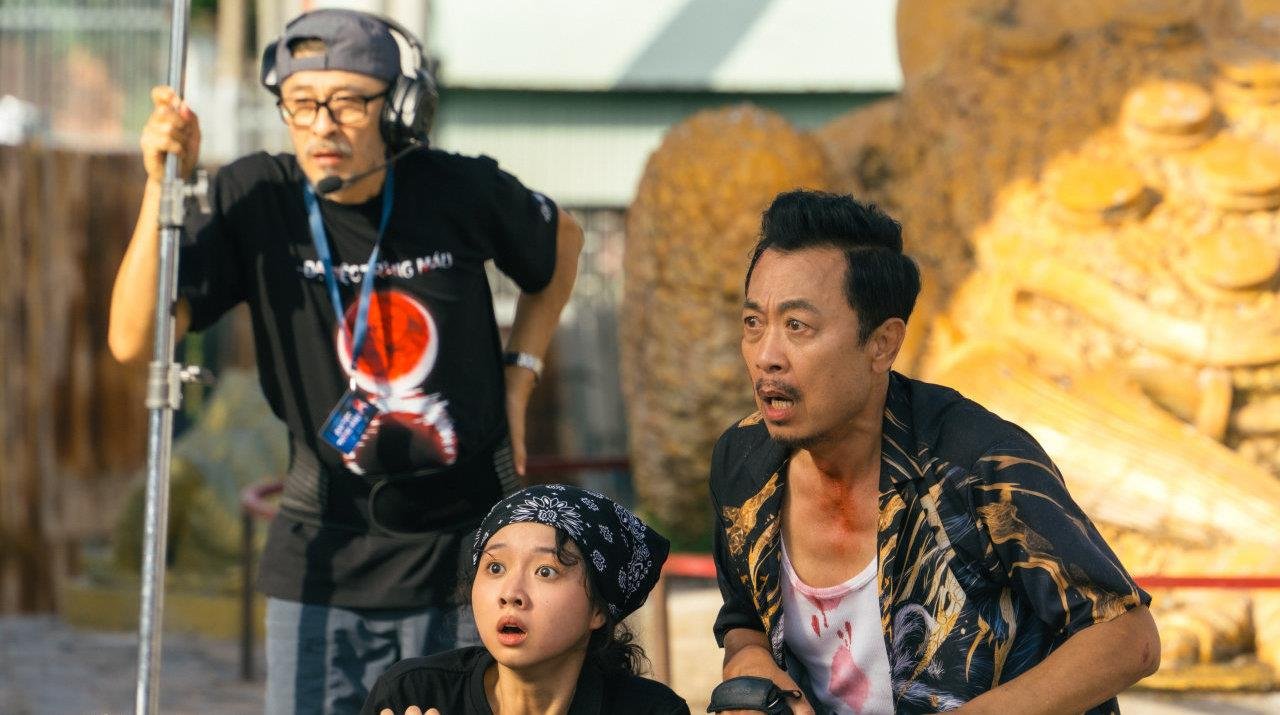
Now it is Vietnam’s turn. The latest adaptation comes from director Phan Gia Nhat Linh, who is also known for producing the Vietnamese remake of the Italian hit “Perfetti Sconosciuti”. His version is titled “Blood Moon Rite 8” — a name that sounds like the eighth instalment of a long-running franchise, although the number is really there as a playful good-luck symbol.
The strength of the story lies in a major twist, so it is better not to reveal too much. Much like the original film, “Blood Moon Rite 8” opens on a movie set where a director is trying to shoot a low-budget zombie production. Suddenly, real zombies seem to appear and everything descends into complete chaos. The film deliberately embraces a B-movie aesthetic, with exaggerated acting, shaky camerawork, and intentionally cheap-looking effects, leaving the audience wondering what exactly they are watching. Then the narrative rewinds and reveals that this opening sequence was itself part of a film within the film.
We then discover that the director is something of a failure in the eyes of both his family and his colleagues, mostly known for making low-prestige commercial television projects. When he is unexpectedly offered the chance to direct a 35-minute zombie movie shot in one continuous take for a demanding Korean client, he sees it as the opportunity of a lifetime — not only professionally, but also personally, especially when it comes to reconnecting with his estranged daughter. The final part of the film gradually brings everything together, showing the chaotic production process behind the scenes and recontextualising many of the bizarre moments seen earlier.
What still makes the formula work so well is simply how clever and entertaining it is. Even if viewers familiar with “One Cut of the Dead” will already know the central trick, the Vietnamese remake remains genuinely enjoyable thanks to the way it adapts the material to a local context. One of the biggest changes is the setting. Instead of an abandoned factory, the zombie shoot now takes place inside a decaying theme park, with actors dressed in colourful fantasy and historical costumes. The result is visually richer and also feels like a playful homage to Vietnamese popular cinema and old-fashioned B-movies. The film also introduces a more contemporary satirical touch through social media culture: the lead actress, played by Miu Le, is less a serious performer than a TikTok celebrity constantly surrounded by fans and influencers dressed as cuddly mascots, creating an absurd and surreal atmosphere.
There is also a gentle satire of the Vietnamese film industry itself. The demanding Korean producer financing the project feels like a clear nod to South Korea’s growing influence across Southeast Asian entertainment industries. At the same time, the movie pokes fun at impossible producer demands and chaotic filmmaking conditions, while also functioning as an affectionate tribute to all the people working behind the scenes — cameramen, assistants, technicians, and set designers — whose efforts somehow keep productions alive.
The humour works consistently well throughout, helped by a strong cast with excellent comic timing. In particular, Vietnamese comedian Van Son brings warmth and charm to the struggling director, making him an easy character to root for. Also very funny is seasoned actress Le Khanh as the director’s wife, a retired action actress who used to takes her roles far too seriously.
All in all, “Blood Moon Rite 8” is a very entertaining remake that will probably enjoy solid success in Vietnam. Even if it never completely escapes the shadow of the Japanese original, it still manages to find its own identity through its humour, colourful visuals, and affectionate celebration of the chaotic magic of filmmaking.



