
 One of New Jersey’s oldest communities may gain a special designation that lets businesses to charge a lower sales tax to incentivize economic development and job growth.
Legislation that won the unanimous approval of a key Senate committee this month would give Burlington City an opportunity to join the state’s Urban Enterprise Zone program.
The small city along the Delaware River in South Jersey, about 3 miles northeast of Philadelphia, would be eligible for numerous state economic development and job creation incentives. These include permission for businesses within the zone to charge half the 6.625% state sales tax rate.

“For our small business owners, this means more customers walking through their doors, and more opportunities to grow,” Seigha Omuso, president of the Main Street Burlington nonprofit advocacy group, said during a recent meeting of the Senate Community and Urban Affairs Committee.
“The UEZ program would also create access to critical investment funding for infrastructure, storefront improvements, beautification and economic development initiatives that make downtown Burlington more attractive to patrons, entrepreneurs and private investors alike,” Omuso said.
Early capital
Burlington City, founded in 1677, once served as capital of the Colonial province of West Jersey.
The city was home to the estate of New Jersey’s royal governor, William Franklin, prior to the American Revolution. On East Union Street is the former home of Oliver Cromwell, a free Black farmer and decorated Revolutionary soldier who fought under Gen. George Washington.
Like many aging urban centers, Burlington City is struggling to overcome a number of challenges, including the environmental legacy of its post-Colonial industrial period.
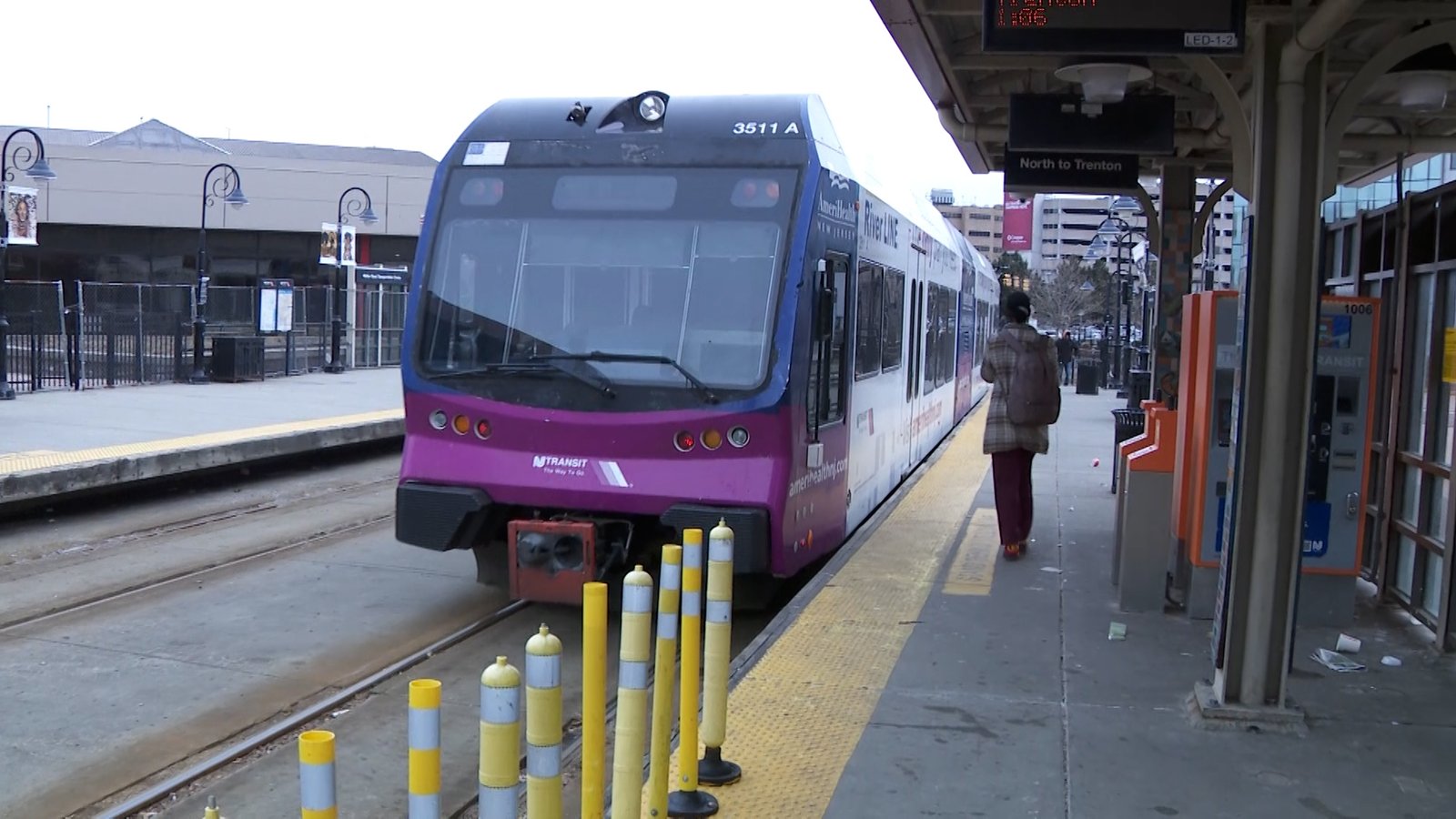
Its riverfront location means much of its inhabitable land is within a flood zone, officials said. The city is bisected by both Route 130 and New Jersey Transit’s River Line light rail, which makes for numerous rail crossings, the officials said.
The legislation approved by 5-0 by the Senate committee cites concerns about the city’s poverty rate. Of roughly 10,000 residents, about 17% live in poverty.
City Council President Dawn Bergner-Thompson said the upcoming celebration of Burlington City’s founding 350 years ago makes this an appropriate time to join the program.
“We envision the Urban Enterprise (Zone) designation, if passed, as an additional tool in our tool belt to assist with economic development and redevelopment,” Bergner-Thompson said.
‘The tools it needs’
Established in 1983, the Urban Enterprise Zone program was significantly reformed via a 2021 law. In all, the state has 32 such areas in parts of 37 communities, according to the state Urban Enterprise Zone Authority. Among them are Asbury Park, Camden, Newark, Plainfield and Trenton.
The program, in addition to allowing businesses within the designated zones to levy a reduced, 3.3125% state sales tax, gives local officials access to other tools, including flexible funding for economic development projects.
If approved by the full Senate and Assembly and then signed into law by Gov. Mikie Sherrill, the legislation would give officials 90 days to submit a zone development plan to the Urban Enterprise Zone Authority.
“This legislation is about giving the city the tools it needs to attract new businesses, support local entrepreneurs, and create jobs for residents,” said Committee Chair Troy Singleton (D-Burlington). “The Urban Enterprise Zone program has a proven track record of driving revitalization, and this bill brings those opportunities to Burlington City,” said Singleton, who is the primary sponsor of the legislation.
This story is made possible in part by the Corporation for Public Broadcasting, a private corporation funded by the American people.



