WASHINGTON — Immigration and Customs Enforcement, which has arrested and detained tens of thousands of people in an anti-immigrant crackdown, has a $45 billion budget to buy “new detention capacity” the Republican-majority Congress will likely not touch.
And maneuvers from Republicans and Democrats to deny ICE, by taking the agency to court to deny it permits, as Newark Mayor Ras Baraka has done with Delaney Hall, a detention site in his city, have fizzled.
But in the face of the Trump administration’s hard-line anti-immigration crackdown, two avenues — a little-tested state law and limited water and sewer constraints – could offer checks against the expansion of new ICE facilities.
New Jersey is one of a few U.S. states — including California, Maine, Massachusetts and, recently, Illinois — that has enshrined a law that appears to authorize damages against federal officials for violations of the U.S. Constitution.

Illinois passed its law recently, tailoring it to apply to ICE and Customs and Border Protection agents. The text mentions gear immigration officials have used against demonstrators — “CS gas”, “less-lethal shotguns”, “facial” coverings, “compressed air launchers” and more.
Federal law allows such a lawsuit under what is known as Section 1983: a section of federal code about the civil rights deprivations.
But these sorts of state laws, including the New Jersey version, have been lightly touched in the U.S. court system.
“Today, victims of unconstitutional federal action have limited remedial options,” attorney Harrison Stark wrote in a University of Wisconsin Law School article published in August 2025. “It offers a potential pathway for pursuing damages against federal officials who act unconstitutionally,” Stark said of these state laws.
Under New Jersey’s state law, the state attorney general may “bring a civil action for damages and for injunctive or other appropriate relief.”
“The Trump administration’s plans for an ICE detention facility in Roxbury will not make New Jersey safer, and Gov. Sherrill is evaluating all of our options to prevent it,” Sean Higgins, a spokesman for the governor, said in a statement. “We are working to gather more information as the Department of Homeland Security has failed to cooperate with local officials or provide any meaningful information about the facility.”
In an influential 1987 legal article, published in the Yale Law Journal and an inspiration for these state laws, constitutional scholar Akhil Reed Amar argued state legislatures could green-light lawsuits against federal agents.
“Even if states have not always taken seriously their role in protecting individual constitutional rights against the federal government,” Amar wrote.
In an interview with NJ Spotlight News on Tuesday, Sen. Andy Kim (D-NJ) said he is working on legislation to limit the Trump administration’s ability to purchase facilities for ICE, such as the Roxbury site.
“It’s clear nobody wants this warehouse, detention facility in Roxbury or anywhere in New Jersey,” Kim said. “This is a town Trump won handily.”
Kim saw the warehouse over the weekend and met with town officials. “They think this will fundamentally change their town, and they don’t want this there,” Kim said. “They feel so disrespected by this administration. Not once has anyone from DHS, ICE talked to them.”
The Trump administration has not disclosed how much it paid for the Roxbury warehouse or when it would be put into use.
Ben Spinelli, executive director of the New Jersey Highlands Council, a state agency that oversees water policy, said the property is in a designated protection area in the regional planning agency’s master plan, and has limited water and sewer capacity.
“I’m not here to make moral judgments about whether it’s a good idea or a bad idea, it’s whether or not it fits in with the protection of the Highlands, which it does not,” Spinelli said in an interview with NJ Spotlight News. “We spent the last two years trying to balance affordable housing demand with protecting the resources in the Highlands, and now, essentially, you’re talking about creating the 89th Highlands municipality.”
Spinelli said the property was not suitable for development in 2019, when the warehouse was built, but at the time, Roxbury was not following the plan. Under the law that created the Highlands council, adherence to the regional master plan is voluntary for half of the region’s 800,000 acres. Since Roxbury conforms to that plan, redevelopment of the property normally would need approval from the Highlands council. It’s unclear, though, whether as federally-owned property it would still have to get all the same permits that a private owner would need.
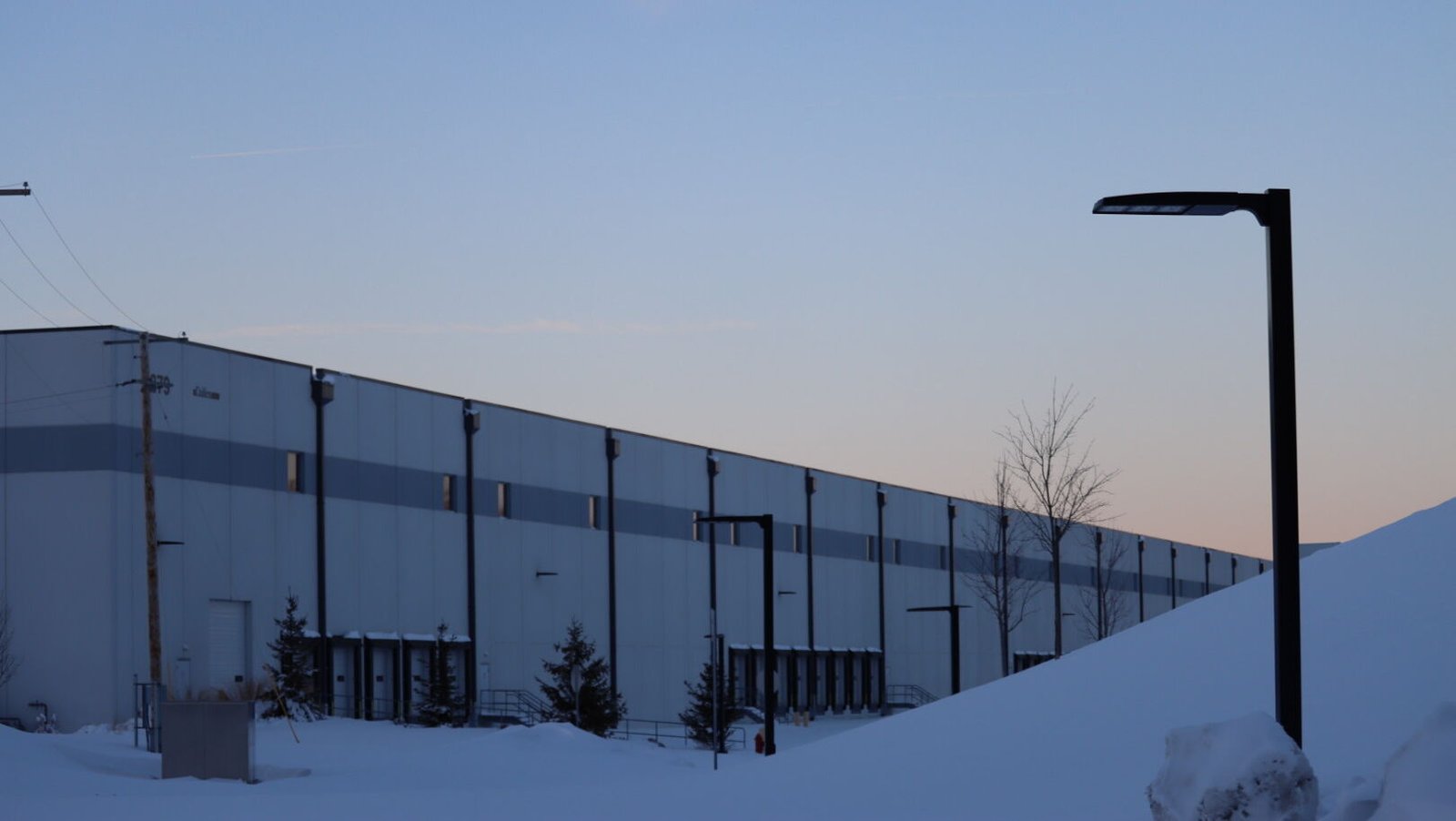
Credit: (John Mooney/NJ Spotlight News)The land where the 470,000-acre warehouse sits contains three vernal pools, forests, wetlands and open-water buffers. It’s also important for groundwater recharge.
A sudden influx of thousands of new detainees would sharply ramp up local demand on first responders, healthcare systems and the natural environment.
“It’s only engineered for 11,000 gallons (of sewage) a day,” Spinelli said. “It was built to be a warehouse where you had maybe a dozen guys working there. The pipes themselves can’t handle any more capacity than what they were permitted for.”
Senators are talking about legislation to check ICE’s reach, Kim said.
“There are Republican senators that don’t want this in their states,” Kim added, referring to ICE expansion. “I’m talking to them. I’m trying to see what we can push on.”
As of November, ICE was using 104 more sites for immigration detention than the start of 2025, a 91% increase, according to the American Immigration council.
Across federal administrations, ICE has routinely lost track of the people in its care, served revolting food and performed medically invasive and unnecessary procedures on detainees, according to inspectors general.