
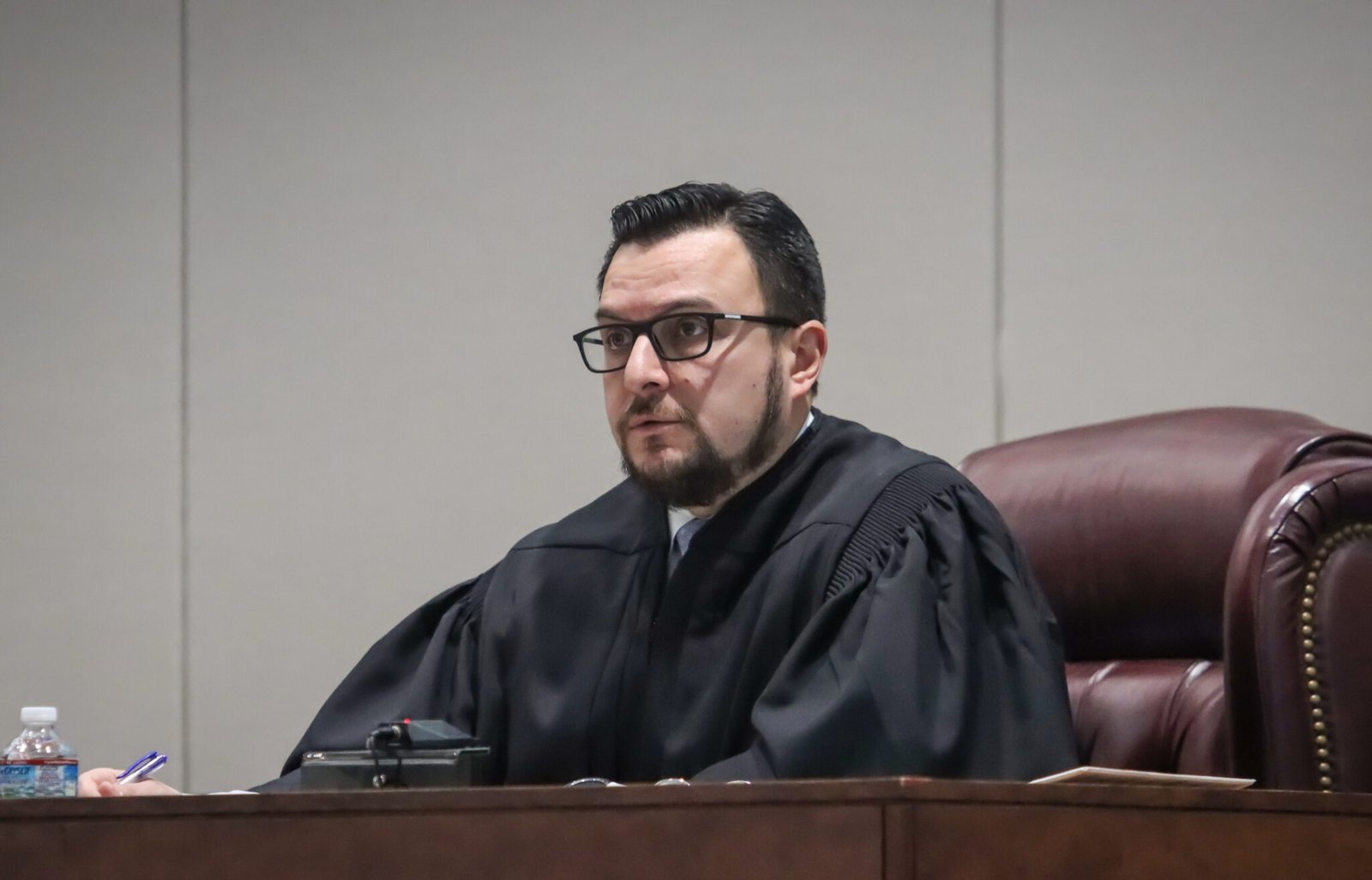
The New Jersey Supreme Court reversed a Cumberland County man’s conviction on drug charges and ordered a new trial, finding his first was tainted by prejudice and pop culture.
Mentions of search warrants, repeated references to organized crime, and an allusion to the acclaimed television series “The Wire” were enough to deprive Gerald Butler of a fair trial, the justices found.
“At the outset of trial here, the prosecutor invoked The Wire, a television series widely known for its portrayal of organized crime, violence, intimidation, and murder, thus analogizing the events leading to the Millville investigation to a large-scale violent criminal enterprise,” Justice Michael Noriega wrote for a unanimous court. “Defendant, however, was not identified as a primary participant in the city’s outbreak of violence.”
NJ Supreme Court won’t order new jury selections in response to clemencies
Butler was convicted on drug charges after a search of a residence where he stayed uncovered cocaine, heroin, and firearms. A jury acquitted him of the gun charges.
The high court found his trial was tainted by inferences of guilt unconnected to the evidence against him.
The problems began with the prosecutor’s opening statement. It included references to “The Wire,” the HBO series that deeply portrays organized crime in Baltimore and the police officers who investigate it, including through the use of wiretaps.
“I end with this. That, very much like the show ‘The Wire,’ sometimes the targets tell on themselves,” the prosecutor said, according to the court’s decision.
Butler argued to the Supreme Court that the references were meant to suggest participation in violent organized crime of the like portrayed in the Peabody Award-winning series.
Courts have long cautioned against pop culture references at trial, warning that outside works of fiction could insinuate guilt by linking defendants with violent themes or characters.
“Referencing the series in the opening minutes of trial effectively framed the jury’s understanding of the case and overshadowed the evidence the State intended to present,” Noriega said.
Still, the reference — limited as it was to the prosecutor’s opening statement — was not enough to win Butler a new trial, the court found.
Despite prosecutors agreeing to limit mentions of the search warrant that uncovered the drugs and firearms as a “lawful search,” investigators repeatedly referred to Butler as the “target” of the warrant.
That violated court doctrine that cautions repeated mentions of a search warrant — and the fact that a judge issued it — can cause juries to infer guilt where none exists, the court said, though those mentions were also not, by themselves, enough to overturn Butler’s convictions.
Though the court acknowledged repeated references to the Organized Crime Bureau that launched the sting — authorities called it “Operation That’s All Folks” — went unchallenged during Butler’s trial and were not improper, it said repeated suggestions that Butler was connected to criminal conduct not charged in the case could prejudice the jury.
Though none of those errors individually could sway the case, taken together, their impact was less clear, the court ruled.
“The cumulative effect of these errors cannot be overlooked,” Noriega said. “The State’s framing of the case blurred the lines between facts properly before the jury and emotional undertones of uncharged violence, which created a real risk that the verdict was tainted by improper influence.”
Butler, the court said, is entitled to a trial based on facts and evidence.
The Office of the Public Defender, which represented Butler, celebrated the ruling and said the decision underscored the principles that underly the country’s criminal justice system.
“Today’s ruling reaffirms the fundamental principle that every defendant is entitled to a verdict based on evidence, not rhetoric or implication,” said Deputy Public Defender Alison Perrone, who heads the office’s appellate section. “The Court correctly recognized that repeated references to violence and undue emphasis on search-warrant status deprived Mr. Butler of a fair trial. As the Court made clear, verdicts must rest on admissible facts and reliable proof. This decision meaningfully safeguards those principles and ensures that Mr. Butler receives the fair trial the Constitution guarantees.”
GET THE MORNING HEADLINES.



