
Recipe Highlights
Growing up in Japan, I ate fish far more often than I do now in the U.S. My mom cooked different kinds of fish throughout the week. She always alternated meat and fish so we could enjoy food from both the sea and land.
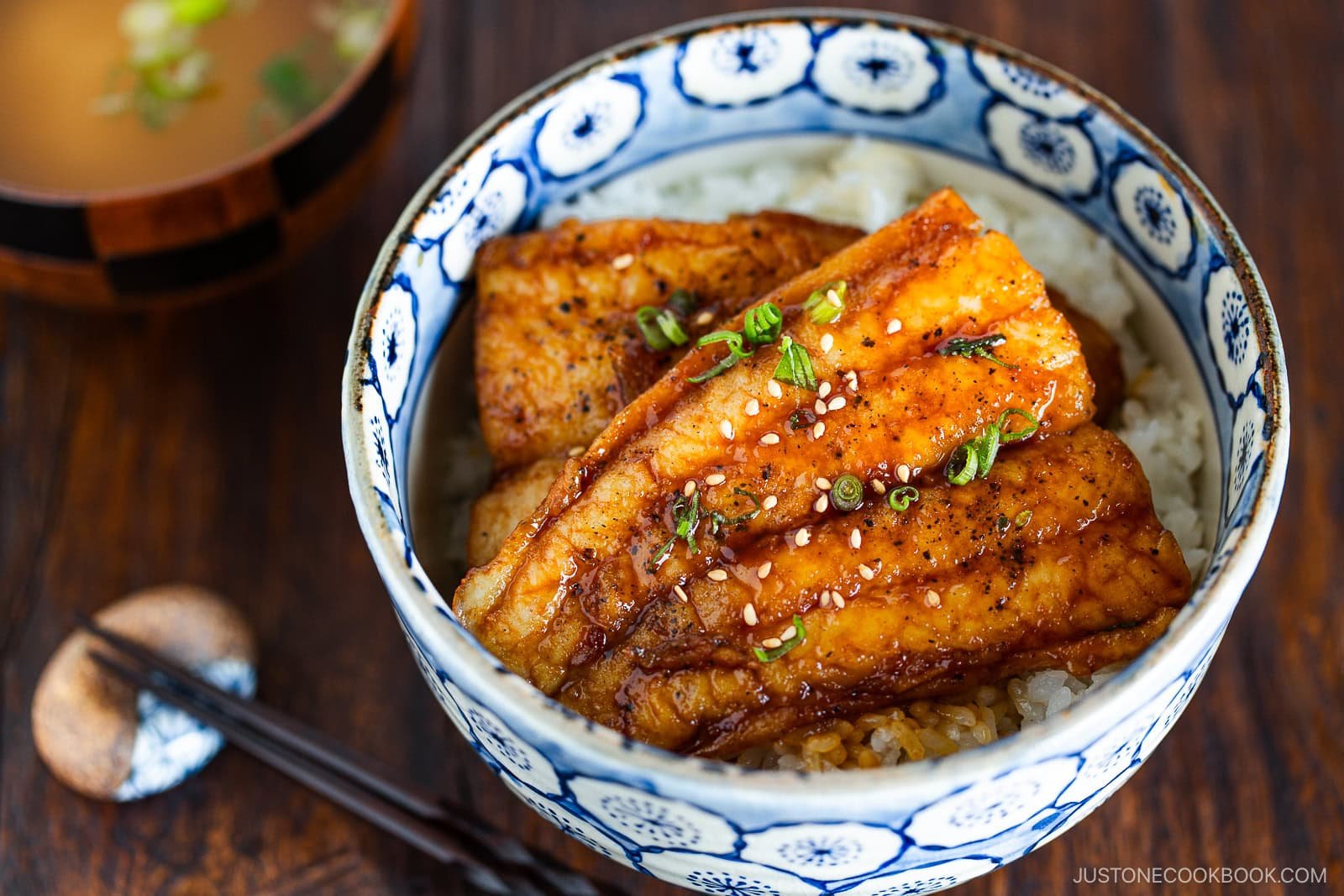
Grilled unagi is a dish I love, but good eel is expensive. So I created Catfish Kabayaki as a budget-friendly alternative, and it’s become one of my favorites!
Here’s why I keep coming back to this recipe:
- Ready in 15 minutes with easy-to-find ingredients
- Uses basa, an affordable catfish with unagi-like flavor
- A satisfying rice bowl with fish glazed in sweet-savory tare
If you love Japanese rice bowls, try my Unadon, Oyakodon, and Gyudon next!

What is Kabayaki?
Kabayaki (蒲焼き) is not a sauce. It’s a Japanese cooking style, much like teriyaki (照り焼き).
A long fish (such as eels and conger eels) is filleted, deboned, skewered, and grilled, then brushed with a sweet soy glaze called tare (たれ). It’s the same method behind Japan’s beloved unagi no kabayaki (鰻の蒲焼き), or grilled eel.
Ingredients for Catfish Kabayaki
- Catfish (basa) fillets
- Sauce – soy sauce, mirin, sake, sugar
- All-purpose flour
- Salt and black pepper
- Neutral oil
For serving
- Cooked Japanese short-grain rice
- Green onions/scallions
- Toasted white sesame seeds
- Sansho pepper (optional)
Find the printable recipe with measurements below.
How to Make Catfish Kabayaki
- Prep the fish. Cut the basa fillets in half crosswise, then season both sides with salt and pepper.
- Coat with flour. Dust the fillets lightly with flour and shake off the excess.
- Pan-fry. Heat the oil over medium heat and fry the fillets 3 to 4 minutes per side, until the crust is golden and the flesh turns milky white.
- Add the sauce. In a small bowl, whisk the sauce ingredients until the sugar dissolves. Pour it over the fish and cook 1–2 minutes, spooning it over until it thickens and glazes the fillets. Sprinkle with sliced green onions.
- Serve. Spoon the fish and sauce over warm rice. Top with sesame seeds.


Nami’s Recipe Tips
Here are the tips I rely on to make this dish work every time.
- Choose thin fillets – My local fishmonger recommended basa, a type of catfish, because it comes in thin fillets that cook quickly and stay tender.
- Dust with flour first – Coating the fish in flour before frying holds the flesh together, gives a crisper surface, and thickens the tare as it reduces.
- Cook on medium – Medium heat browns the crust without drying the inside, so the fish stays juicy.


- Use more oil for a crispier crust – I use 1½ tablespoons in a nonstick pan, but bump it up to 2–2½ tablespoons in a stainless steel pan for extra crunch.
- Use real sake and mirin – These two staples flavor most savory Japanese dishes, so they’re worth stocking. My pantry pages list substitutes if you need them.


Variations
Feel free to mix and match based on what you have on hand.
- Try another fish. Any mild white fish with slender, thin fillets works well with the same tare glaze.
- Spoon it over noodles. Skip the rice and serve the fish and sauce over udon or soba.
- Tweak the sauce. Swap in my Homemade Eel Sauce (unagi tare) for a deeper, more traditional sweet-salty flavor.
What to Serve with Catfish Kabayaki
Add these sides to make a complete meal.


Storage and Reheating Tips
To store: Transfer leftovers to an airtight container and refrigerate for up to 3 days or freeze for up to a month.
To reheat: Warm gently in a covered pan over low heat.
FAQ
What kind of fish should I use?
I use basa, a type of catfish, but any thin white fish works. Pick thin fillets so they cook through quickly.
Does this taste like real unagi?
It isn’t identical—catfish is milder than eel. But the sweet tare glaze and warm rice make for a satisfying unadon experience at a fraction of the cost of real unagi, which can run $30 or more per fillet.
Can I cook this without sake or mirin?
I recommend keeping both on hand, since they flavor most savory Japanese dishes, but my pantry pages list substitutes if you’re in a pinch.
What is sansho pepper?
It’s a citrusy Japanese pepper often paired with grilled eel, and a small pinch adds a light, tingly finish.
I’d love to hear how yours turned out! 💛 Please leave a star rating and comment below to share your experience. Your feedback not only supports Just One Cookbook but also helps other home cooks discover recipes they can trust.
Catfish Kabayaki
To Prep
Gather all the ingredients. It’s best to start when the rice is resting.
Cut 2 basa fillets (catfish fillets) crosswise in half. Season both sides with ⅛ tsp Diamond Crystal kosher salt and ⅛ tsp freshly ground black pepper.
Lightly coat the fillets with 1½ Tbsp all-purpose flour (plain flour) and shake off the excess.
To Cook
- Heat 1½ Tbsp neutral oil in a frying pan over medium heat. Add the fillets and fry for 3–4 minutes per side until the crust is golden brown and the flesh is opaque and milky white.Nami’s Tip: Use 2–2½ Tbsp oil for a stainless steel pan or for a crispier texture.
- In a small bowl, whisk 3 Tbsp soy sauce, 2 Tbsp mirin, 2 Tbsp sake, and 1 Tbsp sugar until the sugar dissolves. Pour over the fish and cook for 1–2 minutes, spooning it over the fish until the sauce thickens and coats the back of a spoon.Thinly slice 2 green onions/scallions and sprinkle over the fish. Turn off the heat.
To Serve
Divide 2 servings cooked Japanese short-grain rice into the donburi bowls and top with the fish. Drizzle with the pan sauce and sprinkle with 1 tsp toasted white sesame seeds and Japanese sansho pepper, if you’d like.
To Store
Transfer the leftovers to an airtight container and store in the refrigerator for up to 2–3 days or in the freezer for up to a month. To reheat, warm it gently in a covered pan over low heat so the flesh stays moist.
Variations
- Try another fish. Any mild white fish that comes in slender, thin fillets takes well to the same tare glaze.
- Make it vegetarian. Coat firm tofu or eggplant in flour and pan-fry, then glaze with the tare for a meat-free bowl.
- Spoon it over noodles. Skip the rice and serve the fish and sauce over udon or soba.
- Use eel for the classic version. Swap in grilled unagi and make traditional unagi no kabayaki.
Calories: 515kcal, Carbohydrates: 40g, Protein: 31g, Fat: 21g, Saturated Fat: 11g, Trans Fat: 1g, Cholesterol: 94mg, Sodium: 1247mg, Potassium: 586mg, Fiber: 1g, Sugar: 8g, Vitamin A: 122IU, Vitamin C: 2mg, Calcium: 35mg, Iron: 2mg
Did you make this recipe?
Tag @justonecookbook on Instagram so we can see your delicious creation!
Editor’s Note: This post was originally published on June 18,m 2018 and republished with more helpful tips and techniques on 6/7, 2026.



