
Recipe Highlights
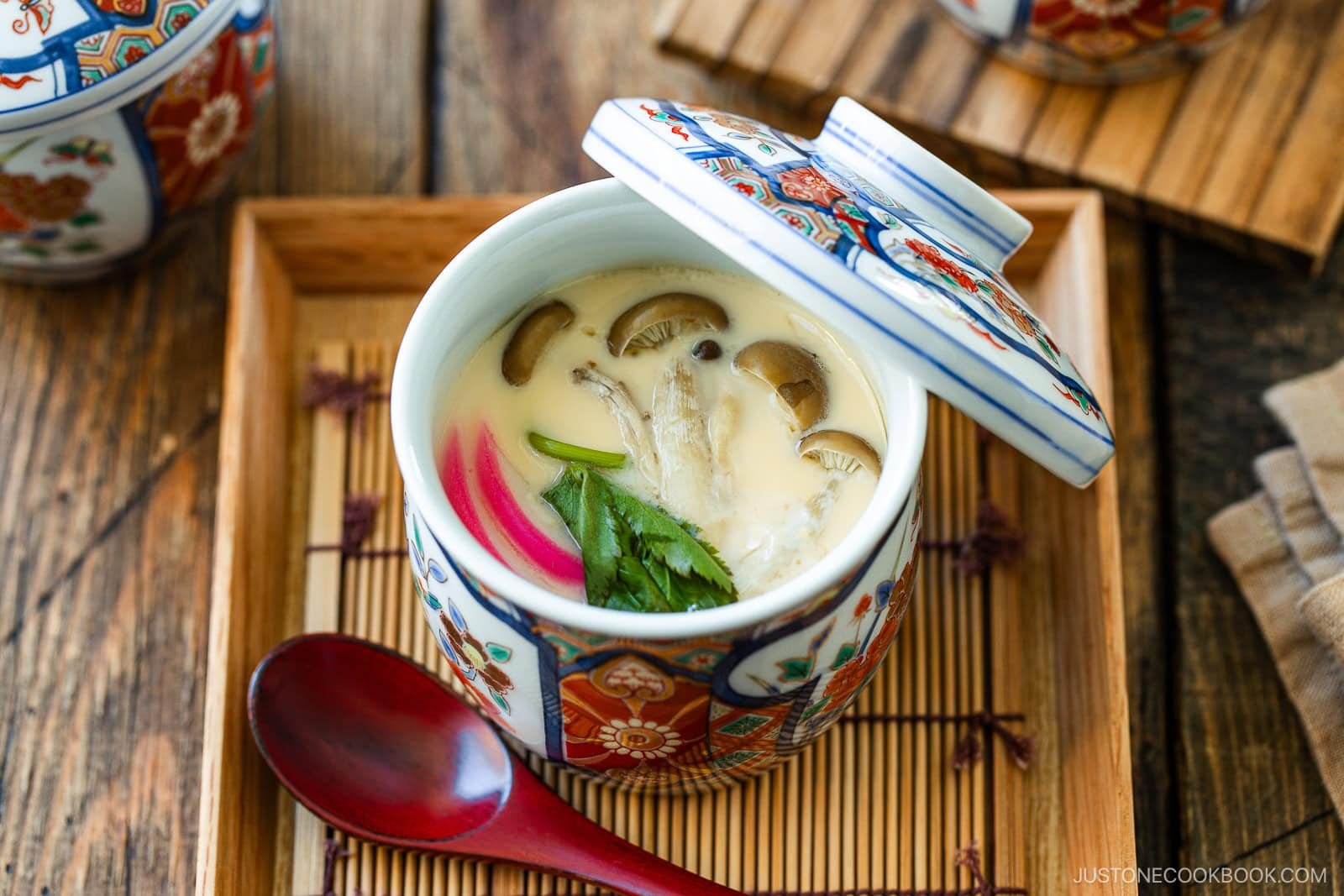
Chawanmushi is one of my son’s favorite appetizers at Japanese restaurants, and honestly, the homemade version is just as good. It’s surprisingly easy to pull off—perfect for dinner parties and quiet family meals alike.
My basic version starts with dashi-seasoned egg custard nestled with chicken, mushrooms, and vegetables, but you can customize it with seasonal ingredients or make it vegetarian.
Here’s why I keep coming back to this recipe:
- Silky-smooth custard with delicate, umami-rich flavor
- Only 20 minutes of steaming—no special equipment needed
- Easy to make vegetarian with a few simple swaps
If you love this chawanmushi recipe, try my Instant Pot Chawanmushi, Chawanmushi with Shrimp, and Matsutake Chawanmushi, next!

What is Chawanmushi?
Chawanmushi (茶碗蒸し) literally translates to ‘teacup steamed egg custard.’
The dish traces its roots to shippoku (卓袱) banquet cuisine in Nagasaki—a unique blend of Japanese, Chinese, and European-influenced cooking that emerged during the Edo period (1603–1868).
Today, chawanmushi appears everywhere from kaiseki ryori restaurants to home kitchens.
Ingredients for Chawanmushi
- chicken tenders – or use chicken breast/thighs
- kamaboko fish cake
- shimeji mushrooms
- mitsuba (Japanese parsley) or green onion
- ginkgo nuts – optional
For the Custard
- large eggs
- dashi (Japanese soup stock)
- seasonings – soy sauce, mirin, sake, and salt
Find the printable recipe with measurements below.
How to Make Chawanmushi (Japanese Steamed Egg Custard)
- Prep the ingredients. Cut the chicken and marinate with sake for 10 minutes. Slice the kamaboko and mushrooms. Knot the mitsuba stems or slice the green onions.
- Make the custard. Combine eggs, dashi, mirin, soy sauce, and salt in a bowl. Whisk until blended. Strain through a fine-mesh sieve.
- Assemble the cups. Layer fillings equally. Pour the egg mixture into the cups until 80% full. Remove any air bubbles.
- Steam. Set the cups in a large pot with hot water reaching halfway up the sides. Cover each cup with its lid or foil. Rest the pot lid slightly ajar. Steam on the lowest heat for 20 minutes.
- Serve. Eat while hot with a small spoon.


Nami’s Recipe Tips
These simple tips will help you make Chawanmushi perfectly every time.
- Use a 1:2.5 egg-to-dashi ratio – I use this instead of the standard 1:3 for a richer custard.
- Make your own dashi stock – Dashi defines chawanmushi’s flavor, so I highly recommend using good quality stock. Use a handy dashi packet or follow my How to Make Dashi guide to make it from scratch.
- Use usukuchi soy sauce – This light-colored soy sauce keeps the custard pale and delicate.
- Bring ingredients to room temperature first – Cold fillings can cause uneven cooking and affect the custard’s set.

- Strain the egg mixture – For a velvety texture, I pass the beaten custard mixture through a fine-mesh sieve.
- Use a hot water bath – I recommend this stovetop method because it’s easy for beginners and only requires a large pot.

Variations
Looking to change things up? Here are a few ways to make this dish your own.
- Use seasonal ingredients. Shrimp, fish, and other vegetables are common variations based on what’s fresh and in season.
- Try a different fish cake. Instead of kamaboko, try tube-shaped chikuwa or pink-swirled narutomaki.
- Make it vegetarian. Use more vegetables and mushrooms instead of chicken and fish cake, and switch to Vegan Dashi.
- Use a steamer basket or oven. For a steamer, wrap the lid with a kitchen towel to prevent condensation from dripping into the custard. For an oven, place covered cups in a roasting pan with 1 inch of boiling water at 350°F (180°C).
- Swap the mushrooms. Try enoki, maitake, or shiitake mushrooms.
- Try different veggies. Snow peas, carrots, spinach, and other leafy greens are colorful options. Blanch firmer vegetables like carrots before adding to the chawanmushi.


What to Serve with Chawanmushi
Chawanmushi makes a wonderful Japanese appetizer. Here are my favorite pairings:


Storage and Reheating Tips
To store: Keep leftovers in their cups and refrigerate for up to 2 days.
To reheat: Steam for 2–3 minutes or until warmed through. Avoid the microwave–it will break the custard’s silky texture.
FAQs
What cups can I use for chawanmushi?
Traditional chawanmushi cups work best. You can buy my favorites on JOC Goods! You can also use heat-resistant ramekins, small bowls, or mugs. Avoid very thick cups since the heat won’t penetrate them as well.
Can I make chawanmushi without a steamer?
No special equipment is needed for my chawan mushi recipe. Use a regular pot on the stove, bake in a hot water bath in the oven, or make it in an Instant Pot.
Why did my chawanmushi come out bubbly or spongy?
This texture means the custard cooked too fast or at too high a temperature. To avoid this, steam gently, aiming for 176–194°F (80–90°C), and leave the pot lid slightly ajar. Straining your egg mixture also helps.
Can I make chawanmushi ahead of time?
Chawanmushi is best served hot. But you can prepare everything ahead of time and steam just before serving.
I’d love to hear how yours turned out! 💛 Please leave a star rating and comment below to share your experience. Your feedback not only supports Just One Cookbook but also helps other home cooks discover recipes they can trust.
Chawanmushi (Japanese Savory Steamed Egg Custard)
To Prepare the Ingredients
Cut 2 chicken tenders into ½-inch (1.3 cm) pieces. Place in a bowl, add 1 Tbsp sake, and marinate for 10 minutes.
Cut 8 slices kamaboko (fish cake) thinly. Trim the roots from 1.8 oz shimeji (brown beech) mushrooms and separate them into small clusters.
Loosely knot each stem of the 4 sprigs mitsuba (Japanese parsley). Alternatively, thinly slice the green onion if using instead.
To Prepare the Hot Water Bath
- Place the chawanmushi cups in a large pot and add enough water to reach halfway up the sides. Remove the cups, cover the pot, and bring to a boil. Turn off the heat.
To Steam the Chawanmushi
- Bring the pot of water back to a boil, then reduce to the lowest heat. Keep the water between 176–194ºF (80–90ºC) throughout steaming. Carefully lower the cups into the water, cover with their lids, and set the pot lid slightly ajar. Steam for 20 minutes, or 15 minutes if you omitted the chicken.Nami’s Tip: Monitor closely—cup sizes and thickness affect cook time. Do not let the water boil, or the custard will turn rough and pitted instead of silky smooth.
- Test doneness by inserting a skewer into the center: clear liquid means it’s ready. Tilt to confirm the custard is set throughout, then carefully lift the cups from the water.Nami’s Tip: I removed the lids first and lifted out the cups with a hot plate gripper.
Calories: 96kcal, Carbohydrates: 3g, Protein: 11g, Fat: 4g, Saturated Fat: 1g, Polyunsaturated Fat: 1g, Monounsaturated Fat: 2g, Trans Fat: 0.02g, Cholesterol: 157mg, Sodium: 397mg, Potassium: 195mg, Fiber: 0.4g, Sugar: 1g, Vitamin A: 211IU, Vitamin C: 0.4mg, Calcium: 24mg, Iron: 1mg
Did you make this recipe?
Tag @justonecookbook on Instagram so we can see your delicious creation!
Editor’s Note: This post was originally published on September 7, 2011, updated on October 2, 2022, with new images and a revised recipe, and republished on April 25, 2026, with updated content.



