
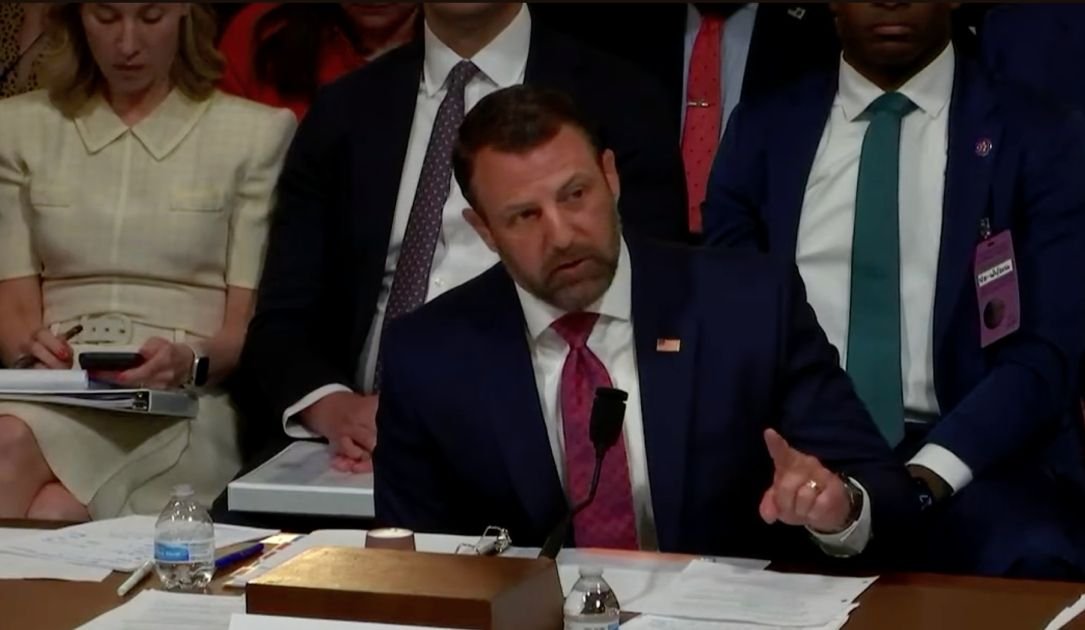
Homeland Security Secretary Markwayne Mullin on Wednesday said he would revitalize the government’s lead civilian cyber agency, a frequent target of President Donald Trump’s ire.
The Cybersecurity and Infrastructure Security Agency (CISA) has lost roughly one-third of its workforce and seen its $3 billion budget slashed during the second Trump administration, following years of complaints by Republicans that its efforts to combat online disinformation during elections singled out conservative voices and infringed upon free speech rights.
President Trump’s fiscal 2027 budget would cut more than $700 million from the agency, raising bipartisan concerns on Capitol Hill.
“Over the last 18 months, [CISA] has seen a significant reduction in its total headcount, including a combination of voluntary departures, reductions in force, and reassignments of cybersecurity personnel,” House Homeland Security Committee Chair Andrew Garbarino (R-NY) said during a hearing.
“I’m concerned that some of the proposals in the budget request, including cuts to CISA’s personnel and cybersecurity education programs, which help sustain a pipeline of skilled cybersecurity professionals in the U.S., could negatively affect efforts.”
In his first appearance before the panel since being confirmed in March, Mullin said that CISA probably needs “somewhere around” 2,800 employees, despite its ability to hire up to 3,400.
“We’re not going to fail on the mission that we have in front of us. Cyberattacks are only getting stronger and they’re attacking our private partners the most,” he said, noting CISA currently has around 2,200 personnel
Mullin hinted that the White House intends to announce a nominee to run the department’s cyber wing, which has been without a Senate-confirmed chief since Trump was sworn back into office. A previous nominee withdrew from consideration in April.
“We’ve got a person, soon to be nominated, that will be running CISA, that has the ability to recruit and focus on the authorities we have. We want CISA to be the leader in cybersecurity. They should be and they will be,” according to Mullin.
He was also asked why the Treasury Department was tapped to be the vulnerability clearinghouse in the artificial intelligence executive order Trump signed on Tuesday, when Congress meant for CISA to serve as the lead federal entity with the private sector.
“When we started looking at the biggest threats that AI is used for, it is through financial gain,” he replied, adding he speaks with Treasury Secretary Scott Bessent “all the time.”
“We are very comfortable with what’s happening there, with him leading in this area, because we’re partnering with CISA and our tools with the unique authority we have,” he said. “Because of the coordination, I think we’re better prepared than just leaving it within DHS.”
Recorded Future
Intelligence Cloud.



