
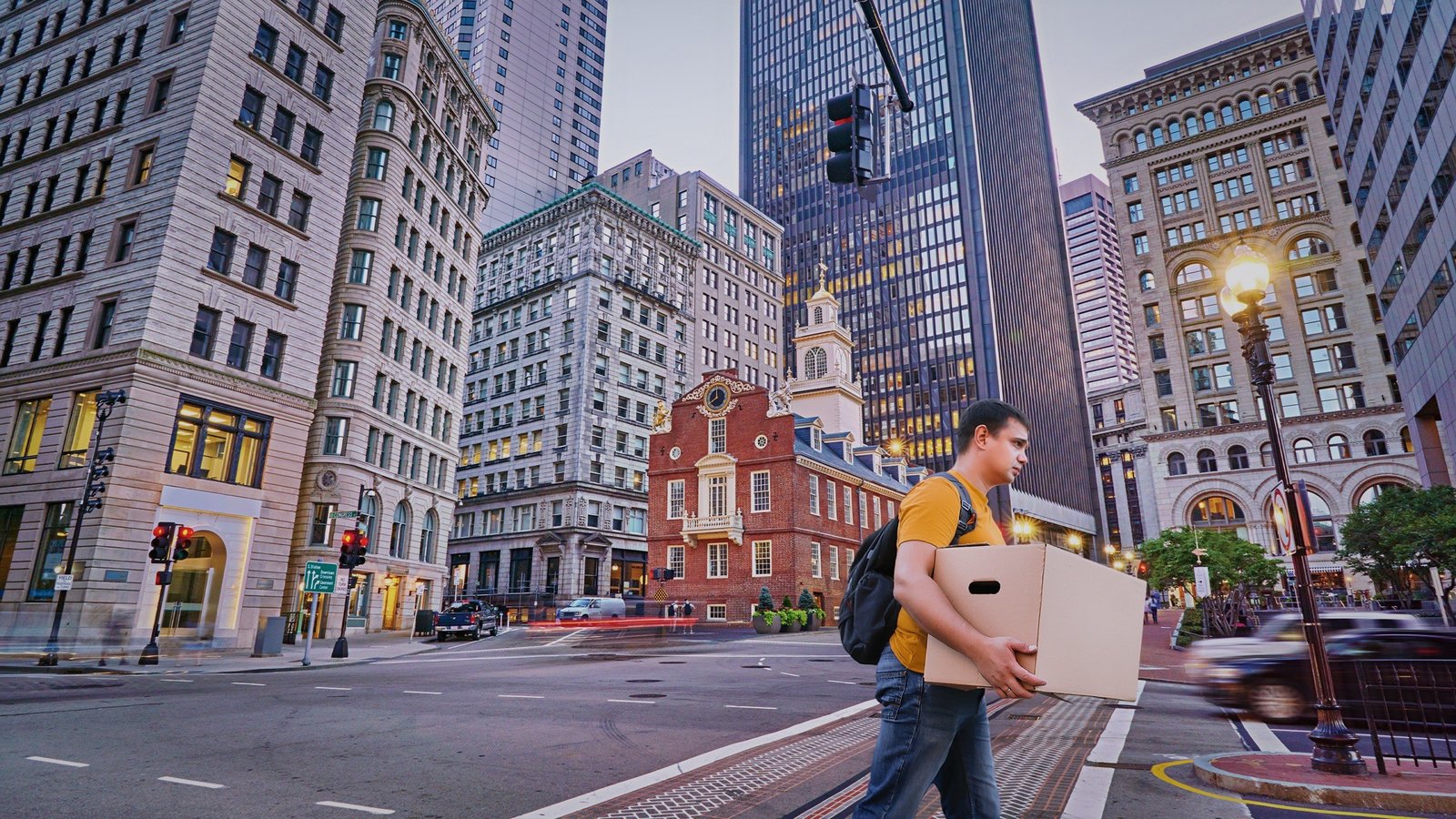
Boston is staring down a mass exodus of young residents who are being squeezed out by surging housing costs driving them toward more affordable markets, according to a new survey.
The 2026 Young Residents Survey, commissioned by The Greater Boston Chamber of Commerce Foundation, found that more than a quarter of Bostonians (26%) between the ages of 20 and 30 years old say they plan on leaving the metro in the next five years—a share the organization calls “distressing.”
The survey also determined that newer residents, LGBTQ residents, unemployed residents, students and unmarried people were more likely to report plans to leave Boston.
The share of survey participants heading for the exit is similar to the results of the 2023 survey, which found 25% of respondents eyeing a move three years ago.
The latest study was conducted in February and March and included 600 young people living in the Greater Boston area, which includes Suffolk, Norfolk, Middlesex, Plymouth, and Essex counties.
The findings reveal that when deciding to stay or leave, 78% of respondents said the cost of rent is important, and 72% cited the ability to buy a home.
The cost of staying
As the region grapples with a housing crisis, half of survey respondents said that affordable housing should be a top priority for local leaders.
“It’s no surprise that housing affordability is a top issue in Boston, especially for the youngest residents who are more likely to be renters,” says Realtor.com® senior economist Jake Krimmel.
Median asking rents in Boston stood at $2,918 in March, the second-highest among the nation’s top 50 metros, surpassing New York City, San Francisco, and Los Angeles, and trailing only ultra-expensive San Jose, CA.
On the homebuying side, Boston’s real estate market is one of the nation’s least affordable, with median listing prices climbing to $832,500 in April—the fifth-highest among major U.S. metros and nearly double the national median, according to the latest Realtor.com monthly housing market trends report.
Concerns over housing affordability, along with job availability, and safety, have soured the outlook for young Bostonians, with the report showing that life satisfaction has plummeted from 89% to 79% in just three years.
Why the Sun Belt is winning over Bostonians
Among the responders planning to leave Boston, approximately half are looking to move within Massachusetts and the rest are considering venturing out of the state.
A deeper dive into the 30-page report shows that 46% of Bostonians planning to exit the Northeast are headed South. Specifically, 23% are looking to settle in Southeastern states, such as Florida, Kentucky, or Tennessee, while another 23% are mulling a move to the Southwest, which includes Arizona and New Mexico.
Compared with Massachusetts, these states offer more inventory and lower housing costs, making them magnets for debt-burdened college graduates and early-career professionals.
“The region’s affordability continues to be a concern as young residents struggle to seize opportunities that outweigh challenges, like housing and career growth,” the Chamber of Commerce Foundation said. “Competitor states that are more affordable may be appealing to young residents who are eager to find housing to rent or purchase that is more affordable and accessible.”
Jack Gaughan, a Nashville Re/Max broker and president of Greater Nashville Realtors®, has helped a transplant from Boston in his mid-30 put down roots in Nashville.
“He originally moved right around COVID but rented until he decided Nashville was the place he wanted to call home,” Gaughan tells Realtor.com.
The broker says his client, a western Massachusetts native who spent nearly a decade living in Boston, wanted to invest in a property that was “modern but functional.” In the end, he closed on a four-bedroom home in a trendy part of Nashville.
For perspective, Nashville’s median listing price was just under $539,000 in April, nearly $300,000 below Boston’s.
The hidden cost of losing Gen Z
Krimmel says that while an outflow of young people from Boston might put some downward pressure on rent price growth in the short term, the long-term trade-off would be a major blow to the metro’s economy.
“Boston’s young people are overwhelmingly high-skilled college graduates who play an important role in the job market, entrepreneurship and innovation scene, and the local service economy, too,” he says.
Krimmel also points out that in a metro with so many universities, including Harvard and MIT, even if tens of thousands of young people moved out overnight, there would be tens of thousands of other recent graduates or current students to take their place.
“That’s the root of Boston’s rental market crisis: a seemingly never-ending supply of young, educated renters but never enough supply of rental housing for them,” says the economist.
To reverse this trend, Krimmel says the answer is simple in theory but seemingly impossible in practice: increase housing supply of all types at all price points, both in the urban core and lower-density suburbs.
In 2025, Gov. Maura Healey’s administration unveiled a housing plan indicating that Massachusetts needs to add 222,000 new homes by 2035 to keep up with growing demand while keeping costs in check.
A year earlier, Healey, a Democrat, signed The Affordable Homes Act, which authorized a record $5 billion for housing and created nearly 50 initiatives aimed at speeding up housing production.
Yet, progress has been elusive. Last fall, Massachusetts received an F on the Realtor.com State-by-State Housing Report Card after falling behind most other states on affordability and new home construction.
During her monthly “Ask the Governor” segment on Boston Public Radio that aired in late March, Healey addressed her administration’s efforts to keep Massachusetts’ young people from moving somewhere cheaper, stressing that it is a trend currently haunting other high-cost areas like California and New York.
“Over the last three-and-a-half years, we’ve got 100,000 homes in the pipeline. Is it enough? No,” admitted the governor. “I need every community in the state to understand that housing is fundamental to the vibrancy of our neighborhoods.”
Get real estate news in your inbox



