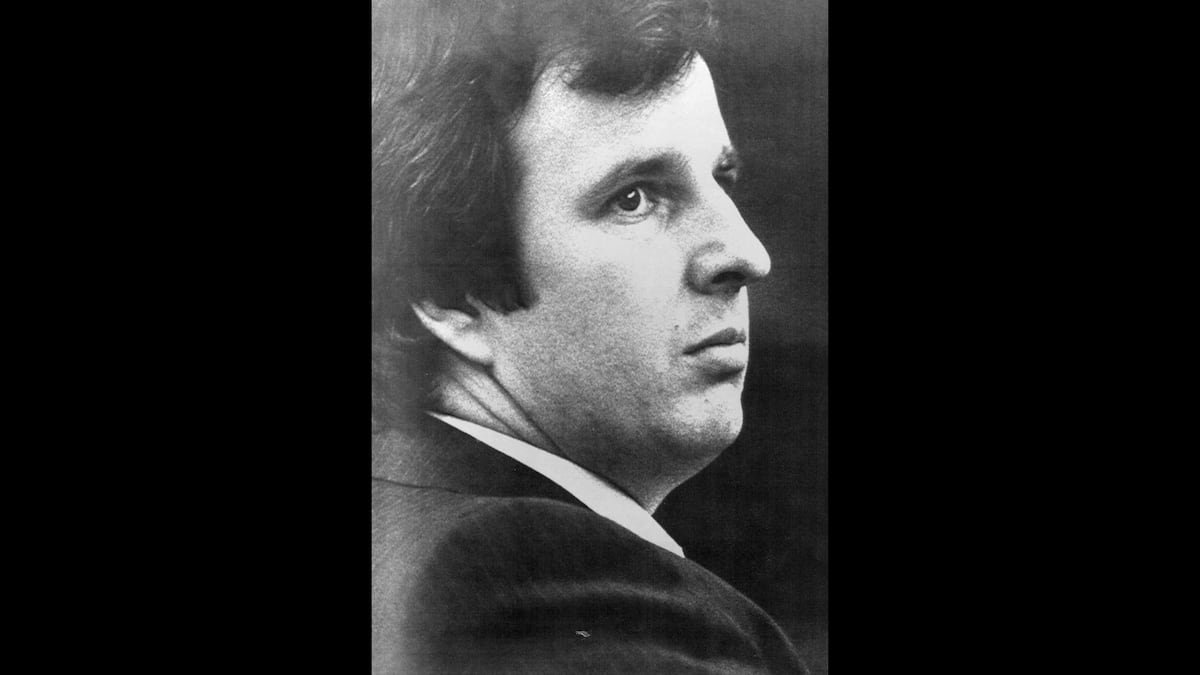
As James Duckett faces execution at the end of this month for the 1987 murder of an 11-year-old girl, his lawyers are confident that DNA testing will prove he is innocent.
On Friday, a week after Gov. Ron DeSantis signed Duckett’s death warrant, a judge granted a request from defense attorneys to compare Duckett’s DNA with biological material found on the victim’s clothing.
The testing, which Duckett first sought more than two decades ago, could upend the case against the ex-cop, whose conviction rested largely on circumstantial evidence.
Or it could remove all doubt about his guilt.
His defense team is banking on the former possibility.
“DNA testing has the potential to conclusively prove Mr. Duckett’s actual innocence and identify the true killer,” attorney Mary Elizabeth Wells wrote in a court paper.
Duckett’s death warrant came amid an unprecedented surge in executions.
Since last year, DeSantis has ordered more than 20 men to die — the most in any year since Florida reinstated the death penalty in the 1970s.
Those executed had been on death row for decades. Their last-minute appeals tended to focus on legal challenges to the way their trials were handled, their intellectual disabilities or the constitutionality of Florida’s lethal injection process.
Seldom have they claimed innocence in the face of an imminent execution. In that respect, Duckett is different. He has long maintained that he is not the person who raped and murdered 11-year-old Teresa McAbee.
The girl was last seen the night of May 11, 1987, outside a Circle K in the small town of Mascotte, west of Orlando. She’d walked there from her nearby home to buy a pencil to do her math homework.
Duckett, one of the town’s two police officers, was running radar on State Road 50 in search of speeders across from the store. He spotted McAbee talking to an older boy near a dumpster. He questioned the pair about being out past curfew, according to court records.
The boy left with his uncle while Duckett placed the girl in his patrol car. He would later say he told her she shouldn’t be out late before letting her go. People nearby said they saw Duckett drive off after McAbee walked away in the opposite direction, according to court records.
When the girl didn’t return home, her mother reported her missing. Duckett took the report and made a missing person flyer.
The next morning, a man fishing found the girl’s body floating face-down in a lake less than a mile south of the Circle K. She’d been raped, strangled and drowned.
Tire tracks near the scene were similar to the tread on Duckett’s police car. Investigators identified McAbee’s fingerprints on the car’s hood. The prints were described in court as being commingled with Duckett’s fingerprints and indicated the girl had been sitting on the hood and moving backward.
A hair found in McAbee’s underwear was deemed by an FBI analyst to be nearly identical to Duckett’s hair, though another analyst could not make a match.
Three women who testified at Duckett’s trial told similar stories about encounters they’d had with him while he was on duty in the months before the murder. All three claimed he’d made sexual advances after picking them up in town.
A jailhouse informant who surfaced months later said she’d been nearby the night of the murder and had seen Duckett confront McAbee. The informant testified that she saw Duckett drive off with the girl in his car.
A jury found him guilty. They voted 8-4 in favor of the death penalty.
In later years, cracks formed in the case against him.
The FBI hair analyst was discredited after he was found to have given erroneous and misleading testimony in other cases. A review of his testimony in Duckett’s case found inconsistencies in his notes and lab results.
The jailhouse informant recanted her story, according to records filed by Duckett’s defense, telling attorneys she’d lied under pressure from investigators.
Duckett’s claims of innocence in the early 2000s caught the eye of Marshall Frank, a retired Miami police detective turned author. His reexamination of the case was the subject of stories in 2003 by the renowned Miami Herald reporter Edna Buchanan.
Once convinced of Duckett’s innocence, Frank later changed his mind after meeting Duckett in prison. He said Duckett lied to him about key points in the case, according to reporting from the Herald. He also learned Duckett had been looked at as a suspect in an unsolved slaying of a 15-year-old girl in Polk County.
Duckett maintained his innocence. Fifteen years after his conviction, he asked a court for permission to conduct DNA testing.
A laboratory slide in storage at the Lake County Sheriff’s Office held biological samples taken from McAbee’s underwear. The slide, according to court records, likely held the killer’s DNA.
The use of DNA testing in criminal cases was in its infancy in 1987. Thus, it had not been attempted before Duckett’s trial.
A Florida Department of Law Enforcement analyst in 2003 said she was concerned DNA would be destroyed during an attempt to extract it from the slide. No testing of the slide was conducted.
The more than two decades since have seen vast improvements in the sophistication of DNA testing methods. Duckett’s defense argues that new efforts to examine the slide would yield a conclusive result.
“Every bit of evidence relied upon by the state to gain a conviction against Mr. Duckett has been rebutted in post-conviction (appeals),” Wells, his lead attorney, wrote in a court paper. “The DNA evidence would provide objective evidence that someone other than Mr. Duckett killed the victim.”
State prosecutors did not oppose Duckett’s request. But they said the law required testing be performed by the Florida Department of Law Enforcement.
Duckett’s defense wanted a private laboratory in Texas to do it. Florida’s state lab, they said, is incapable of performing the kind of advanced testing they need.
After a hearing Friday, Lake County Circuit Judge Brian Welke ordered that the DNA testing would proceed. The state lab would determine the appropriate testing procedures with the discretion to enlist the help of the Texas lab, according to the judge’s order.
Prosecutors said the state lab can conduct the testing within a week.
Duckett’s execution is set for March 31.