
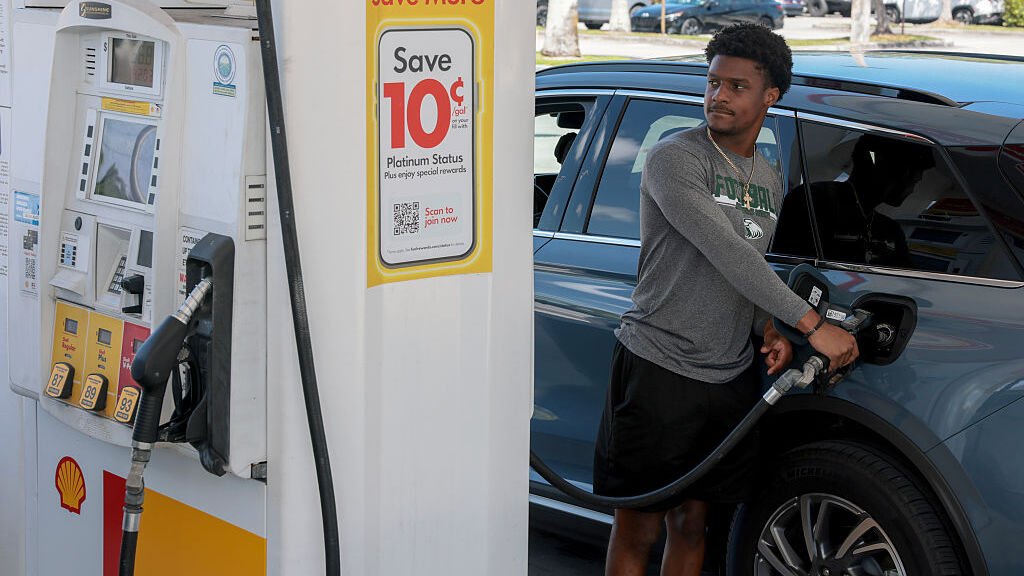
Gas prices are rising sharply across the country again, and the increase is hitting especially hard in a cluster of Midwestern states that backed Donald Trump in the 2024 election. The surge is closely tied to oil prices climbing to wartime highs amid ongoing geopolitical tensions — particularly, the conflict in Iran.
The average cost of gas in the U.S. is $1.12 higher than it was this time last year, and oil prices are continuing to catapult above $100/barrel (1) — with no signs of significantly slowing or reversing course for the long haul, according to AAA. (2)
Must Read
The five states most affected — Indiana, Michigan, Ohio, Wisconsin, and Iowa — have seen the fastest week-over-week increases in gasoline prices nationwide, AAA data suggests. (3) These states form a key political stronghold for Trump, making the economic impact of rising fuel costs especially significant, both financially and politically.
Conflict-induced costs are climbing, leaving people paying more at the pump
Nationally, gas prices have climbed above $4 per gallon, marking a significant increase since the conflict began in late February. Prices are the highest they’ve been since late July 2022, driven largely by disruptions to the Strait of Hormuz, a critical artery for global oil shipments.
The conflict has constrained crude oil supply and created a direct and immediate effect for consumers at the pump.
While Treasury Secretary Scott Bessent recently said that he’s “optimistic” that gas prices will drop back to the $3 range this summer, critics continue to warn that, even if the war comes to an end, it’ll take time for consumer costs to catch up.
Regional issues are exacerbating the problem
Analysts point to several compounding factors for high gas prices, beyond high oil prices. Gas stations are attempting to recover profits lost earlier in the conflict, while record-high U.S. petroleum exports are reducing domestic supply, according to the Wall Street Journal. (4)
Gasoline demand increased last week from 9.05 million b/d to 9.10 million, but total domestic gasoline supply decreased from 228.4 million barrels to 222.3 million alongside gasoline production, which decreased to about 9.8 million barrels per day, according to data from the Energy Information Administration (EIA). (5) Crude oil inventories also dropped by 6.2 million barrels from last week.



