
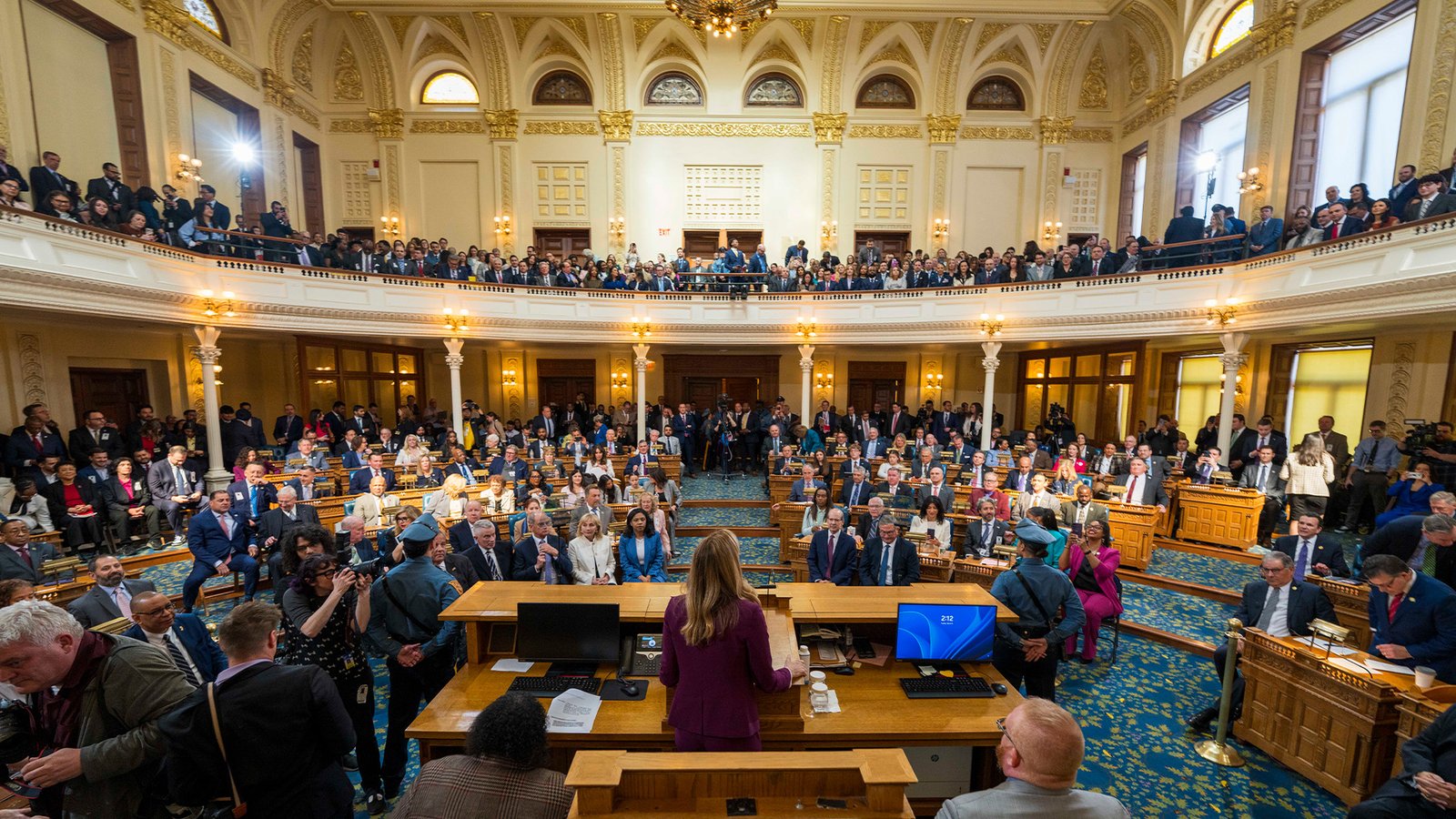
 Weeks before lawmakers must approve an annual state budget, Republicans are pitching cost-saving proposals and urging majority Democrats to take a look.
Among the GOP-backed ideas is a call to repurpose unspent balances from prior-year appropriations, which they estimate could free up hundreds of millions of dollars in revenue.
Some Republicans have also pledged to refrain this year from seeking any legislative additions to a $60.7 billion spending plan put forward by Gov. Mikie Sherrill, a first-term Democrat.
“Families across New Jersey are cutting back because they have to,” said Assembly Republican Leader John DiMaio (R-Warren). “Democrats in Trenton still refuse to do the same.”

At the same time, the minority party is suggesting that Sherrill should restore some of her own proposed cuts, including to groups that advocate for people with diabetes and others with Tourette Syndrome and associated conditions.In recent years, legislative additions, mostly authored by majority Democrats, have inflated the budget by hundreds of millions of dollars annually.
The last-minute spending has helped widen a structural budget gap by allowing annual appropriations to outpace growth in revenues.
This year, Sherrill, a former congresswoman who is a newcomer to state government, is raising concerns about overspending and a growing budget imbalance. The structural budget gap was projected to grow to $3 billion when she took office in January, according to administration estimates.
In response, Sherrill has proposed a series of budget reductions. These include eliminating numerous line items that lawmakers fought to include in the current fiscal year budget, which was signed into law by former Gov. Phil Murphy in June.
Cost of living
Sherrill, as part of her own budget plan, is urging lawmakers to reduce spending on a costly senior property tax relief program, including lowering eligibility requirements, and to revise business-tax policies to draw new revenue.
A final draft of the governor’s proposed budget shared with lawmakers last month would cut the structural gap nearly in half, if lawmakers were to approve it without making any changes.
Sherrill’s focus on narrowing the structural gap appears to have wide support from New Jersey voters at a time when their own affordability and cost-of-living concerns are running high.
Nearly six in 10 voters agree with the approach of narrowing the gap over time, instead of letting it erode budget reserves, according to a recent survey conducted by the Rutgers-Eagleton Poll.
Only 5% of the respondents said they want policymakers in Trenton to maintain spending and accept a budget deficit.
Meanwhile, 80% said they support ending the Legislature’s practice of adding new spending to the budget in the run-up to its approval in both houses.
Support for budget-process reform bridges the partisan divide, according to Ashley Koning, director of the Eagleton Center for Public Interest Polling.
“The one item where Republicans align with Democrats and independents is ending the practice of adding spending items at the last minute before a budget vote,” Koning said.
Eagleton polled 859 registered New Jersey voters from May 15-19. The poll has a margin of error of plus or minus 4.2 percentage points.Democrats hold 82 of 120 Senate and Assembly seats, or nearly 70%. NJ Spotlight News reported last month that more than 80% of the last-minute spending added by lawmakers to the budget last year went to districts represented by Democrats, often with little to no explanation or justification for each added line item.
Pork spending
Sherrill expressed a willingness to entertain changes to her own budget plan during an interview with NJ Spotlight News in March. She has also requested that lawmakers offset any proposed spending additions with cuts.
The recent budgeting overtures from Republican lawmakers come as the introduction of a fiscal year 2027 spending bill remains pending in the Legislature.
In a letter sent last week to the top Democrats in both houses, Republicans who serve on the Senate’s Budget and Appropriations Committee said a list of proposals they shared with Sherrill would save an estimated $1 billion or more if enacted.
Included is the call to repurpose unused balances from prior-year appropriations, including line items inserted at the request of individual lawmakers that Republicans have derisively labeled pork spending.
The GOP savings plan calls for working closely with public employee unions to reduce soaring worker health care costs, and for ending costly abuses of post-employment pension and health care benefits.
“We believe the proposals we shared with the Governor are common-sense measures that would receive broad support from most people in New Jersey.” — GOP lawmakers
Investing the state’s short-term cash reserves in short-term, interest-generating notes issued by New Jersey municipalities would benefit both the state and local governments, according to the letter, which was signed by Sens. Declan O’Scanlon (R-Monmouth), Michael Testa (R-Cumberland), Doug Steinhardt (R-Warren) and Carmen Amato (R-Ocean).
“We believe the proposals we shared with the Governor are common-sense measures that would receive broad support from most people in New Jersey,” the GOP lawmakers wrote.
The letter from the Senate Republicans also calls for the restoration of some spending that Sherrill omitted from her budget, including modest amounts of state grant funding that has been awarded in the past to “critical nonprofit service providers.”
Some examples include the NJ Center for Tourette Syndrome &Associated Disorders, which stands to lose $445,000 under Sherrill’s proposed budget, and the Diabetes Foundation, which would lose $100,000.
“Just because most of this funding was added by the Legislature does not mean the grants are the same as unjustified pork,” the GOP lawmakers wrote.
This story is made possible in part by the Corporation for Public Broadcasting, a private corporation funded by the American people.



