
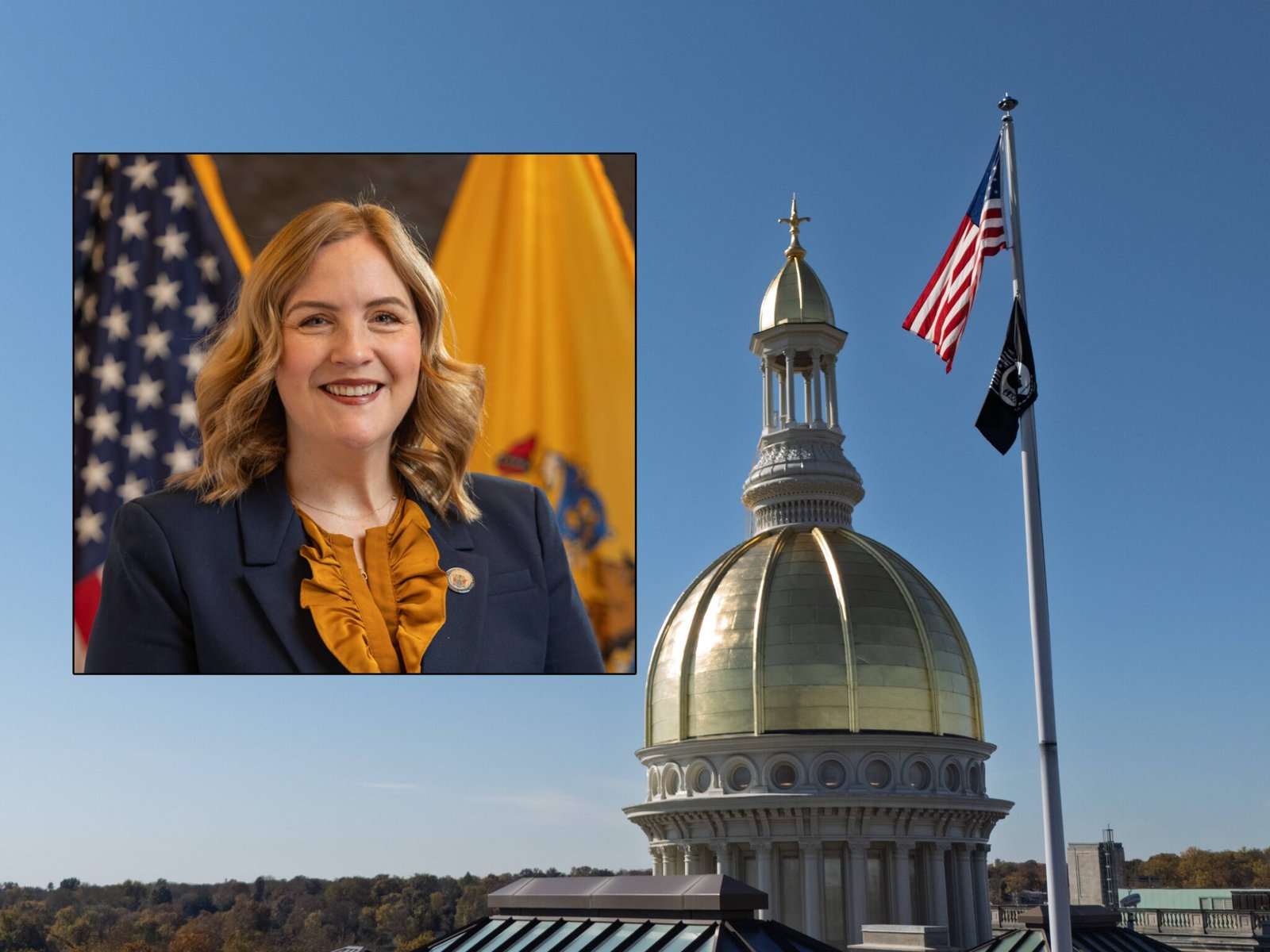
The Senate Judiciary Committee unanimously advanced the nomination of Lily Laux to be the state’s next education commissioner Thursday after Laux fielded questions on school funding, the state’s teacher shortage, and school consolidation.
The former Texas Education Agency deputy commissioner sailed through the roughly 90-minute hearing and could be confirmed by the full Senate as early as Monday.
“Our job is to support schools, not burden them. We must give districts what they need and remove what slows them down, and we have to see that resources are producing results, and when they don’t, we need to adjust,” she told the Senate Judiciary Committee.
In digital-first era, NJ librarians demand more affordable e-books
Laux indicated support for mandatory school consolidation — something Gov. Mikie Sherrill (D) backed on the campaign trail — but said shared service agreements could be a better solution for some school boards.
Sen. Vin Gopal (D-Monmouth), the education chairman, has sought to require certain small school districts with falling enrollments to merge in a bid to reduce education costs. Schools are the primary driver of property taxes in New Jersey. Last year, school taxes accounted for 52% of property taxes statewide.
Consolidation could help students as well as district coffers, Laux said, because combining districts could allow schools to offer new courses or expand extracurricular offerings without boosting expenses.
“When you are a student attending a small school district — I myself attended a smaller school district — you have limited opportunities,” she told the panel. “As we said, we don’t want a student’s choices to be constrained by their geography, so I think for us this conversation is one where, again, we put opportunity and affordability together.”
Laux suggested improvements to teachers’ work-life balance could help end the state’s teacher shortage.
The state’s workforce of educators has slimmed as fewer enter the field and more depart it early.
Reducing the time teachers spend grading papers or preparing coursework on their own time could help keep some in the field, Laux said.
“I experienced this as a middle school teacher, when you are in person all day with kids, that is a very demanding job. And if you have to go home and grade papers and then also write lessons, your working conditions and work-life balance are very challenging,” Laux told the judiciary panel.
Politics that have occasionally made teachers targets — like a fracas over sex education in 2022 — were unhelpful to keeping schools staffed, Laux said. She declined to say whether New Jersey should allow students to opt in to sex education courses rather than allowing them to opt out, saying those decisions are best left to lawmakers and the State Board of Education.
Laux, who oversaw changes to Texas’s school finance system, declined to give details on how New Jersey’s own system for funding its K-12 schools may change under Sherrill, though she said major changes would not come in the fiscal year that begins July 1.
“We’re not going to be able to do long-term structural fixes in this budget cycle, but we need to start those conversations,” she said.
She likewise declined to guarantee that districts would be kept whole in Sherrill’s first budget proposal, saying she could make no promises before Sherrill presents it to the Legislature. The governor is set to deliver her budget address soon.
New Jersey’s school funding formula has increasingly become an area of focus for lawmakers, some of whom say state aid is distributed unequally. They argue that the phase-out of transitional state aid to districts left some with deficits spanning millions of dollars after years of successive cuts.
Others have argued that the funding formula does not accurately reflect the cost of student transportation and extraordinary special education.
GET THE MORNING HEADLINES.



