
 WASHINGTON — The deepest federal spending cuts to national health and anti-hunger programs, delivered via a bill Republicans pushed a year ago, will arrive after Election Day in November. Early data, though, show Americans’ access to such help is slipping before the law is fully implemented.
Enrollment in Medicaid, the health insurance system for low-income and disabled residents, dropped by about 28,000 in New Jersey from January-October 2025, or 1.7%, according to the Center for Children & Families, a nonpartisan research center at Georgetown University. National Medicaid enrollment fell 2.9% percent in the same period, according to the center.
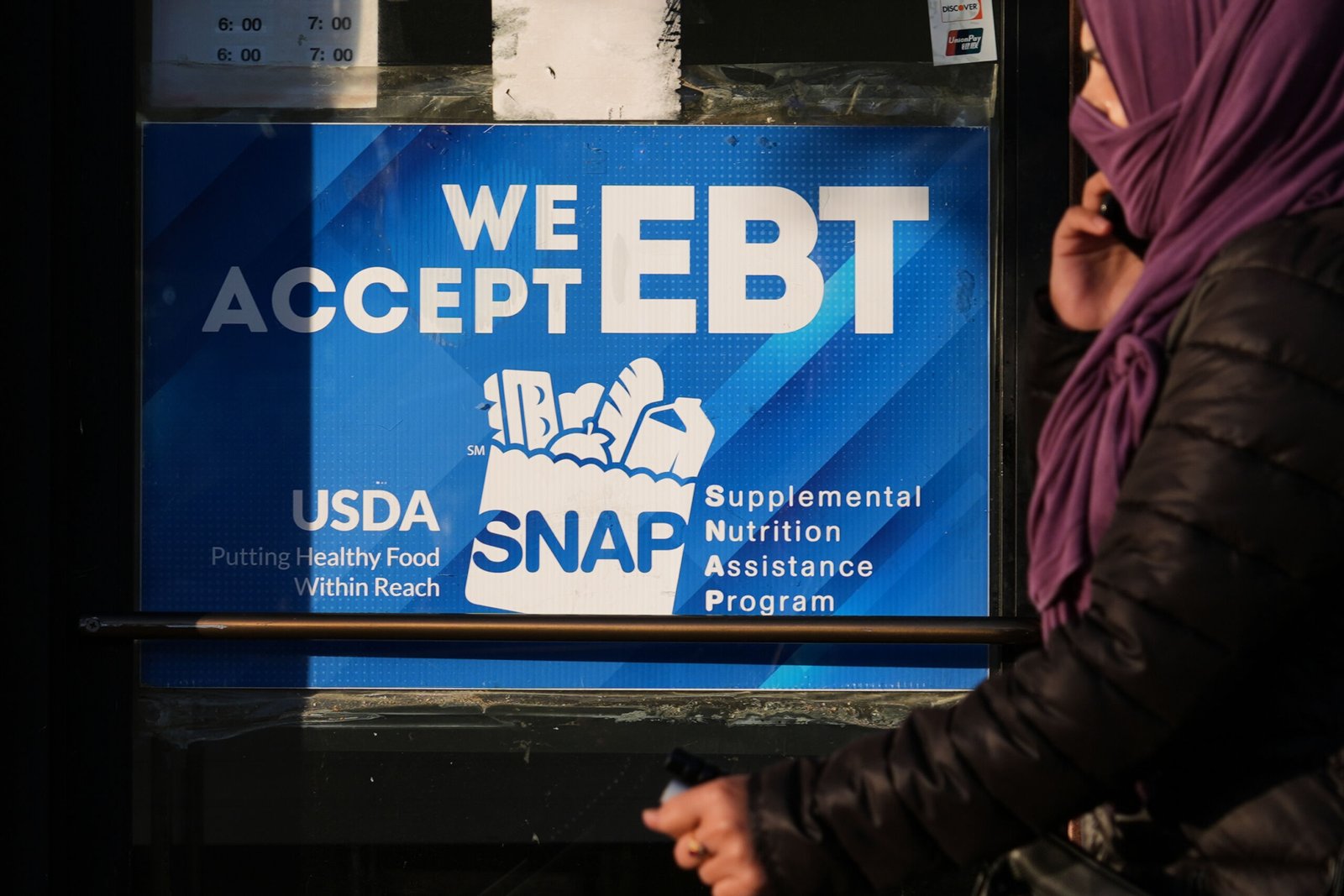
Between July 2025 and March 2026, enrollment in New Jersey for the Supplemental Nutrition Assistance Program, formerly called food stamps, fell about 5%, to 776,000 from roughly 817,000, according to the Center on Budget and Policy Priorities. And 68,830 fewer New Jerseyans were enrolled in the state’s health insurance market, according to state officials, after Congress chose not to extend tax credits for that system, created under a 2010 health law commonly called Obamacare.

Though New Jersey enrollment losses have been modest compared with other states — some have dipped 10% and more — they are likely to accelerate next year once the most restrictive changes take hold.
The two deepest cuts of the law — the legislative centerpiece for Republicans this Congress and for the Trump administration — are roughly $1 trillion to Medicaid and about $285 billion to SNAP. Those spending cuts may cost New Jersey hundreds of millions of dollars annually.
Separate from the health and food reductions, tax changes that Congress wrote in the legislation could cost New Jersey about $500 million in lost revenue, according to Aaron Binder, the state treasurer. “This isn’t a direct federal cut, but it’s an impact of the federal legislation,” Binder told lawmakers in April.
‘Anti-immigrant agenda’
Rep. Bonnie Watson Coleman (D-12th) said Republicans scheduled the cuts “right after the midterm elections so that they can try to hold on to power.”
The three Republicans who represent New Jersey in Congress, Reps. Jeff Van Drew (R-2nd), Chris Smith (R-4th) and Tom Kean Jr. (R-7th), have stood by their votes for the law.
“Women, small children, disabled persons — they will not lose anything,” Smith said in a recent interview with NJ Spotlight News. “I’m confident, but I think the delay gives us further time to make sure that’s the case.”
Overall, Congress shifted an estimated $100 million in costs to New Jersey through the federal law and its requirements, according to budget documents from the administration of Gov. Mikie Sherrill, a Democrat.
Rushed implementation, federal penalties and an anti-immigrant agenda from Washington could explain why enrollment is falling before the cuts officially arrive, experts said.
The anti-immigrant agenda of the Trump Administration (including an unprecedented sharing of Medicaid data with ICE) is creating a ‘chilling effect’ whereby the parents of citizen children are fearful to enroll their clearly eligible children because of possible negative consequences for other family members such as deportation,” Joan Alker of the Center for Children & Families said last month.
Alker, the center’s executive director, identified another explanation: “More red tape and less outreach assistance to help families overcome administrative barriers,” she wrote, adding that some families may assume Medicaid cuts are already in place. “Families hear about Medicaid cuts and work reporting requirements and may not renew coverage as they assume they are already in effect.”
New work rules for SNAP enrollees went into place in December 2025, a change expected to knock people off the system, including military veterans, young people just out of foster care, refugees and the homeless.
Though cuts to Medicaid and SNAP are separate from the funding fight over coverage through the 2010 health law, Democrats have seized on both for political footing.
“Across the board, we are seeing costs skyrocket for New Jersey families as a direct result of the federal government’s mismanagement,” Sherrill said in April, announcing the loss of 68,830 enrollees in the state-run health insurance marketplace. “While New Jersey is committed to addressing health care costs, Washington has chosen to drive up health insurance prices, resulting in more New Jerseyans’ losing coverage.”
People who get their coverage through the 2010 health law are in line for another increase of at least 10% in premium payments, according to a survey by KFF, a nonprofit health policy research, polling and news organization, completed last week.
The 2027 median premium increase proposed by insurers is 14%, according to KFF, which surveyed companies that submitted plans to 16 states and Washington, D.C.



