
The basics:
- 137,000-square-foot Melchiorre Cancer Center opening in Livingston
- Consolidates oncology, imaging, infusion and support services
- Features MRI-guided radiation technology, advanced imaging
- Designed around patient comfort, wellness and coordinated care
Ahead of its June 22 ribbon-cutting ceremony, NJBIZ got an early look inside the new Melchiorre Cancer Center at Cooperman Barnabas Medical Center in Livingston. The tour explored the five-story facility, including hearing from leaders about how the center was designed to transform the cancer care experience for patients and families.
The approximately 137,000-square-foot center will serve as the northern destination for the integrated services offered by RWJBarnabas Health and Rutgers Cancer Institute of New Jersey across a growing statewide oncology network. The new location brings together medical oncology, radiation oncology, imaging, infusion therapy, laboratory services and supportive care programs under one roof.
The first-hand look follows an April briefing during which RWJBarnabas Health, Cooperman Barnabas Medical Center and RCI leaders outlined the vision for the Melchiorre Cancer Center.
A growing oncology network
Named in recognition of a $30 million gift from philanthropists Andrea and Anthony Melchiorre, the center represents a major investment in expanding access to advanced cancer care in New Jersey.
It joins the recently opened Jack & Sheryl Morris Cancer Center in New Brunswick, which NJBIZ has reported extensively on, and the forthcoming Specialty & Cancer Care Center at the Vogel Medical Campus in Tinton Falls, scheduled to open in early 2027, as a key component of RWJBarnabas Health’s growing statewide oncology services. Together, the facilities intend to bring advanced cancer treatment, clinical research and specialized services closer to patients throughout the state.
While the Livingston facility features leading technology and expanded clinical capacity, one theme surfaced repeatedly throughout the tour: patient experience.
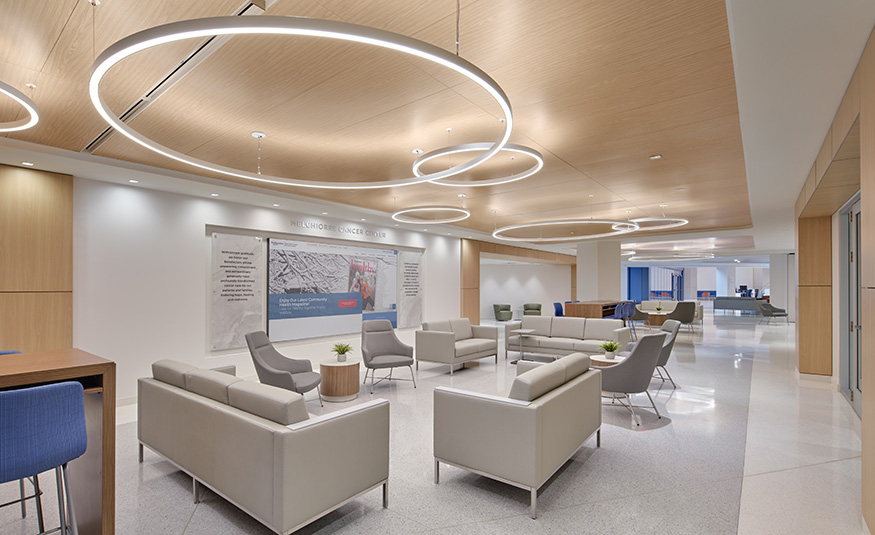
Beyond its clinical capabilities, the center is intentionally designed to feel less institutional than a traditional hospital.
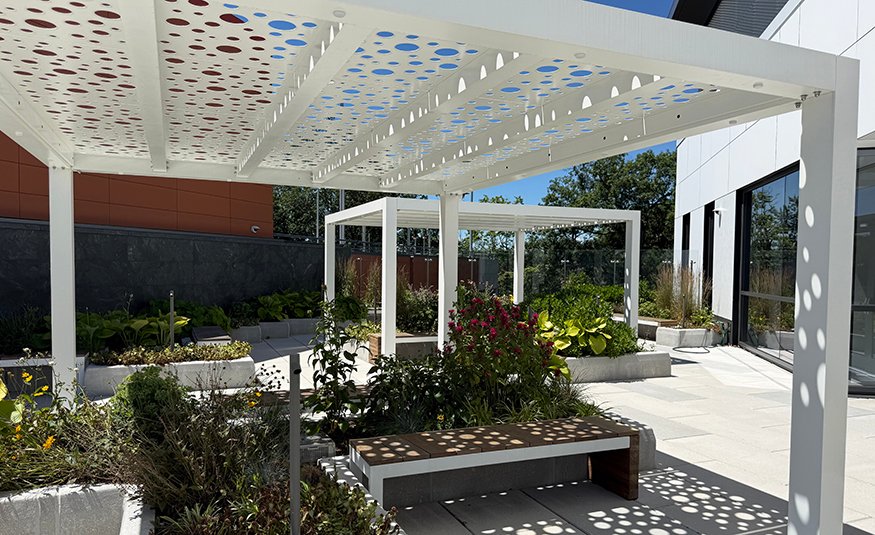
Soft colors, natural light and views of the surrounding landscape help create a more welcoming environment. Meanwhile, a café, lounge areas, patient resources and a rooftop terrace offer comfortable spaces for those receiving treatment and visitors. The amenities also provide families and caregivers with places to gather and recharge while loved ones receive care.
From the moment patients arrive, the building seeks to reduce friction and make what can often be an overwhelming journey feel more manageable. The facility integrates free valet and garage parking, centralized registration, dedicated patient greeting areas, laboratory services, imaging, physician offices, infusion therapy, radiation oncology and on-site pharmacy services.
Putting patients first
“We try to make things as easy as possible here,” Robert Weitzman, vice president of operations – ambulatory care, RWJBarnabas Health, told NJBIZ during the tour. “… Everything is patient centric. Patients don’t ambulate well sometimes when they have this kind of diagnosis.”
That patient-first philosophy extends throughout the building. The center includes:
- 52 exam rooms
- 40 private infusion rooms
- Seven short-stay treatment spaces
- Six extended-stay treatment spaces
Waiting areas are organized to improve privacy and reduce unnecessary walking, while clinical teams are positioned closer to the patients they serve.
Denise Kubek, administrative director of clinical operations for the cancer center – who was also on the tour, developed the facility workflow plan. Weitzman explained its intentional design around patient movement.
We try to make things as easy as possible here.
—Robert Weitzman, RWJBarnabasHealth
“What she’s done is develop a plan where we’re segmenting by disease type and pulling patients so their A-to-B is as short as possible,” said Weitzman.
The approach is intended to improve efficiency while also making visits easier for patients who may be also dealing with fatigue, mobility challenges or the physical effects of treatment.
Building buzz
Kubek said the building design supports different patient needs throughout the course of a visit.
“The patients will see their physician, and if they don’t require infusion therapy at that point, they’ll hopefully go home,” Kubek told NJBIZ. “But then the rest of the patients will come upstairs to the third floor, check in here, and then they’ll come back for their infusion treatment.”
Throughout the tour, leaders highlighted how lessons learned from existing oncology facilities influenced the latest design. The expanded footprint provides additional space not only for patients but also for physicians, nurses and support staff.

“The fact that I don’t have staff tripping over each other is a miracle,” said Kubek, describing the limitations of the current space and the opportunities the new facility provides. “We see the number of patients I just mentioned [approximately 225 on any given day] in 17 exam rooms – so to expand to over 40 – they’re very excited about it.”
The building also reflects a broader shift in how cancer centers approach care.
Beyond traditional treatment spaces, the Melchiorre Cancer Center includes a variety of wellness-focused amenities and supportive services designed to address the emotional and practical challenges that often accompany a cancer diagnosis. Among those features are a teaching kitchen focused on nutrition education, an art therapy studio, salon services, wig and prosthetic fitting areas, family education rooms, and dedicated spaces for holistic therapies and support programs.
“Art therapy is a big part of the healing and designed for that holistic care,” said Weitzman.
Creating space
The emphasis on wellness is visible throughout the facility. Large windows bring natural light into patient care areas, highlighting views of trees and landscaped spaces that were intentionally incorporated into the design.
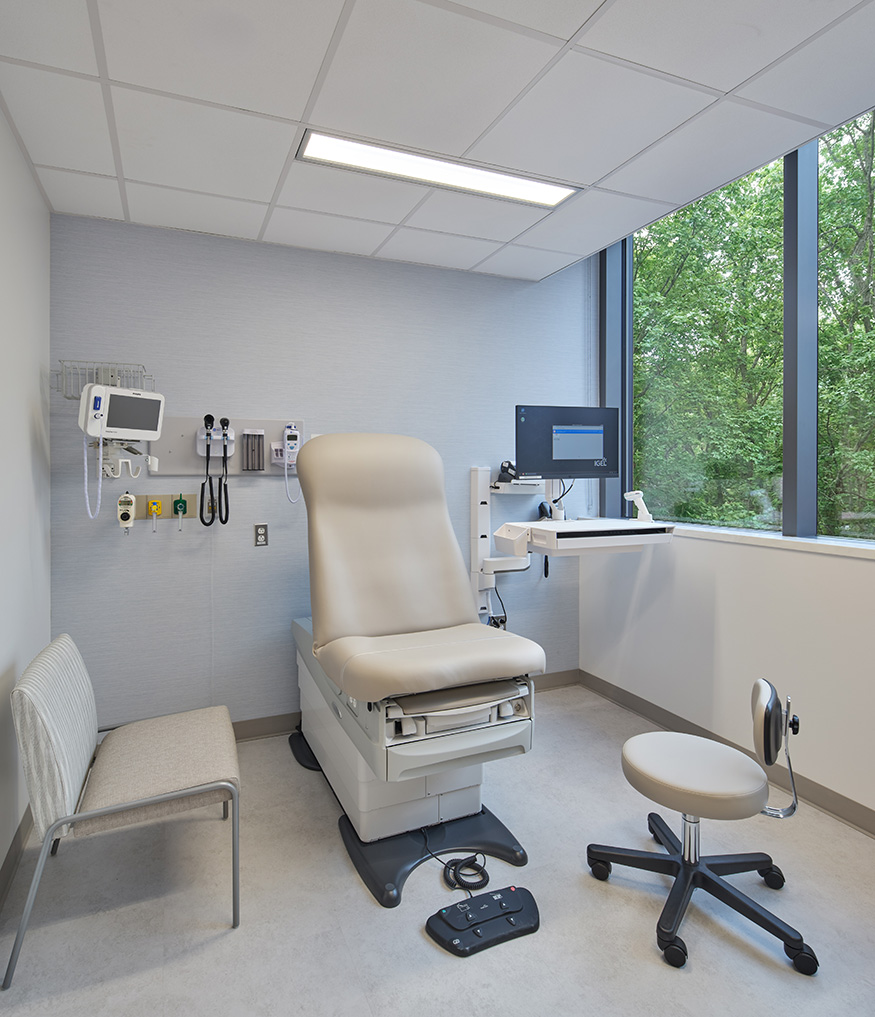
Leaders said the goal was to create an environment that feels less like a traditional medical facility and more like a place of healing.
One of the most distinctive features is a rooftop terrace overlooking the surrounding campus. During the tour, executives described the space as an area where patients, caregivers and staff can step away from treatment environments and find a moment of respite.
“Oncology can be confining, and I think in our space now we have that challenge,” said Weitzman. “Coming into here with the staff that we have and this space, it’s going to be game changing.”
The center’s aforementioned third-floor infusion suite reflects many of the same design principles. The area includes 40 private infusion spaces, with 32 treatment chairs and eight beds, as well as dedicated short-stay treatment areas for patients receiving injections and other brief therapies.
Kubek said the layout sought to improve both patient comfort and caregiver visibility.
“The nurses will cover two of these pod sections, will be three in a team, but it’s nicely designed where the nurses can sit directly in with the patients and be visible to the patients at all times,” she said.
Technology-backed treatment
Technology remains a cornerstone of the center’s clinical mission.
The facility includes a comprehensive imaging suite featuring PET-CT, MRI, ultrasound and X-ray capabilities. The Melchiorre center allows patients to receive diagnostic and monitoring services in the same location as their oncology care.
The radiation oncology department also houses one of New Jersey’s few MRI-guided linear accelerators. The technology allows clinicians to visualize tumors during treatment and adapt radiation plans in real time.
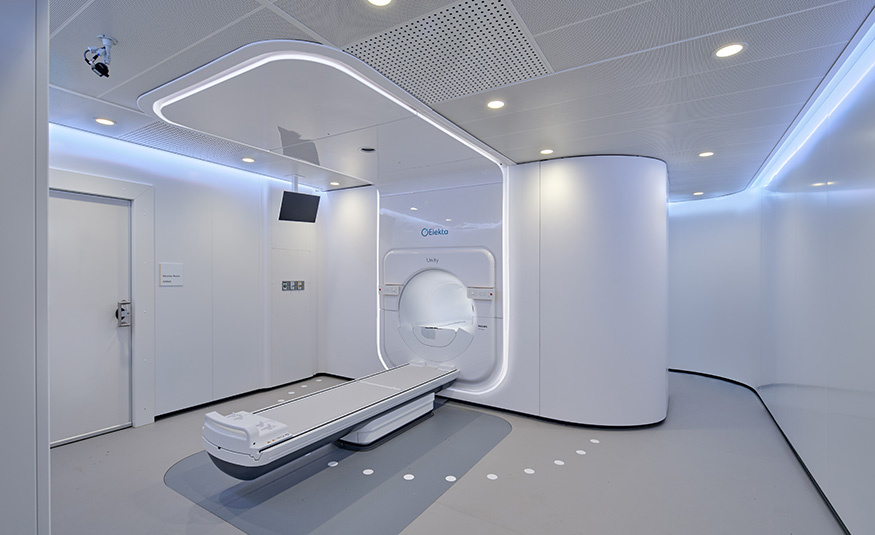
Leaders explained that integrating imaging, laboratory services, physician visits and treatment into a single facility can reduce delays and improve coordination among care teams.
Behind the scenes, technology is also helping to improve operations, such as scheduling and infusion chair utilization designed to reduce patient wait times.
Soft launch
The center has already begun a phased opening, with radiation oncology services seeing patients ahead of the formal launch. According to Weitzman, the initial response has been overwhelmingly positive. He noted how hospital leaders are obsessive about patient comments and feedback.
And at Melchiorre, “The patient responses have been overwhelmingly positive,” he said. “They love the space.”
Staff feedback has also been encouraging. Nurses and clinicians preparing to work in the facility have expressed excitement about the expanded treatment areas, private infusion suites and upgraded technology.
As the June 22 ribbon cutting approaches, the Melchiorre Cancer Center represents the latest milestone in RWJBarnabas Health’s statewide oncology expansion. For patients walking through its doors, leaders say the goal extends beyond treatment alone.
Through a combination of advanced technology, coordinated services and thoughtfully designed spaces, the center aims to provide a more comfortable, seamless and supportive experience throughout every stage of the cancer journey.
The post Inside the new Melchiorre Cancer Center in Livingston (photos) appeared first on NJBIZ.



