
Stay informed with free updates
Simply sign up to the Currencies myFT Digest — delivered directly to your inbox.
Investors have piled into Hungarian assets, betting that the downfall of former prime minister Viktor Orbán has opened a path to closer relations with the EU that could boost the economy and reduce borrowing.
The Budapest stock market is up nearly 15 per cent this month while the forint has gained 3.6 per cent against the euro and the country’s borrowing costs have plunged more than 1.2 percentage points. About half the gains came before last weekend’s election, as polls indicated a comfortable win for opposition leader Péter Magyar.
But the size of Magyar’s landslide victory has given him a supermajority, allowing him to change all laws, including the constitution.
The “return of credible policymaking” and closer relations with the EU could save Hungary’s credit rating from a downgrade from investment grade to junk, said Viktor Szabo, investment director at Aberdeen, which bought Hungarian debt before the election.
Investors are now focusing on how Magyar’s Tisza Party plans to meet an ambitious goal of joining the euro by the early 2030s.
Hungary’s economy is well short of the criteria for membership and, when he takes office next month, Magyar will also have the tough task of dismantling Orban’s self-styled “illiberal democracy” and unblocking billions of euros in frozen EU funds.
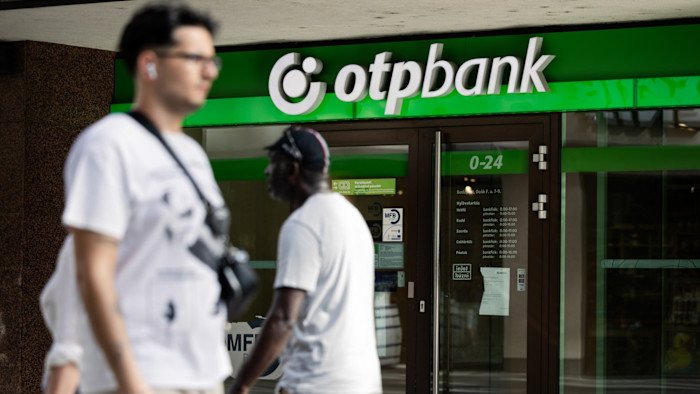
So far, investors are backing him to succeed. Bellwether stock OTP Bank has risen 8 per cent since the election, bringing its gains this month to 26 per cent. The stock has almost doubled in price over the past year as investors have put bets on a change in government.
The rally across Hungarian assets reflected “a general positivity trade on what this means for Hungary, as being structural change, a pro-EU stance and a potential to access a large amount of the EU funds”, said Roger Mark, analyst at fund firm Ninety One.
Investors hope that post-Orbán Hungary will close an economic gap with countries such as Poland and make progress on fiscal reforms needed to join the euro that would be beneficial even if the country ends up keeping the forint.
This week, yields on Hungarian debt narrowed to a little more than 0.5 percentage points above Poland’s bonds, compared with almost 2 percentage points at the end of last year. Warsaw has cooled on joining the euro and it runs a larger fiscal deficit than Budapest.
“If this convergence happens, Hungarian bonds will eventually trade inside Poland’s,” Mark said.
Citi economists Piotr Kalisz and Arkadiusz Trzciolek said “the biggest upside” for Hungarian assets lay not in euro adoption itself, but in the process of preparing for it.
“The measures that are required to meet the convergence criteria are exactly the same measures that the Hungarian economy might benefit from,” they said.

To join the euro, Hungary would need to keep inflation no more than 1.5 percentage points above the average of the three EU economies with the lowest rate. Interest rates would have to be no more than 2 percentage points above those countries’ average.
Hungary’s central bank currently targets 3 per cent inflation, compared with the European Central Bank’s 2 per cent target. Inflation fell below 2 per cent in March, although investors are cautious over how the war in Iran’s fallout on energy prices will affect Hungary’s import-dependent economy.
The new administration will also need to put government debt on a downward path towards the Maastricht target of less than 60 per cent of GDP, from about 75 per cent last year. It would also need to bring its budget deficit below 3 per cent of GDP, from 4.7 per cent last year.
Volatility in the forint would be the last hurdle, as the central bank would have to keep the currency within a “waiting room” trading band against the euro for at least two years before accession.
“I would imagine that [Tisza] will try and go quickly on the fiscal consolidation effort — they have a large mandate and it makes sense to frontload the pain,” Mark said, although he added it would be a challenge to reduce high social spending under Fidesz.
Pro-euro reforms would be under less pressure with the release of frozen EU funds. Hungary could soon have access to €16bn of EU defence loans but has an August deadline to unlock nearly €10bn in separate grants and loans or risk losing them. Almost €10bn in “cohesion” funds — support for member states that are poorer than the EU average — is also in limbo.
Investors estimate Hungary could unlock about €12bn all told in the next year if it can demonstrate progress on milestones to reinstate the rule of law, such as an anti-corruption legal framework and restoring independence to the judiciary and academia. But they acknowledge that Magyar has a political battle ahead with the entrenched patronage networks left by Fidesz.
This week, Magyar declared President Tamás Sulyok, an Orbán ally, “morally unsuited” to remain as head of state and called for other key Fidesz-appointed officials to step down.
“People are very happy, there’s a good mood out there, but it’s a good question” how reform of the state would be tackled, said Nafez Zouk, portfolio manager at Aviva Investors. “If anything, something tells me the reason Orbán conceded [electoral defeat] so quickly is that he might assess that he can be more damaging in opposition than not.”
Additional reporting by Marton Dunai in Budapest



