
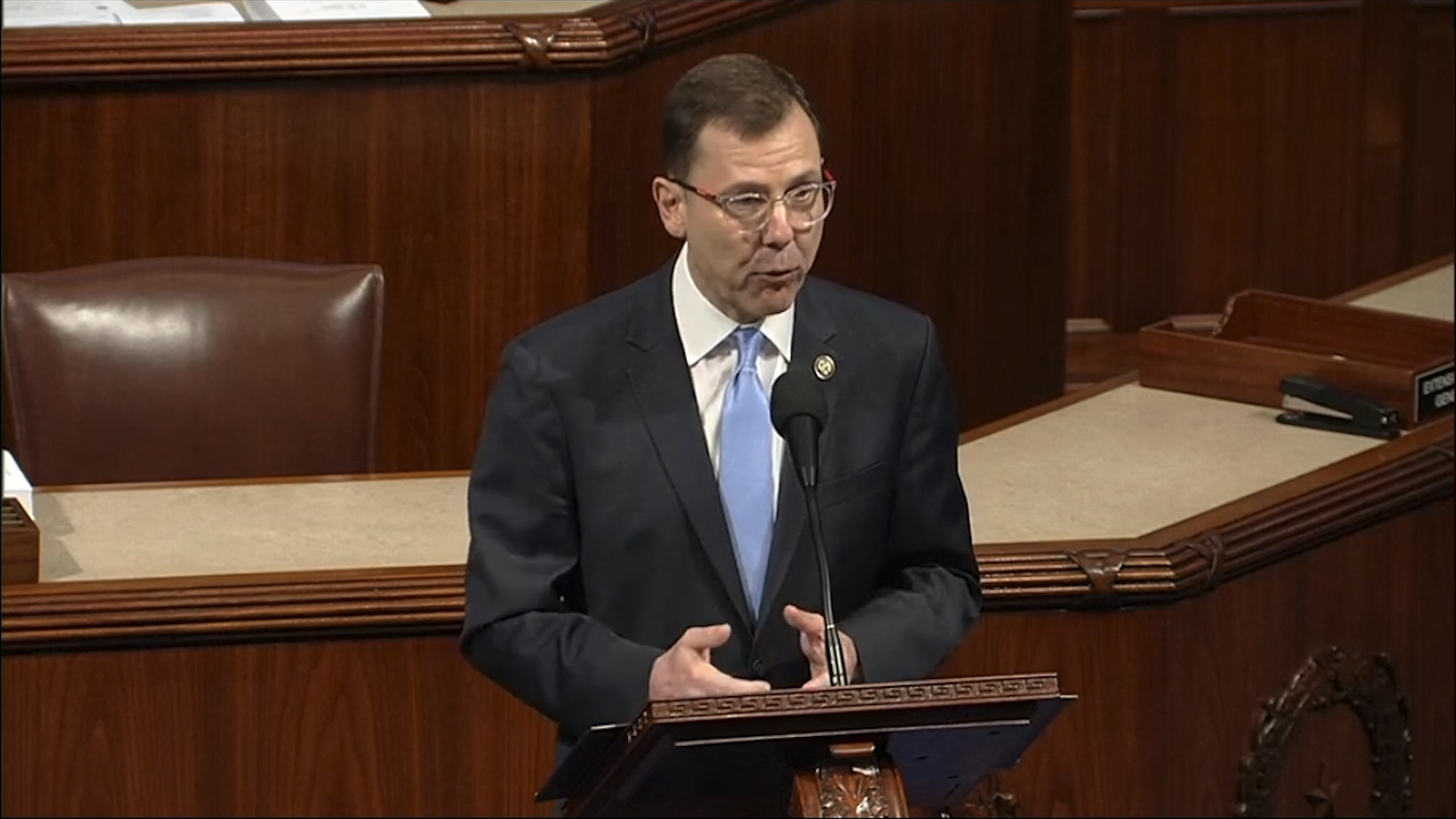
 WASHINGTON — New Jersey congressman Tom Kean Jr., whose mysterious months-long absence from Congress became fodder for gossip and political rumor, was diagnosed with depression in the spring, he said in a floor speech marking his return on Tuesday morning.
He received the diagnosis when he went to receive medical treatment, he said.
“I was given the diagnosis of depression,” Kean said from the floor. “It is physical, it is emotional, and until you experience it yourself, it is difficult to fully understand how powerful this illness can be.”

Kean did not say what hospital treated him or what prompted him to seek treatment in the first place. “I am grateful to be back with the full support of my doctors,” he said.
Almost one in five Americans in the first quarter of 2026 reported they were undergoing depression treatment or had in the past, according to an April Gallup poll.
The congressman kept the nature of his condition quiet for four months, a period when he was absent for highly scrutinized votes on war, foreign policies and a spending bill to provide $70 billion for federal immigration agents.
Kean, 57, faces one of the most difficult reelection campaigns in the country — the November midterms that pit him against a former military helicopter pilot who has proven to be a competitive fundraiser.
The congressman’s absence highlighted the void of medical incapacitation of government officials — the reality that without the death, removal or resignation of a lawmaker, they cannot be removed from office until election.
‘Lack of transparency’
Kean slipped into the Capitol on Tuesday morning, later entering the chamber through the Carriage Entrance, an archway so named for the horse-drawn carts that once shuttled members to and from the building.
During the “morning hour” of speeches, a typically placid period in the House when members deliver speeches about picayune issues in their district, like state sports wins and agriculture subsidies, dozens of reporters waited in the chamber press gallery for the congressman to explain why he vanished.
Kean sat below, legs crossed, tucked out of reporters’ view as he reviewed a binder containing his speech.
In his remarks, Kean did not apologize for withholding health information from the public. He thanked his staff, family and constituents for their support.
When former Defense Secretary Lloyd Austin was hospitalized for several days in early January 2024 after a cancer diagnosis, Kean told Austin that he was “gravely concerned about the lack of transparency” from the Pentagon about the secretary’s medical condition. In a breach of protocol, Pentagon staff did not immediately disclose Austin’s medical status.
In a Jan. 11, 2024, letter to Austin, Kean and others provided a list of questions for the defense secretary. “It is vital Congress and the American people fully know what transpired during this unfortunate event so it is never repeated,” they wrote.
After his remarks on Tuesday, Kean left the House chamber, avoiding dozens of reporters who had jockeyed to buttonhole the man whose vacancy had intrigued Washington for months. An aide drove him away moments later.
Medical incapacitation dots U.S. political history. At least three sitting senators — John Fetterman of Pennsylvania, Chris Van Hollen of Maryland and Ben Ray Luján of New Mexico— have experienced strokes while in office. Each publicly shared information about their conditions sooner than Kean did his.
Fetterman has been open about his struggle with depression, which deepened after a 2022 stroke.
Kean said he was “hesitant” to remain hospitalized given his work. He said, though, “The doctors recommended that I remain in the hospital to address my illness.”



