
Mother Jones illustration; Andrej Sokolow/dpa/Zuma, Starmax/Newscom/Zuma
Long before today’s tech giants forced their way into co-chairing the Met Gala, Google co-founder Sergey Brin positioned himself in the front row of Diane Von Furstenberg’s 2013 spring show, sporting an early prototype of what would be known as Google Glass. Von Furstenberg herself donned a pair of the wearable smartglasses as she directed models, some also wearing Google Glass, down the runway. It seemed like a promising partnership between a powerful tech company and the woman who popularized the iconic wrap dress.
Yet despite the celebrity-packed promotions, generous Vogue spreads, and proclamations of one of the “Best Inventions of the Year,” Google Glass infamously flopped. It turns out there wasn’t much clamoring for clunky lenses that did little more than take photos and send alerts of incoming text messages. Which is to say nothing about the intense privacy concerns the technology appeared to present.
In pushing AI technology, the Meta-Jenner partnership reads like a poor misreading of our cultural moment, as well as a willful disregard of just how badly Google Glass pissed off people a decade prior.
It was around this time that the public was introduced to King Kylie, the internet persona fans bestowed upon the youngest of the Kardashian-Jenner machine as a testament to her cultural clout. In fact, Kylie Jenner was seemingly everywhere in the mid-2010’s, with a social media dominance that in 2018 commanded $1 million per sponsored Instagram post and an immensely popular cosmetics line.
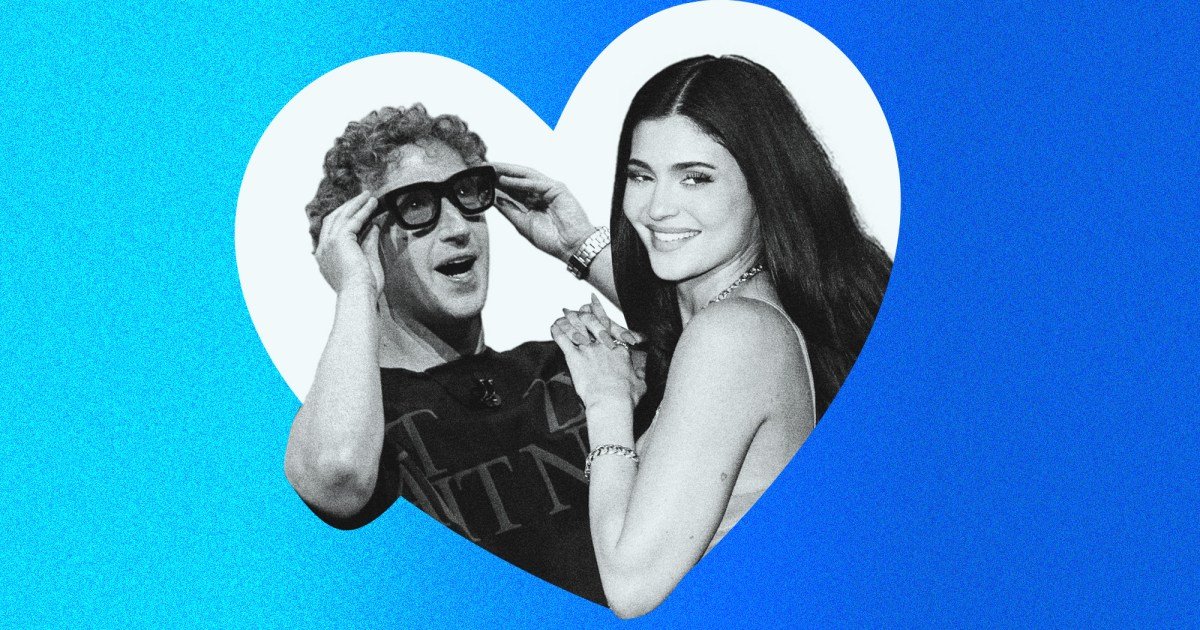
So it makes sense, in a way, that Meta, which owns Instagram, is now turning to a veteran of the platform to sell its new line of AI glasses. “Cutest night with @metaglasses! My meta glasses are out now,” Jenner posted in a carousel from a party in New York, where she celebrated this week with Mark Zuckerberg. One can only imagine the regret felt by Snapchat, which Jenner also gamely used to fuel her rise and is now in the AI glasses business, upon seeing Jenner palling around with Zuck.

But outside Meta’s monied party on Tuesday, the reception has been scornful. “Meta glasses are cybertrucks for the face,” read a comment that has since gone viral. In fact, much of the negative feedback felt ripped straight from the criticism once aimed at Google Glass: “Mass surveillance predator glasses yesssss,” one user wrote on Jenner’s Instagram. “Legit people are putting others in danger with this technology.”
To be sure, Meta Glasses appear to avoid some of Google Glass’s pitfalls. For one, Meta’s glasses, designed in partnership with Ray-Ban parent company EssilorLuxottica, are more aesthetically pleasing than their Google forebearer. They’re also significantly cheaper, starting at $299. (Jenner’s limited Starfire edition is slightly more at $399.)
But in pushing AI technology, the Meta-Jenner partnership reads like a poor misreading of our cultural moment, as well as a willful disregard of just how badly Google Glass pissed off people a decade prior. After all, is there a bigger unifying force than our current animosity for AI? Just look at all the college graduates, perennially the demographic of cool in any given era, roasting AI en masse. When they’re forced to use it, Gen Z absolutely loathes it.
But the hostility runs far deeper than young people. People on both sides of the aisle are actively rejecting the data centers popping up in their backyards; we have near-universal agreement that the aesthetics of AI suck; and there’s outright antipathy for the billionaire overlords, Zuckerberg included, hoping to shove AI into every inch of the public sphere. It feels appropriate, then, that a company that has been stuck in cultural freefall is trying to make AI glasses happen, when the same, decades-old question—who even wants them?—still looms large.
As for Jenner, the influencer remains relevant, and a willingness to cozy up to the worst people in any given room appears to run in the family. But it’s Jenner’s ability to sell things—which is ostensibly the root goal of the Meta-Jenner partnership—that is far shakier in 2026: Kylie Cosmetics is nowhere near as popular as it once was, and Jenner’s clothing line, KHY, has yet to make an impact since launching in 2023. As for Jenner’s boyfriend, Timothée Chalamet, the actor was also at Tuesday’s event, though apparently not wanting to be seen and, even perhaps even more notably, not wearing a pair of Meta Glasses.



