
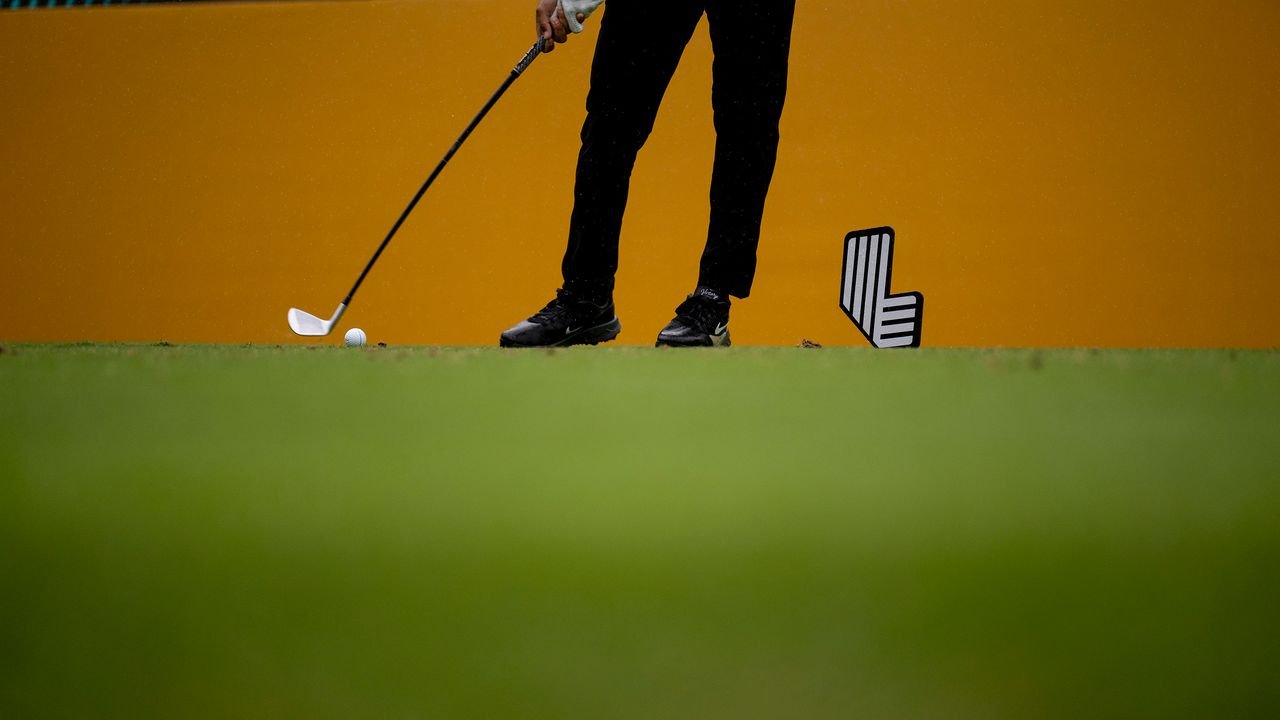
You shouldn’t count other people’s money, but I can’t help thinking that the kingdom of Saudi Arabia could’ve found better uses for five billion dollars than sinking it into the upstart golf league LIV. Several news outlets have reported that the Saudi Public Investment Fund, which has been pumping about a hundred million dollars a month into LIV since the league’s launch, in 2022, will be pulling its funding at the end of the year. The league isn’t officially dead, but it doesn’t seem long for this world. What happens, then, to LIV’s players, who received absurdly lucrative contracts to defect from the P.G.A. Tour, and may be banned from returning? Was this all just a waste of time? What do I do now with all of my team merch for Cleeks Golf Club and the HyFlyers?
In the end, LIV was less evil, as a geopolitical project, than many people claimed, and more soulless, as a sport, than I thought possible. Since LIV’s inception, the press has widely labelled it an exercise in “sportswashing”—image rehabilitation for Mohammed bin Salman, Saudi Arabia’s crown prince, after the murder and dismemberment of the Washington Post journalist Jamal Khashoggi. In LIV’s first season, I spoke with Saudi and U.S. officials, some of whom did business with M.B.S., who said that the sportswashing idea made no sense. Starting an expensive professional golf league was a roundabout way to launder the reputation of a violent autocrat.
LIV was one element of Vision 2030, M.B.S.’s effort to transform and diversify Saudi Arabia into a post-oil economy. The Saudis wanted to attract Western business, and to have Riyadh supplant Abu Dhabi and Dubai as the Middle East’s economic capital. The project was outrageously ambitious; it called for, among other things, building a city from scratch, called Neom, whose plans, at one point, included an artificial moon. Golf was part of the plan’s goal to make Saudi Arabia a sports-and-entertainment destination; the leaders of the PIF, the Saudi sovereign-wealth fund, also thought that golf would attract business executives, and the league ended up being a useful tool with which to curry favor with President Donald Trump, who would go on to host LIV tournaments at his golf clubs. It didn’t hurt that Yasir Al-Rumayyan, the PIF’s governor, was an avid golfer. If LIV was a vanity project, it would have been Rumayyan’s. M.B.S. is a video-game guy. Although he has loomed large in the golf world’s imagination, there have been no indications that, to any disproportionate degree, the business mattered to him.
Vision 2030, as a whole, has let some air into the repressive Saudi state. It has been a liberalizing force, moderating religious rule, neutering the religious police, and expanding the rights of women. The country, for the first time in decades, has cinemas. There are concerts, comedy shows, malls, sports. For the golfers, this didn’t make the moral choice of joining LIV any less fraught. Some gestured, comically, at their excitement at helping to reform Saudi society. (“We’ve all made mistakes,” Greg Norman, LIV’s first C.E.O., said, of Khashoggi’s murder.) Many golfers, frustrated by the P.G.A. Tour’s status as a near-monopoly, in which players had little negotiating power, simply used LIV as leverage to get paid. Phil Mickelson told the golf writer Alan Shipnuck, “We know they killed Khashoggi and have a horrible record on human rights.” He went on, “They execute people over there for being gay. Knowing all of this, why would I even consider it? Because this is a once-in-a-lifetime opportunity to reshape how the P.G.A. Tour operates.” One golf agent told Shipnuck, “What you have to understand about professional golfers is that they are all whores.”



