
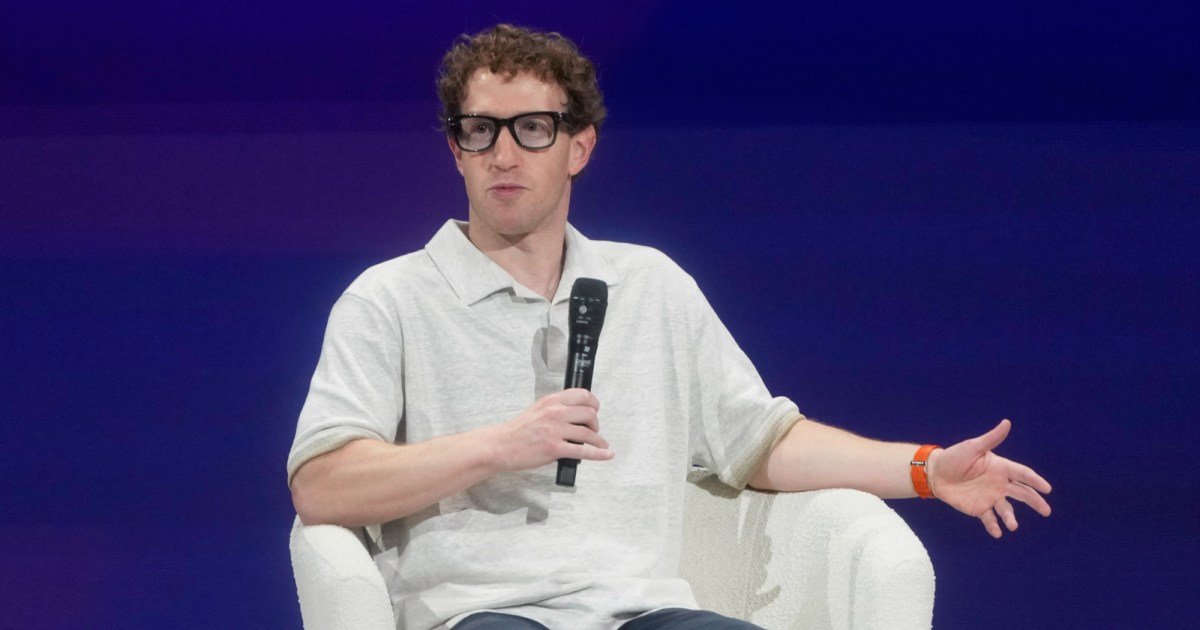
Meta founder and CEO Mark Zuckerberg speaks at LlamaCon 2025, an AI developer conference, in Menlo Park, California.Jeff Chiu/AP
Meta believes the future is gambling.
As prediction markets surge in popularity, CEO Mark Zuckerberg is reportedly calling for his company to consider partnering with Polymarket and Kalshi, two of the biggest platforms, while he develops a similar in-house app, Arena. According to a Friday report by the New York Times, Zuckerberg wants to design Arena to specifically target 18 to 34-year-olds.
Meta also hopes to implement parts of Arena into Facebook and its messaging app, Messenger, attaching betting options to group chats, news feeds, and videos.
“We believe that prediction markets are one of the more interesting new content types,” Ime Archibong, a senior Meta official leading Arena’s development, reportedly said in an internal company post last month. “The social conversation is the payoff as people aim to show off how good they are at predicting things to their friends.”
The strategy appears to be: betting as content, gamifying gambling to become social. It’s a framing that could open the door to harmful situations, especially for the young people he’s going after. According to the National Council on Problem Gambling, 2.5 million US adults, or about 1 percent of Americans, meet the diagnostic mental health criteria of severe gambling addiction. An Epic Research study published on Friday analyzing electronic health records found that gambling disorder diagnoses have risen more than 60 percent since 2018 in states that have legalized sports betting. The largest increase came from young people, aged 18 to 29, whose rate more than doubled.
“When markets are built into a personalized feed, they stop feeling like something for traders,” Archibong wrote in his same internal post. “They start to feel like part of the conversation that is tied to memes, moments, and whatever people are paying attention to.”
Yes. Right. Exactly. Meta appears to openly desire a world in which the company profits off addiction by blurring the lines between gambling and daily online conversation.



