
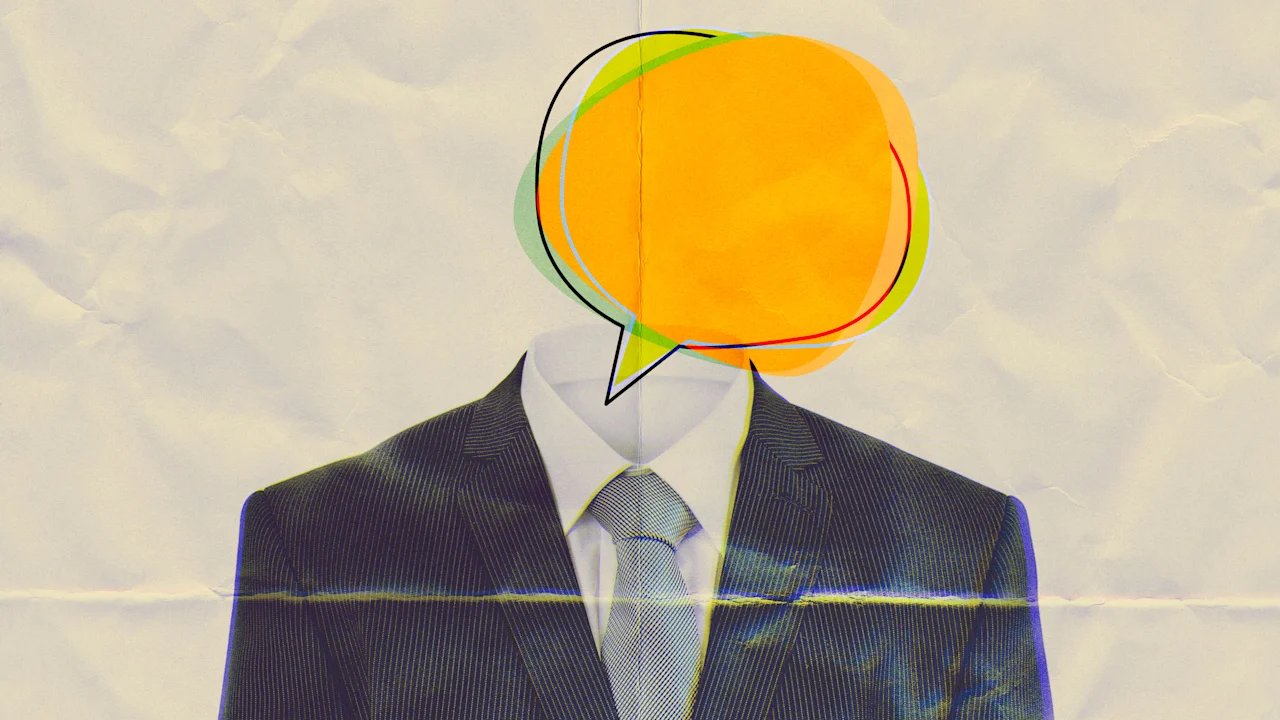
Igas, Charles, Corey, and Ryan are four characters in a popular TikTok skit series where, over Zoom, they discuss how to “proactively realign” their “cross-functional synergy” and ensure “tighter execution” in the face of looming threats like a “shrinking opportunity aperture”—otherwise known as February coming to a close.
The spoofs, posted by startup recruitment firm Verso Jobs, are intentionally drenched in nonsense. All the characters are played by one employee, Seamus Harvey, wearing various face filters and cramming in as much corporate jargon as possible.
They resonate because they feel real—particularly for Gen Zers and mid-career millennials complaining online about their “corporate icks.”
You might not know the term, but you likely recognize the feeling of cringing when a colleague “circles back” on an email, tags you on Slack to appear busy, or a manager subtly switches up their personality when someone senior joins the meeting.
What looks like eye-rolling at buzzwords and inauthentic behaviors actually signals a growing impatience with performative workplace culture at a time when job security feels more fragile than ever: The cost of living continues to skyrocket, one steady job is no longer enough for a mortgage, and millennials are navigating a premature career crisis.
And a growing number of workers are no longer willing to play along.
When work doesn’t feel human
Alex Lovell, a political psychologist and vice president of the O.C. Tanner Institute, the research division of O.C. Tanner, the software company that specializes in employee recognition and workplace culture, says a corporate ick emerges when “work stops feeling human and it starts feeling performative.”
“The eye roll at jargon or personality shifting is really almost a reaction to low trust,” Lovell tells Fast Company. “People can tell when everyone is impression-managing instead of just being honest about how things are going.”
Corporate icks in response to big egos and office lingo have probably always existed, he adds, but what has changed is the amount of patience people have left.
Carla Bevins, an associate teaching professor of business management communication at Carnegie Mellon University’s Tepper School of Business, says corporate speak erodes trust because the language and intent do not line up.
“If a listener has to translate what you said, the communication has already failed,” she tells Fast Company. “When communication feels like performance, people disengage.”
Justin, who doesn’t use his full name on social media for privacy concerns, makes content on social media under the handle Professor Corporate while also working a 9-to-5. He tells Fast Company that people still understand how to play office politics, but they just don’t care enough to perform them anymore.
The job market is turbulent, AI is disrupting industries across the board, and layoffs sweep through companies regardless of performance. Many workers are living in this “culture of insecurity,” wondering whether they can afford rent, a mortgage, or children. In that environment, performing enthusiasm for jargon-filled meetings feels especially difficult.
“You’re just not safe no matter how good you are,” Justin says. “I’ve noticed people have stopped caring a little bit on how formal they may need to be.”
Authenticity was championed—then taken away
Justin personally experiences icks when colleagues are clearly angling for advancement but lack the subtlety to mask it. Another trigger is people “not working their wage.”
“If you’re a junior person or a mid-level manager, but you’re acting like a director or VP trying to tell people what to do, or being overly enthusiastic about things that nobody cares about, that’s an ick,” he says. “You’re putting on this facade that is so easy to see through.”
Authenticity may be one of the few distinctly human signals people crave in the workplace as automation takes over, and employees are increasingly sensitive to when it feels absent. The COVID-19 pandemic and the work-from-home era became something of a “pajama revolution,” Lovell says, where people showed up without makeup or office attire and discovered it had little impact on their careers.
This had measurable effects. Employee recognition software and services company O.C. Tanner’s 2026 Global Culture Report found that when employees feel their leaders and coworkers are accountable and transparent, they are five times more likely to trust their organization. Engagement and satisfaction with direct leaders’ communication also increase fivefold.
But as return to office mandates have taken hold, it’s as if all that honesty and authenticity is no longer a priority, which feels like a backwards step.
When the ick is a breaking point
For some, the corporate disconnect is enough for them to leave their career ladders entirely.
Sam Loeffler worked at five companies throughout her 20s in brand management roles. A top performer earning around $180,000 a year by age 30, she appeared to be thriving. But the higher she climbed, the more corporate life felt stressful and increasingly “fake.”
She quit without another job lined up and took eight months off. Then she began building a different kind of life.
Now, she’s a coach and content creator under the handle Sam Beyond Corporate, helping other people explore anti-corporate paths, and she works shifts at an organic olive oil farm in the middle of California.
“We were asking each other, do you feel like you wear a mask at work? Are you the same person here as you are at home?” she tells Fast Company of a recent conversation with her colleagues. “And we were all like, 100%, yes, I am fully myself. And I could never do that in corporate no matter what.”
While not every jaded, tired worker has the financial cushion to walk away to try something new, Loeffler’s story is one that is increasingly apparent on social media, with creators sharing their decisions to leave their roles with no immediate career plans, or referring to themselves as “corporate dropouts.”
Leaving corporate life isn’t realistic for everyone. Many are stuck “hugging” their roles before something better comes along, the icks simmering internally. But there’s a growing sense, Loeffler says, that people want more than that.
“I wanted to have more of a purpose led impact on the world,” she says. “I’m not just here to be a corporate slave.”
The rise of the corporate ick may signal a turning point where tolerance for pretense is thinning, and younger employees especially don’t feel able to ignore the gap between what the corporate world says and what is actually reality. And they’re reacting—whether that means spending a nest egg on starting a new life, or simply uploading snarky vids to social media.
“Younger workers in particular are like, don’t tell me things are good here when they’re not,” Lovell says. “If my workplace culture isn’t great, I am not going to pretend that it is.”



