
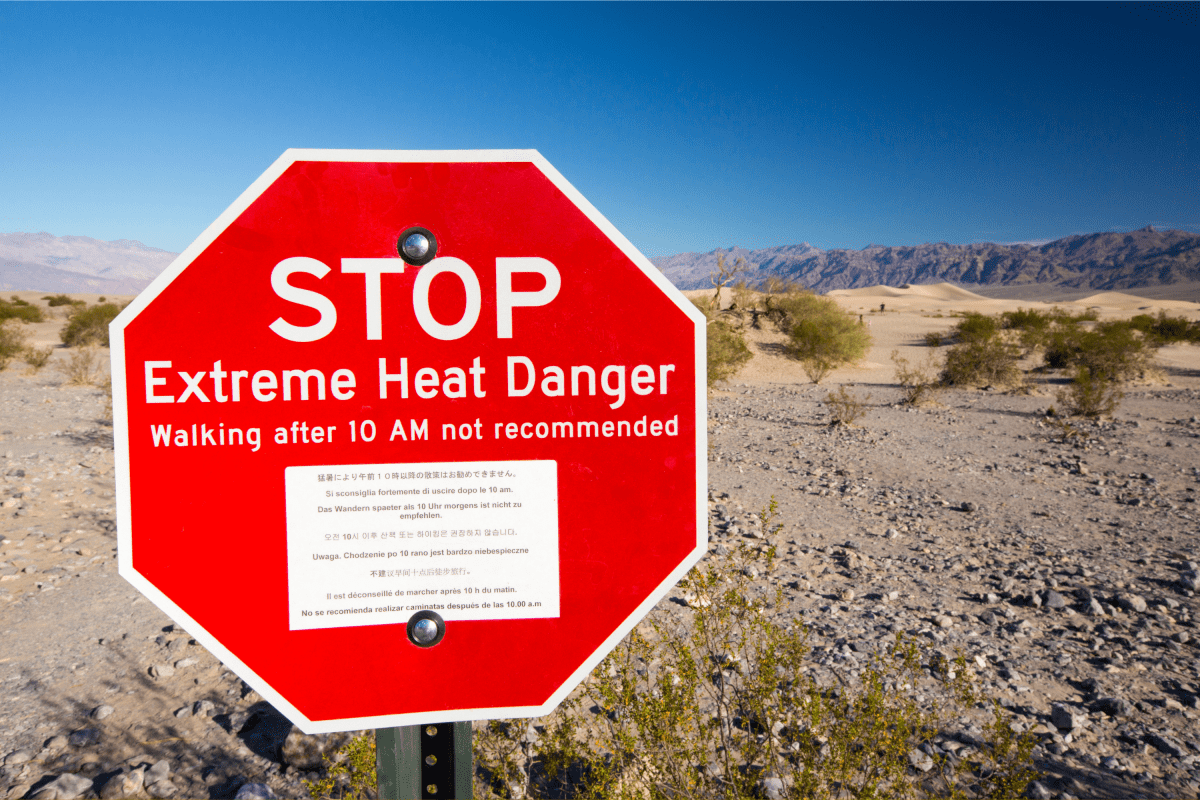
A dangerous heatwave is sweeping across Arizona and California, with forecasters warning that temperatures more typical of peak summer could expose millions to serious health risks over the next several days.
The timing is especially concerning because the heat is arriving unusually early in the season, before many people have acclimatized to sustained high temperatures. Health experts warn that such heatwaves can be particularly dangerous, increasing the risk of heat exhaustion, heat stroke and respiratory problems—especially when paired with worsening air quality.
Hottest Conditions Focused on Phoenix and Desert Regions
The National Weather Service has issued a mix of extreme heat warnings and heat advisories stretching from the Phoenix metro area to California’s interior valleys and desert regions, with some areas expected to hit 114 F by Tuesday.
In southeastern California and southern Arizona desert regions—such as Imperial Valley, the Salton Sea area, Yuma, and the Coachella Valley—temperatures could climb even higher, ranging from 100 F to 114 F. These areas are under extreme heat warnings from Sunday until Monday.
For comparison, typical highs for May in Phoenix are around 90 F to 99 F, meaning the predicted conditions are several degrees above seasonal norms and more typical for early summer.
Why This Heat Could Be ‘Dangerous’
Even a short period of extreme heat can have serious consequences. Medical research shows it strains multiple body systems and increases the risk of hospitalizations and mortality.
The Environmental Protection Agency (EPA) warns that the danger is often amplified in urban areas, where the “urban heat island” effect—which is a city area that stays hotter than more rural places because the buildings and roads trap heat—keeps nighttime temperatures elevated, reducing the body’s ability to recover between hot days.
Heat Advisories Stretch Across California’s Interior
While not as extreme as the desert warnings, large portions of California—including the Inland Empire (Riverside and San Bernardino Counties) and the San Joaquin Valley (Fresno, Bakersfield, Modesto)—are under heat advisories.
Temperatures in these regions are expected to reach:
- 95 F to 101 F in the Inland Empire on Monday
- Up to 102 F across the San Joaquin Valley through Monday and Tuesday
- Mid-90s to near 100 F across parts of Northern and Central California on Monday and Tuesday
Even these “lower” readings still represent elevated heat risk for early May, when temperatures are typically milder than peak summer levels.
What Residents Should Do During Extreme Heat Conditions
The NWS is urging people across affected regions to take precautions, especially during peak afternoon heat:
- Stay hydrated and drink water regularly
- Limit outdoor activity, especially strenuous work
- Use air conditioning or cooling centers when possible
- Wear lightweight, loose-fitting clothing
- Check on elderly neighbors, children, and pets
- Never leave children or pets in cars
Heat and Air Quality: A Dual Concern
The ongoing heat wave is also coinciding with air quality alerts across parts of Arizona and California, compounding the health risks tied to the extreme temperatures.
In Imperial Valley, officials issued an air quality alert for Sunday due to harmful levels of ground-level ozone (otherwise known as smog), with the highest levels of pollution expected during the afternoon and early evening hours—when temperatures usually peak.
At the same time, the Phoenix metro area has been under an “Ozone High Pollution Advisory” through Sunday, with the NWS warning that weather conditions and existing emissions will likely push ozone levels high enough to pose direct health risks.
The overlap of extreme heat and elevated ozone levels creates a dual hazard: Residents are being urged to limit outdoor activity, not only to avoid heat illness, but also to reduce their exposure to polluted air—especially during peak afternoon hours when both risks are at their highest.



