
A NATO defense researcher has warned that the risk of a third world war is “becoming clearer” amid the U.S.-Israel conflict with Iran.
Florence Gaub, the head of research at the NATO Defense College, said the risk could grow through accidents and misread signals rather than “someone one day presses the war button.”
“You can slide into this kind of conflict without anyone wanting it—an accident, a misreading, verbal escalation, decisions taken under pressure,” she told the Spanish newspaper El País on Monday.
“That’s why it’s just as important to invest in diplomacy as in defense,” she said, according to an AI translation of the interview.
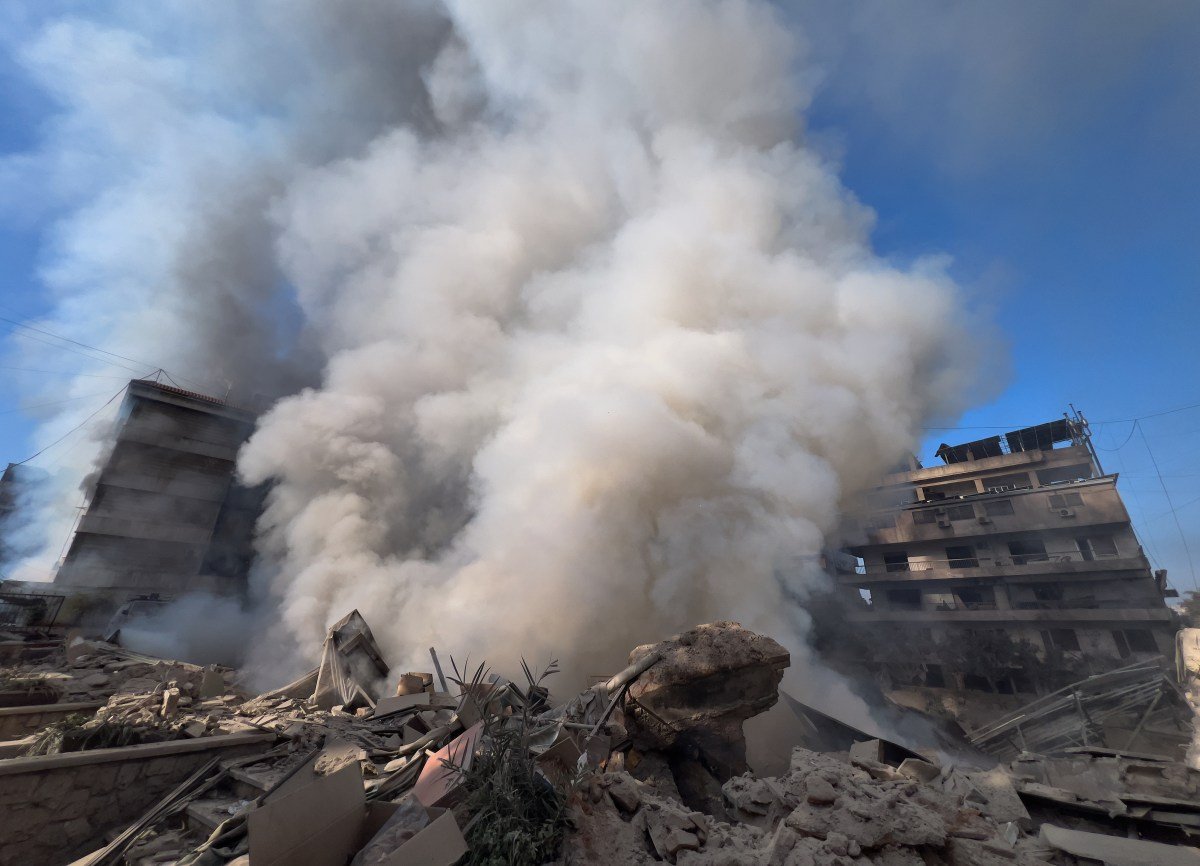
On Saturday, the U.S. and Israel attacked Tehran, killing its supreme leader, Ayatollah Ali Khamenei, and other significant figures from the regime. The strikes triggered retaliation from Iran, which has repeatedly fired multiple missiles and drones at its Gulf neighbors, targeting American bases and allies.
The Middle East has since been engulfed in attacks—leading to death, injuries and damage to buildings and infrastructure—and the conflict shows no sign of ending anytime soon.
U.S. President Donald Trump has said Operation Epic Fury is ongoing and will continue in full force “until all of our objectives are achieved.”
However, he has given conflicting timelines for how long he expects this to take—ranging from two or three days to four or five weeks.
Despite this, Defense Secretary Pete Hegseth told reporters the U.S. would not be sucked into an “endless war.”
Iranian Conflict Expanding
In the latest sign that the Iranian conflict is expanding into a broader regional conflict, Israel said its troops were “operating in southern Lebanon” near the border “as part of an enhanced forward defense posture” to strike Hezbollah targets.
There are also major concerns about energy supplies around the world as Tehran has threatened to fire upon vessels using the Strait of Hormuz—an Iranian waterway where about one-quarter of the world’s crude oil and natural gas trade passes through.
A number of merchant ships have already been struck and the state-owned QatarEnergy—responsible for some 20 percent of global LNG exports—shut its facility in Ras Laffan on Monday after targeted attacks.
China, which buys most of Iran’s crude oil, is pressuring Tehran to avoid disrupting energy flows, according to Bloomberg.
“Energy policy is vital to the global economy and ensuring unfettered supply is the responsibility of all. China will do what is necessary to ensure its energy security,” China’s Foreign Ministry spokesperson Mao Ning said on Tuesday at a regular news conference in Beijing.
‘Iran War Has Been in the Making Since Early 2000s’
Gaub said the current conflict did not come as a surprise to her, as “this war has been in the making at least since the early 2000s, when Iran’s nuclear program was uncovered.”
“When the source of a conflict is not resolved and material capability aligns with the will to act, war is always only a matter of time,” she said.
Saturday’s attack came days after Washington and Tehran engaged in negotiations, following decades of talks and setbacks.
Former U.S. President Barack Obama, along with other world powers, successfully negotiated the 2015 Joint Comprehensive Plan of Action (JCPOA), which limited Iran’s nuclear program at the time, but Trump withdrew from this deal in 2018.
In his first term, Trump called the JCPOA a “disastrous deal,” arguing that it was too weak, too temporary and did not address Iran’s ballistic missile program or its support for armed groups across the Middle East.
Gaub called Trump “a leader who uses surprise as a method.” She continued: “His strength lies in offering a vision of the future, even if it is entirely illiberal. Ultra movements succeed because they promise a break with the past. Traditional parties, by contrast, limit themselves to managing the present.”
In 2018, many, especially progressives, believed the U.S.’s withdrawal from the agreement could lead to war. Stephen Miles, the director of the Win Without War coalition, told Newsweek at the time that pulling out of the deal “could have consequences as disastrous as invading Iraq.”
“We forced U.N. weapons inspectors out of Iraq before they finished their work, and that’s exactly what we’ll be doing if Trump kills the JCPOA, thereby putting us back on the path to another disastrous war in the Middle East,” he said.
Trump said in a video address on Sunday, “It has always been the policy of the United States, in particular my administration, that this terrorist regime can never have a nuclear weapon.”
In his most recent video address on Monday, the U.S. president said, “Our resolve, and likewise that of Israel, has never been stronger.”
Iran has used similarly fiery language, with the country’s parliamentary speaker Mohammad Bagher Qalibaf saying in a televised address over the weekend: “You have crossed our red line and must pay the price. We will deliver such devastating blows that you yourselves will be driven to beg.”
Trump said on Truth Social on Monday that Tehran wanted to talk, but it was “too late.”
In a polarized era, the center is dismissed as bland. At Newsweek, ours is different: The Courageous Center—it’s not “both sides,” it’s sharp, challenging and alive with ideas. We follow facts, not factions. If that sounds like the kind of journalism you want to see thrive, we need you.
When you become a Newsweek Member, you support a mission to keep the center strong and vibrant. Members enjoy: Ad-free browsing, exclusive content and editor conversations. Help keep the center courageous. Join today.




