
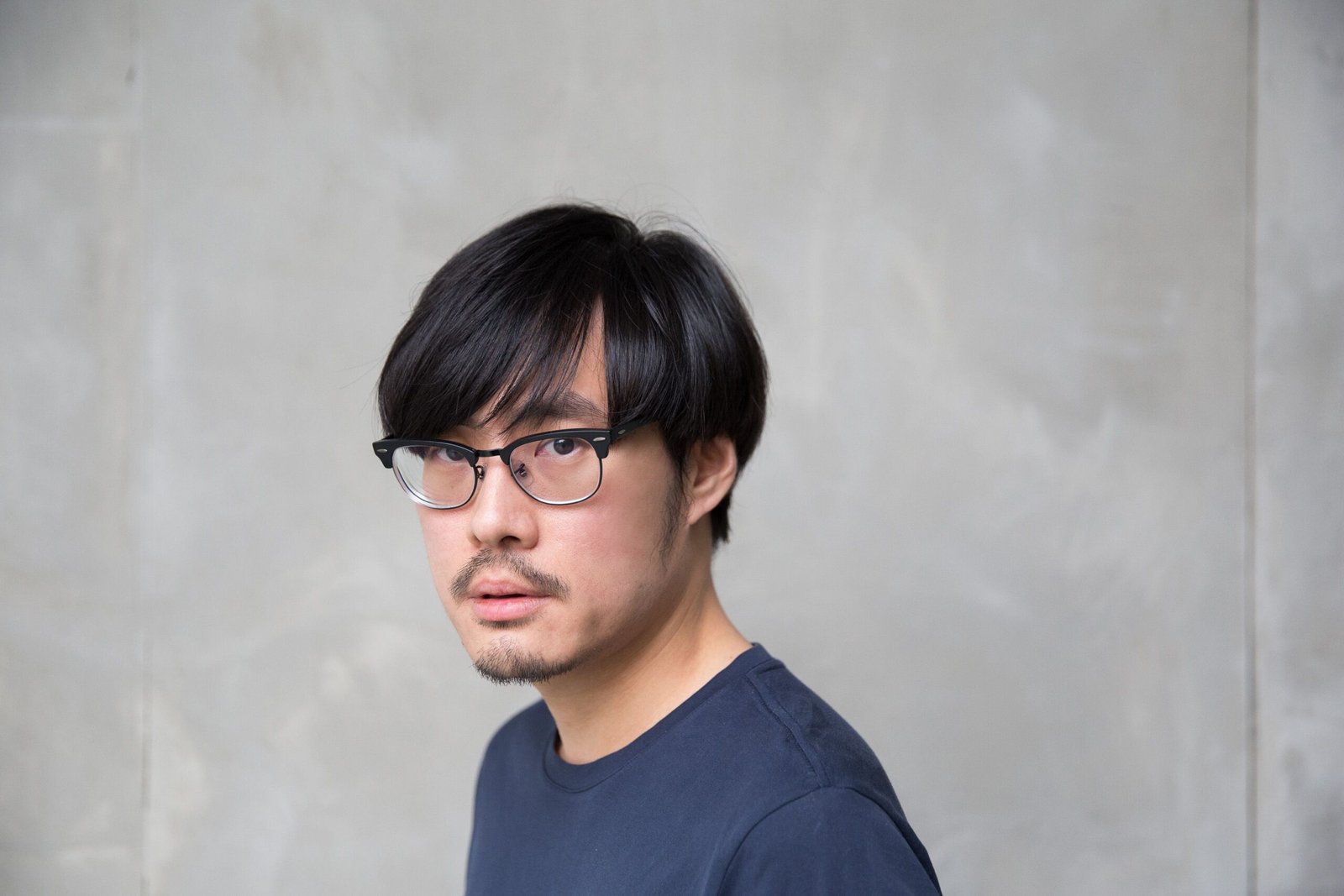
Nawapol Thamrongrattanarit has established himself as one of the most distinctive voices in contemporary Thai cinema, a filmmaker whose works tread a very fine line, sitting right on the border between indie and mainstream cinema. A self-taught director, film critic and screenwriter who majored in Chinese at Chulalongkorn University in Bangkok, Nawapol has earned critical acclaim for a unique and eccentric style that has proven equally at home on the international festival circuit and in commercial theaters. His trajectory is particularly fascinating because, while his approach has changed considerably through the years, a number of recurring themes continue to connect his movies: memory, love, work, technology, growing up, competition, loneliness and the difficulty of finding one’s place in contemporary Thai society.
His feature debut, “36”, immediately established several of the elements that would continue to preoccupy him. Photography, digital storage, memory and impermanence became part of a minimalist cinematic language that was simultaneously intimate and formalist. “Mary is Happy, Mary is Happy” pushed the connection between cinema and digital existence even further, while “Heart Attack” moved him towards the mainstream without abandoning his particular sensibility. “Die Tomorrow” and “BNK48: Girls Don’t Cry” subsequently showed his willingness to experiment with documentary forms and essay structures, before “Happy Old Year” brought his obsession with memory to perhaps its purest expression. “Fast & Feel Love” pushed his indie language furthest into mainstream entertainment, while “Human Resource” strips everything back again into a restrained observation of contemporary life.
There is also an intriguing connection between Nawapol’s themes and the way he approaches filmmaking itself. Discussing “Happy Old Year”, he explained that, in terms of minimalism, when he makes a movie, he puts himself in the position of an observer. The characters simply live their lives and the audience observes what happens in front of them. Instead of indicating that a particular scene exists specifically for crying or for emotions, he prefers to show situations with a certain distance. He does not want to tell viewers everything, inviting them instead to become active observers. His characters do not always express everything they feel, while music does not necessarily determine their emotions either.
This approach became particularly pronounced in “Happy Old Year”, which Nawapol described as the first time his style met the general audience entirely on his own terms. His career, however, has demonstrated an unusual ability to move between modes. “Fast & Feel Love” is arguably his most accomplished fusion of mainstream entertainment and independent aesthetics, while “Human Resource” moves almost in the opposite direction, replacing much of the stylistic playfulness with a restrained, detached and increasingly suffocating observation of contemporary working life. His longtime collaborator Parama Malakul Na Ayudhya has also highlighted this evolution. According to him, what has remained constant is Nawapol’s attention to detail and his delicacy with every micro element, while what has changed is the degree of restraint and precision.
36 (2012)
Winner of the New Currents Award at the Busan International Film Festival, “36” is Nawapol Thamrongrattanarit’s brilliant feature debut. It also won the New Asian Cinema section of the Five Flavours Asian Film Festival in Warsaw, the New Talent Award at the Hong Kong Asian Film Festival, and Best Director at the Cinemanila International Film Festival. The story revolves around Sai, played by Koramit Vajrasthira, a location scout whose job is to capture potential settings with her digital camera. One day, her career becomes intertwined with that of artistic director Oom, portrayed by Wanlop Rungkamjad. The two establish both a professional collaboration and a genuine relationship that lies somewhere between love and friendship. Photography is the common thread running through both of their lives. Oom likes to capture people but does not like being photographed, while Sai is maniacal about grouping photos from each year of her life into different hard drives. At the beginning of their acquaintance, Oom is impressed by Sai’s ability to remember any photograph she has taken over the years. To test her talent, he asks what she photographed in April two years earlier, and she clearly remembers capturing a family trip.
The actual title relates to the structure, which is divided into 36 still-camera shots. Each of the 36 frames is preceded by a black frame in which the scene number and its relative title appear, usually foretelling what will happen next, while the characters frequently move at the edges of the image or stand outside it altogether. Pairach Khumwan’s cinematography is tenderly shrouded in a pinkish color palette and perfectly accompanies the slow flow of events, while the naturalism of the acting complements Nawapol’s inclination towards minimalism. It is memory, symbolized by Sai’s camera, that is the absolute protagonist of “36”. When her 2008 hard disk breaks, she states, “It’s like the whole year has been lost.” Sai’s memory seems to rely on the photographs and their silent presence in an archive: if there is a picture proving an event occurred, then that event is real. Human memory, just like technology, is a fragile tool subject to decay, and Nawapol prompts us to reflect on the close relationship between photography, cinema and memories. The theme would return repeatedly throughout his career, most explicitly in “Happy Old Year”, which he eventually described as the dark side of “36”.
Nawapol’s sophomore feature “Mary is Happy, Mary is Happy” is one of the first movies based entirely on the Twitter feed of an existing user. Using 410 consecutive tweets by @marylony as inspiration, this Venice Biennale-funded feature tells the universal and relatable story of growing up, falling in love and moving on while trying to make the ultimate minimal school yearbook. Nawapol manages to take the seemingly random tweets and create a cohesive piece of cinema while remaining as authentic as possible to their varying tone. He accomplishes the difficult task by creating small vignettes out of sets of tweets, all of which appear either on a black screen or as subtitles, with each showing a different aspect of the multifaceted person who is the original Twitter user and, by extension, the main character. The seeming randomness gives him the opportunity to engage with themes including love, death, grieving, moving on after the loss of a loved one, disability, homosexuality and even living under authoritarian rule and participating in a cult of personality.
The vignette-style storytelling also gives cinematographer Phairat Khumwan freedom to create a quirky visual aesthetic that manages to be surreal and dreamlike yet natural and relatable. Slightly unnatural colors, large amounts of empty space and controlled jittery handheld camerawork allow the viewer to become part of Mary’s idiosyncratic world, one that frequently feels inhabited only by her, her best friend Suri and her love interest M. The visual techniques incorporate influences from Jean-Luc Godard, Wong Kar-wai, Edward Yang and, most notably, Shunji Iwai, while Chonlasit Upanigkit’s rhythmically abrupt editing and Rasiguet Sookkarn’s eclectic set design create a visually pleasing and unique result. Patcha Poonpiriya and Chonnikan Netjui are splendid as Mary and Suri, their chemistry treading the thin line between friendship and love. More importantly in the context of Nawapol’s career, “Mary is Happy, Mary is Happy” takes the digital romanticism already present in “36” and transforms the very language of social media into cinematic structure. Technology changes the medium through which his characters communicate, but their fundamental needs for love, friendship and connection remain essentially the same.

“Heart Attack” finds Nawapol back on the familiar ground of arty, quirky young people and professionals seen in “36” and “Mary is Happy, Mary is Happy”, and this time the alchemy is almost perfect. Thirty-year-old Yoon is a freelance graphic designer and Photoshop retoucher. Undeniably, he is damn good and incredibly committed, but he is trapped in the typical loop of working hard and never turning down a job for fear of being left out and losing connections. Yoon spends most of his days and nights in his room in front of a Mac, and in this tiny world there is no room for leisure, friends or even sleep. His pride and joy is his ability to go without sleeping for up to five days in order to meet the tight deadlines of the creative industry. When an annoying itchy rash appears on his neck and begins spreading across his body, he eventually ends up under the care of Imm, a dedicated junior physician who understands that the problem is not merely dermatological but rooted in his lifestyle. To get well, Yoon needs healthy food, exercise and, above everything else, sleep. Once cornered, he must rethink his life choices and reevaluate his priorities while becoming increasingly dependent on appointments with the only person who seems to care about him.
Nawapol cleverly puts together a profitable movie that preserves an indie flavor and veers away from any static genre definition. It is neither the classic romantic comedy the poster and international title might suggest nor a full-on comedy, although there are plenty of genuinely hilarious moments. His script and direction blend comedy, drama, dark humor and merely an innuendo of romance, sensibly avoiding corny romantic clichés in favor of a sympathetic and accurate character study. Nawapol later admitted he used to be like Yoon himself, describing the constant need to run and update oneself as the curse of being a freelancer. Chonlasit Upanigkit’s awarded editing is snappy without being frenetic, combining long meditative takes with faster ones to create an effective comic tempo, while Sunny Suwanmethanont builds goofy, likable Yoon layer by layer and Davika Hoorne owns the role of Imm with her refreshing normality. “Heart Attack” is an honest look at the hardship of balancing work choices and personal life, presented with a light touch and the right amount of humor. It also marks the moment Nawapol demonstrated that the independent sensibility of his first two features could function within commercial Thai cinema.

Where “Heart Attack” managed to present the lives of freelancers in an analytical and realistic fashion while retaining a comic feeling throughout, “Die Tomorrow” has little to do with that approach. Instead, it is a rather experimental production focusing on death and the way people perceive and perhaps accept it. According to the statistics presented, two people on Earth die each second, and Nawapol highlights the fact both through on-screen text and by repeatedly including a kind of clock that counts deaths in real time. The movie then recreates imaginary episodes from the lives of people whose deaths made the news, focusing on the moments immediately before they die. At the same time, interviews with people talking about death are included, from a young boy whose perception of the subject comes from searching Google to an old man who offers profound and philosophical comments on the entire concept.
Through these elements, Nawapol contemplates death and its consequences, and particularly the thoughts people have on the subject, through a highly experimental production that lingers between documentary and fiction. This tactic extends to the cinematography, with framing drawn from smartphones and Instagram, while black screens featuring death statistics appear between the episodes. Chutimon Chuengcharoensukying and Sunny Suwanmethanont are among the recognizable Thai actors appearing, although their roles have a distinct guest-star quality. The result feels like an audiovisual essay created by a director who has thought very hard about death. It is insightful, although difficult to watch and certainly less oriented towards mainstream audiences. Within Nawapol’s wider oeuvre, however, “Die Tomorrow” is another crucial variation on his fascination with impermanence. Photographs, tweets, Google searches, statistics and smartphone imagery again become part of his cinematic language, but technology remains secondary to the human attempt to understand something as impossible to preserve as life itself.

“BNK48: Girls Don’t Cry” deals with the concept of idols and its export from Japan to Thailand. BNK48 is the Thai sister group of Japanese phenomenon AKB48, and Nawapol, through interviews with a number of members, highlights the selection process and the thoughts and feelings of the girls, explaining why such a concept became so popular. Initially, and for much of the documentary, the confessions are scary to the point of shocking. The girls sketch a picture of extreme antagonism even among friends, since the basic lineup, called the Senbatsu, changes frequently according to their performances. They consequently feel the need to improve constantly, although this improvement often has more to do with popularity on social media than hard work or talent. Even scarier is the fact that their eagerness to succeed and fear of failing make them endure immense pressure and strict rules, occasionally going as far as changing their personalities in order to become more appealing to fans.
Nawapol seems perplexed, shocked and even appalled at what he hears initially, but as time passes he begins enjoying his interaction with the girls, with the same thing happening to the viewer as their personalities rise above the idol concept. The minimalism of the interviews works particularly well in contrast with the maximalism of the concerts and public appearances, while Nawapol’s own editing uses the interviews as the main theme and interrupts them with footage at the most crucial moments. The resulting comment is complex and ambiguous, suggesting a world where image and popularity have immense importance while simultaneously highlighting the individuals trapped inside that system. Nawapol himself later complicated the idea of victimhood, stating that the girls understood the nature and rules of the group and knew what they wanted. His comment that “image is temporary, talent lives longer” could almost function as the key to the documentary. Much like Yoon in “Heart Attack”, the girls exist in a system of relentless competition in which stopping even briefly can mean being left behind, while the role social media plays in their identities connects the documentary directly with “Mary is Happy, Mary is Happy”.

The world is Jean’s oyster, but only seemingly. After spending three years in Sweden, she returns to Bangkok to open her studio. However, putting ideas into practice turns out to be more complicated than expected. First, she has to convince her family to turn their old, cluttered house into a modern and minimalistic interior and therefore get rid of all the objects accumulated over the years. “Minimalism is like a Buddhist philosophy. It is all about letting go,” Jean says in the opening scene. What sounds so clear in theory does not necessarily apply to real life, particularly when one’s family is frozen deep in time, the house resembles a prehistoric storeroom full of dusty trash and unwanted memories begin to emerge. Jean has no intention of giving up, though. Armed with a large pile of trash bags, she begins a battle for a new and supposedly better life, one that quickly becomes about much more than throwing away old possessions.
“Happy Old Year” is a tender and charmingly sentimental story about dealing with memories and setting oneself free. Nawapol eagerly returns to his favorite motif, rediscovering one’s past through photography and objects, an idea already central to “36”, although this time he gives up much of the formal experimentation in favor of a more classical narrative that brings the audience closer to his characters. The protagonists are created with great sensitivity and empathy, while their strongest emotions reveal themselves mostly between the lines, through small gestures, quick looks and thrifty dialogue. Nawapol revealed that the project came directly from his own experience of clearing things from his room every December and gradually realizing that discarding physical objects actually means negotiating with memories. He eventually described “Happy Old Year” as the dark side of “36”: even without objects or photographs, memories stay in the mind and cannot simply be deleted. The movie therefore shows the ambiguity of life and emotions in a world dominated by Marie Kondo, digital files and instant solutions, while suggesting that perhaps the only wise answer is to accept the pain and let things go. Nawapol also called it the first work that was “me in 100%”, making it arguably the purest expression of his observer-based minimalism.

Nawapol’s works tread a very fine line between indie and mainstream cinema and, despite dealing with various themes, his narratives often return to one key element: love. “Fast & Feel Love”, amusingly marketed as his first action movie, pushes this combination further than ever. Kao and Jay do not fit in at school. With his obsession for competitive sport stacking, Kao has no time to make friends, while Jay, who loves her plants and speaks impeccable English, is constantly called a “Falang”, or foreigner. The two find solace in each other’s company and genuinely become fond of one another. Years later, they are in their thirties and living together. Kao has become something of a celebrity in sport stacking, spending almost every waking minute practicing, whereas Jay does everything necessary to provide the ideal environment for his success. However, as Kao prepares to defend his world record, Jay decides enough is enough, leaving him to fend for himself for the first time in his adult life.
The marketing department may actually have been onto something, since the fast-paced narrative, swift editing and music all contain clear elements of an action movie. Nevertheless, this is Nawapol, so the result cannot possibly fit comfortably into either the action or sports mould. At its core, “Fast & Feel Love” is a late coming-of-age story wrapped in romance and packaged in the guise of an action and sports movie, one that talks about understanding the reality of childhood ambitions and entering adulthood. For Kao and Jay, this means giving up, or at least giving less prominence to, the one thing they love most in order to become who they need to be. Despite the heavy themes, there is tremendous warmth and humor in Nawapol’s script, making this easily one of the funniest works in his oeuvre. Nat Kitcharit embodies Kao’s innocence, drive and sincerity perfectly, but this is easily Urassaya Sperbund’s show, with Jay’s journey towards becoming her own person forming the emotional backbone. “Fast & Feel Love” consequently emerges as one of Nawapol’s most accomplished and mainstream works while still savoring an indie flavor. Kao’s obsessive dedication echoes Yoon in “Heart Attack”, Jay’s need to abandon a life that no longer serves her recalls Jean in “Happy Old Year”, and the pressure of competition evokes “BNK48: Girls Don’t Cry”.
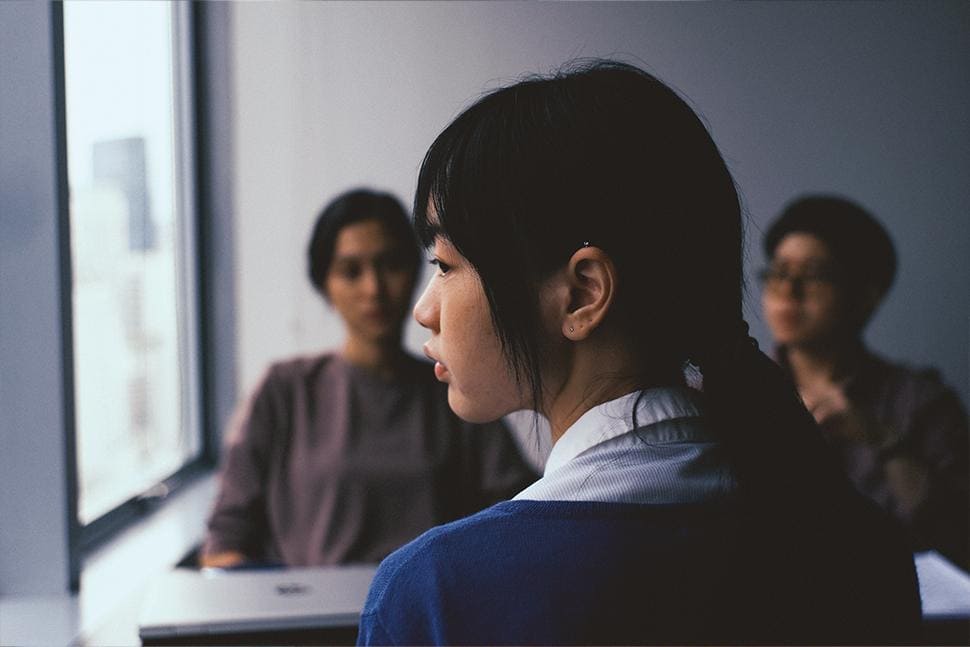
In “Human Resource”, Nawapol follows a familiar recipe, centering on a woman who must navigate an increasingly suffocating environment, this time while pregnant and working in the corporate world. Fren works in HR for a large company, Sagan. As the story begins, she and her colleague Tenn are interviewing candidates for a vacant position, while another employee, June, has been absent for several days following company policies regarding weekend work and the attitude of a superior. At the same time, Fren has just discovered she is pregnant, something she has revealed neither to her boyfriend Thame nor to anyone else. As she struggles to maintain a routine that becomes increasingly oppressive, the pressure steadily mounts. Her gaze on the world, whether observing her workplace, Thame’s behavior or even Bangkok traffic, becomes a constant evaluation of whether this environment is truly fit for raising a child. The increasing demands corporations place on employees, seminars about adapting to AI, the importance of connections, corruption and the difficulties faced by new entrepreneurs all gradually form part of the same wider picture.
Nawapol adopts a particularly interesting approach by maintaining a detached perspective towards Fren, mirroring the way she herself moves through life, lost in thought and disconnected from her surroundings. The overall style remains calm and measured, shaped by restrained performances and Manussa Vorasingha’s editing, which sustains a slow-burning pace, although an undercurrent of tension gradually builds. Close-ups emphasize Fren’s loneliness and the intensity of her inner turmoil, while Prapamonton Eiamchan delivers a wonderfully controlled performance and Paopetch Charoensook effectively captures the contrasting aspects of Thame. Natdanai Naksuwarn’s cinematography employs close-ups and a 4:3 aspect ratio to frame Fren’s isolation, with several night scenes emerging as visual highlights. While “Human Resource” may lack some of the stylistic flair of Nawapol’s earlier movies, as an exercise in restraint and measure it is remarkably successful. It also brings him back to the working-world anxieties of “Heart Attack”, only with most of the comedy removed. The filmmaker who once transformed 410 tweets into a cascade of vignettes now works with considerably greater restraint and leaves increasingly large spaces for the audience to interpret.
Across these eight works, Nawapol Thamrongrattanarit’s evolution is obvious, yet so is the consistency beneath it. The 36 static shots of his debut, the 410 tweets of “Mary is Happy, Mary is Happy”, Yoon’s endless Photoshop deadlines, the death statistics and smartphone imagery of “Die Tomorrow”, the social-media popularity contest of BNK48, Jean’s attempt to discard physical and digital memories, Kao’s obsessive pursuit of milliseconds and Fren’s silent observation of an exhausting corporate society are all connected by a fundamental question: how do people remain human inside systems that constantly tell them how they should live?
Technology plays an enormous role in this universe, but Nawapol has never treated technology itself as the enemy. As he has pointed out, every era can be romantic if one finds its romantic points and moments. In the digital era, the medium has changed, but human relationships remain fundamentally the same. Time and space have changed, as have the ways people communicate and the extraordinary quantity of memories they can store, yet the basic need for relationships remains. Human beings still need love, and that need has not disappeared simply because interaction now takes place through hard drives, smartphones, Facebook profiles, Twitter feeds or corporate messaging systems.
Memory is equally central. “36” asks whether something disappears if no photograph remains to prove it happened. “Happy Old Year” arrives at the opposite end of that question, suggesting that removing the photograph or object does not eliminate the memory at all. “Die Tomorrow” takes impermanence to its logical extreme, while “Fast & Feel Love” turns letting go into the painful process of accepting adulthood. Even “BNK48: Girls Don’t Cry” can be understood through this perspective, as young women negotiate the divide between the public images preserved and circulated online and the people they actually are.
Work represents another constant. Yoon in “Heart Attack” is consumed by the fear that if he stops for even a second, somebody else will replace him. The members of BNK48 endure a similar system of relentless competition, where working harder does not necessarily guarantee success. Kao turns his childhood obsession into a profession that leaves him incapable of performing basic adult tasks. Fren, meanwhile, occupies perhaps Nawapol’s bleakest professional environment, one where people themselves have quite literally become “human resources”. In all these cases, ambition is never condemned outright. Instead, Nawapol is interested in the moment when dedication begins consuming the person who possesses it.
His treatment of women has also become increasingly central. Mary, the members of BNK48, Jean, Jay and Fren are not simply vehicles for themes. They are complicated protagonists whose uncertainty, selfishness, ambition, loneliness, anger and desire for independence are allowed to exist without being easily resolved. This becomes particularly evident from “Happy Old Year” onwards and culminates, at least for the moment, with Fren in “Human Resource”, whose silence and detachment essentially determine the entire perspective of the story.
Perhaps the most impressive aspect of Nawapol’s career, however, is his ability to move between independent and mainstream filmmaking without completely surrendering either side. “36”, “Mary is Happy, Mary is Happy” and “Die Tomorrow” can be intensely experimental. “Heart Attack” and “Fast & Feel Love” demonstrate that the same filmmaker can make genuinely accessible, funny and emotionally engaging commercial cinema. “BNK48: Girls Don’t Cry” turns commissioned material into a nuanced study of image and competition, while “Happy Old Year” proves that minimal aesthetics and a relatively classical narrative do not need to contradict one another. “Human Resource”, finally, suggests a filmmaker who has become confident enough to remove rather than add.
Nawapol once stated that image is temporary while talent lives longer, and that anyone who wants to go further needs to develop both. The comment was made in relation to BNK48, but it also works remarkably well as a description of his own trajectory. His cinema has changed its image repeatedly, from static frames to Twitter vignettes, romantic comedy, audiovisual essay, documentary, minimalist drama, sports-action parody and corporate social critique. The talent beneath those transformations, however, has remained identifiable. Whatever form his movies take, Nawapol Thamrongrattanarit continues to observe contemporary people trying to remember, love, work, compete, let go and survive in a world that seems to be changing faster than they are.



