
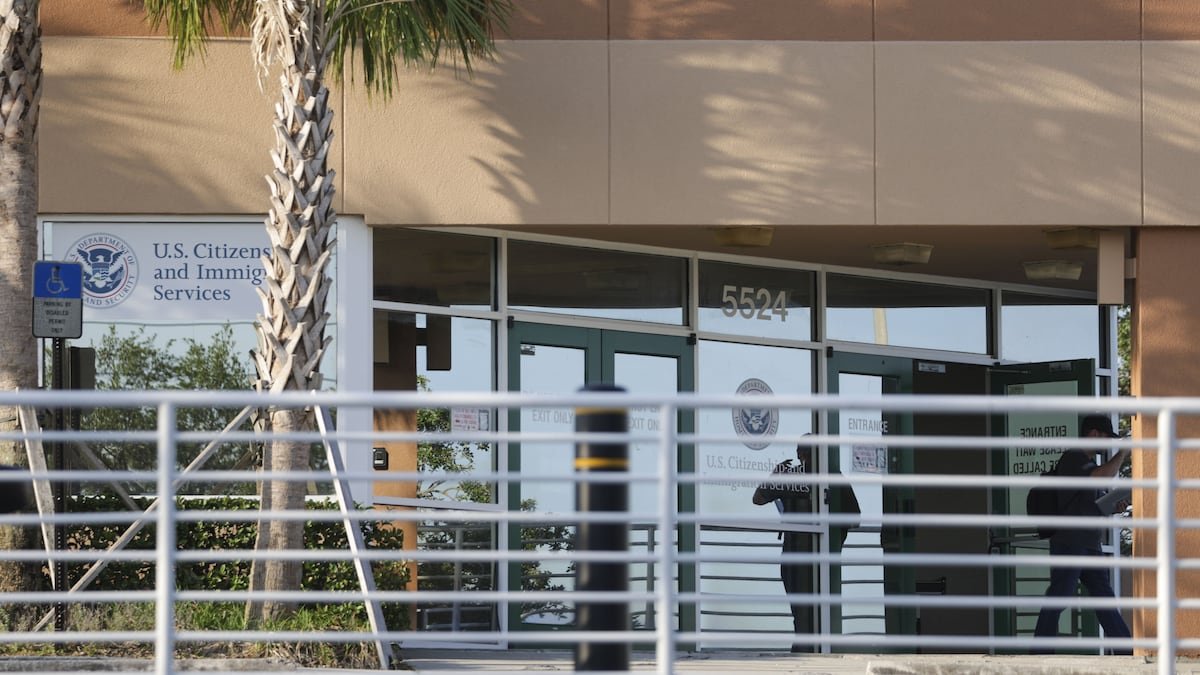
Ramón Pérez has been waiting for more than a year since he submitted his application for a T visa, a legal status for victims of human trafficking, and completed his fingerprint background check.
Pérez was one of the victims of a 2024 crash outside Ocala involving temporary migrant laborers. The crash killed eight of his colleagues and injured dozens more.
Now, he could be waiting even longer after U.S. Citizenship and Immigration Services confirmed it is tightening the vetting and screening of applicants using the Federal Bureau of Investigation database.
“Things keep getting worse,” said Pérez.
The change is part of an executive order signed by President Donald Trump in February. It applies to pending applications such as those for asylum, green cards and U.S. citizenship. Before, the agency used fingerprint background checks to verify identity and criminal history. Now, it is using a broader FBI database search known as the Next Generation Identification system that offers enhanced criminal history record information and integrated capabilities to provide “the world’s largest and most efficient electronic repository of biometric and criminal history information,” according to the FBI.
“Processing is ongoing as we apply these enhanced background check requirements,” agency spokesperson Zach Kahler said in a statement, adding that delays “should be brief and resolved shortly. USCIS will always prioritize the safety of the American people.”
Nearly 12 million applications are already pending in the United States, according to an NPR review of data from U.S. Citizenship and Immigration Services.
Immigration attorneys and advocates are concerned people could be swept up in mass deportations while their cases are delayed.
Florida immigration attorney Laura Quintero said the fingerprint process should be enough because it already includes a background check. Even when applicants have submitted enough evidence, and the process appears to be normal, she’s seeing more cases held up after interviews. The new guidelines went into effect on April 27.
“They don’t want to give us an answer,” Quintero said. “When we file requests or contact USCIS, they say the case is in the background check process.”
Quintero has an Ecuadorian client who had her immigration interview recently. A petition by her husband for her to get a green card had already been approved by USCIS, and the woman had provided evidence of her marriage. Now, she will have to wait for a new background check.
Vicky Obando, a local advocate and project development coordinator at United for the Community in Pinellas County, said her group is helping families prepare for possible immigration-related emergencies, such as the arrest of a parent or deportation order, due to stricter policies and directives. Last year, a rule created a law enforcement unit within U.S. Citizenship and Immigration Services that gives federal officers the authority to carry guns, execute warrants and arrest people for immigration violations.
On April 28, a federal appeals court ruled the Trump administration cannot jail immigrants without the chance to seek bond, the Associated Press reported.
“We support families in preparing essential documentation in the event they need to leave the country,” Obando said, including “organizing key personal records and facilitating powers of attorney to ensure they are prepared for any situation.”
The Trump administration has announced other directives in recent weeks to curb immigration, such as a new yearly fee for asylum cases and stricter rules for people applying for temporary visas, first reported by the Washington Post.
Lisette Sanchez, an immigration attorney in Tampa, said in an interview that some petitioners may wait a long time unless they decide to file a federal lawsuit.
Sanchez has told her clients and followers on social media not to put their immigration cases aside and urged people not to stop applying.



