
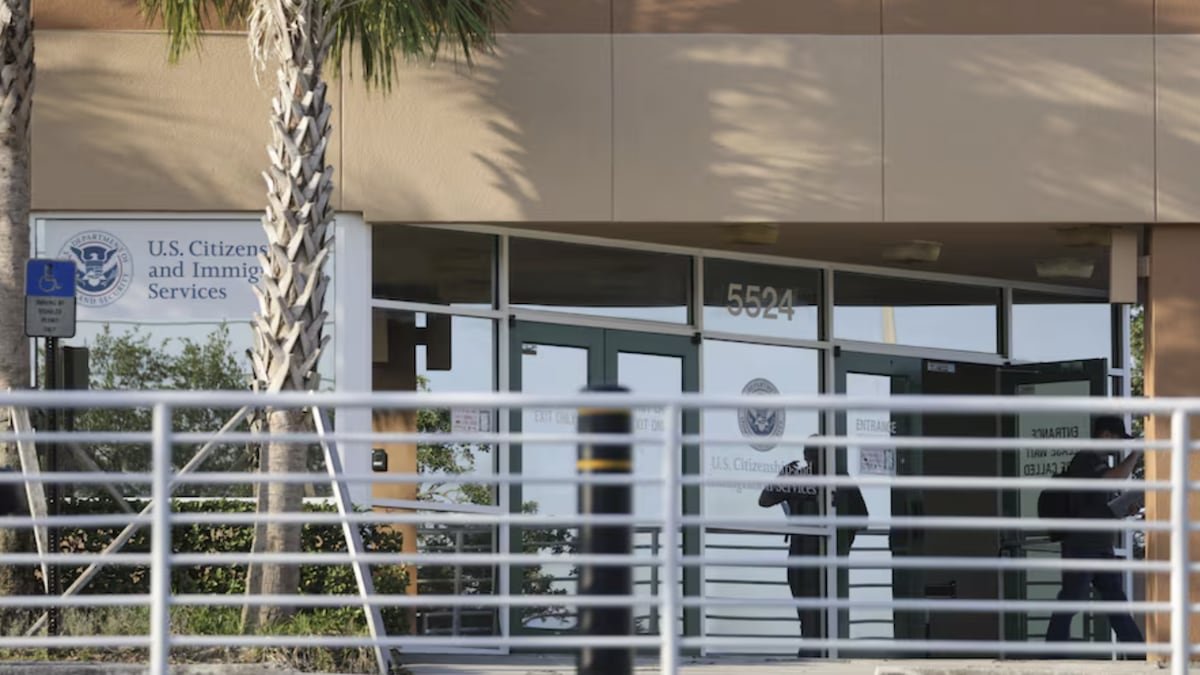
Immigrants living temporarily in the United States who want to apply for permanent residence, obtaining what is known as a green card, will have to leave and complete the process in their country of origin.
Last week’s announcement by U.S. Citizenship and Immigration Services could affect people married to U.S. citizens, holders of work visas, foreign students, and political asylum seekers, among others.
The new policy allows the immigration system to function “as the law intended instead of incentivizing loopholes,” agency spokesperson Zach Kahler said in a statement.
“From now on, an alien who is in the U.S. temporarily and wants a Green Card must return to their home country to apply, except in extraordinary circumstances,” Kahler said.
USCIS did not specify when the new policy would take effect or what would happen to those already in the process of obtaining permanent residence in the U.S. It also did not detail what “extraordinary circumstances” it would consider for processing a permanent residence application or adjustment of status without requiring someone to leave. However, the agency said people who provide an “economic benefit” or “national interest” could likely stay in the United States.
Historically, immigrants have been able to adjust their status in the United States while settling into their communities. Congress created the adjustment of status provision in 1952 as part of the Immigration and Nationality Act.
But amid zero-tolerance policies, bans and pauses of immigration interviews, USCIS has cut grants of legal permanent residence by about half over the course of the year, according to the libertarian Cato Institute. The number of approvals fell by 54% from July to January , the institute found.
Advocates and leaders said the new green card policy could lead to lengthy family separations and more uncertainty. Permanent residence is the last step before applying for citizenship.
“When families are forced to complete their permanent residence process from their countries, we are not just talking about an immigration procedure,” Ana Lamb, an immigrant advocate in Hillsborough County, said. “We are talking about family separation, the loss of economic stability, disruption in the lives of U.S. citizen children and an enormous level of anxiety and uncertainty.”
Walter Kim, president of the National Association of Evangelicals , said in a statemen that “while addressing visa overstay rates is a worthwhile goal, this new USCIS policy undermines family unity.”
A recent study from the National Foundation for American Policy, a nonpartisan research group, said the administration’s policies could significantly reduce the number of permanent residents or people who receive green cards by up to 50% by the end of Trump’s four-year term.
The regulation requiring people to apply for a green card abroad comes days after President Donald Trump signed an executive order called “Restoring Integrity to America’s Financial System” that requires banks and government departments to take a closer look at whether people without legal status are opening accounts or getting financial services.
Information from the Associated Press was used in this report.



