
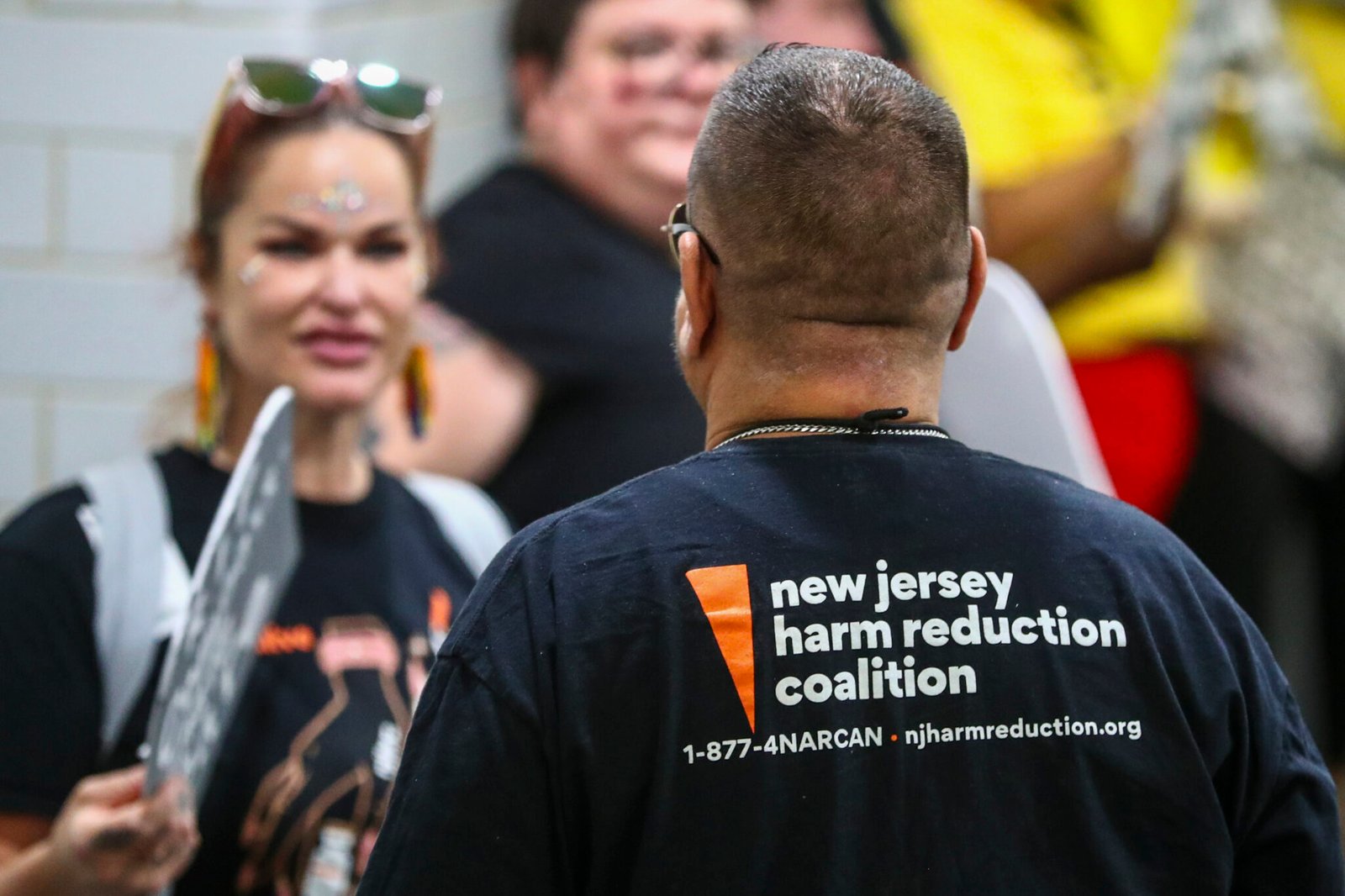
Gov. Mikie Sherrill said she will build on the harm reduction programs established by her predecessor, strategies that proponents say have been shown to save lives, reduce infectious diseases, and help people connect to other services, including long-term recovery from drug addiction.
New Jersey in recent years has quickly scaled up harm reduction programs that now touch every county, allowing people who use drugs — and friends, family members, and social service providers —to get easier access to the opioid-reversal medicine naloxone, fentanyl test strips, clean needles, condoms, and other public health tools.
“My Administration is committed to expanding access to lifesaving resources and uplifting evidence-based harm reduction strategies to support sustained recovery for those affected by addiction. Real recovery means breaking dangerous cycles, removing people from harmful environments and triggers, and ensuring people have stable access to critical resources,” Sherrill told the New Jersey Monitor in an email.
A dose a day of Narcan sparks concern about drugs in NJ prisons
Sherrill, a Democrat, took office on Jan. 20. In September, under her predecessor, Phil Murphy, the state dedicated $119 million from the state’s share of opioid settlement funds to sustain and expand the state’s harm reduction system through 2030.
In all, Murphy’s administration invested nearly $145 million in harm reduction work, in addition to funding treatment, recovery, and family support programs, using a combination of settlement money and taxpayer dollars.
Sherrill, who will present her first state budget plan to the Legislature on March 10, said the need for this work remains.
“The opioid crisis continues to have a devastating impact across our state and nation. We cannot afford to lose momentum in New Jersey’s efforts to end overdose deaths. Every life lost to overdose is a tragedy, and too many families have been impacted,” she said.
Drug-related deaths skyrocketed in the 2010s nationwide and in New Jersey, where they rose from just over 1,000 annual fatalities in 2012 to nearly 3,000 in 2018, state data shows. Fatalities peaked here in 2021, when nearly 3,200 people died from drugs, but have since declined to around 2,000 in 2024, the most recent year available.
Preliminary figures from the state medical examiner’s office indicate the downward trend continued through 2025, when roughly 1,300 drug deaths were recorded. But the data shows the decline has not been equitable; fatalities among Black residents and older people of all backgrounds were slower to reverse than for the population at large.
“Everyone needs help at some point, and that looks different for different people.”
– Sarah Adelman, ex-state human services commissioner
New Jersey has steadily expanded treatment and recovery support options over the past decade, and tens of thousands of people receive treatment each year, either at a residential program or as an outpatient. Former Gov. Chris Christie’s administration focused on reducing shame and stigma, growing recovery options and reducing the flow of prescription opioids. But most people with addiction don’t seek treatment, can’t access services, or can’t afford them.
When it comes to saving lives, advocates point to frontline harm reduction work — which often means helping people who are homeless, engaged in sex work, or actively using drugs, situations that put them at extreme risk for overdose and death — as the reason fatalities are down.
Once this meant skirting the law. In 1997, leaders of a grassroots group were arrested and fined $500 each distributing clean needles in New Brunswick to help stop the spread of AIDS. Statutory changes by Murphy and others now provide legal protection for this work.
Harm reduction is grounded in a belief that everyone has value, including people who use drugs — either for recreation or because of physical dependence — and that everyone deserves support and basic services, like housing and health care. It seeks to challenge longstanding stigma and shame around addiction and uses low-cost public health methods like giving out clean needles and naloxone and limit disease spread and limit fatal overdoses.
Under President Trump, federal health officials have labeled harm reduction efforts as part of the “failed policies” of the Biden administration. Trump officials temporarily withheld some funding for this work and redirected dollars to other programs centered on education and prevention, sober housing, and expanding treatment.
Experts said it is unclear what Trump’s agenda will mean for existing harm reduction programs. The more immediate concern, they said, are changes to the Medicaid program, which now pays for more than half of all substance-use treatment nationwide.
Advocates in New Jersey said state officials’ focus on harm reduction reflects the state’s growing willingness to listen to people with lived experience, both in and out of government. That first-hand knowledge makes for more effective programs, they said.
Carole Johnson is president and CEO of University Hospital in Newark, and a former commissioner of the state Department of Human Services, which oversees community-based addiction programs and has dispersed much of the opioid settlement funding
“You can build lots of systems and policy solutions, but if people don’t feel safe or comfortable using them, then they’re nice on paper, but they haven’t actually moved the needle,” Johnson told the New Jersey Monitor, adding, “I think one of the real legacies of the Murphy administration is really trying to make the front door as easy as possible.”
Four years ago, harm reduction services were available on certain days in seven cities in New Jersey. Today, programs are regularly operating in 47 locations, according to the Department of Health, which continues to process applications for additional sites. Advocates credit public investment, legal changes, and greater public awareness and acceptance of addiction issues for enabling this growth.
Use of harm reduction grew 122% from 2022 through 2024, when some 4,500 people participated, many of whom were referred for other assistance, according to a Health Department report from August. The programs distributed close to 16,300 naloxone kits in 2024, making it possible for participants to save others’ lives, and gave away almost 500 prescriptions for the addiction-treatment medication buprenorphine, nearly twice the number issued in 2022.
Morgan Thompson, president and CEO of Prevention Links, a recovery organization based in Union County, praised New Jersey’s commitment to harm reduction. Thompson serves on New Jersey’s Opioid Recovery and Remediation Fund Advisory Council, which is guiding the state’s use of more than $1 billion in settlement funds from pharmaceutical manufacturers and distributors. (Half of the money is controlled by the state, while the rest goes directly to the counties and some 250 municipalities, under the settlement terms.)
“I think that there’s a direct link between the expansion of programs like that and the ability of people who use substances of all kinds to be able to live thriving lives and to be able to access the things that everybody takes for granted, like the ability to be served by a doctor,” Thompson told the New Jersey Monitor.
A strategic plan released by the council in June prioritized harm reduction and housing, among other things, and noted that stigma remains the primary barrier to care. Funding recommendations the group shared in December call for another $24 million for harm reduction work and nearly $290 million to further expand treatment, warp-around programs, monitoring, and more.
Thompson praised Sarah Adelman, a former state Department of Human Services commissioner who chaired the advisory council, for her work to reduce stigma around addiction and make services more accessible. (Adelman, who replaced Johnson as human services commissioner in 2022, has been succeeded by Sherrill’s pick for the post, Dr. Stephen Cha, whose nomination was approved by the full Senate last week.)
Naloxone, for example, was once carried just by first responders, Thompson said, but is now available at more than 700 pharmacies for free, no questions asked, through a partnership with the department.
“Just being able to readily access that life-saving resource is a direct result of Commissioner Adelman’s leadership and advocacy and vision for how caring for people with substance-use challenges should just be mainstream,” she said.
Not everyone sees harm reduction as the best option for public investment. Frank Jones, an advocate whose brother struggled with addiction, worries that some harm reduction practices enable people to continue using drugs without truly healing. Jones said that for him, recovery also means sobriety.
“My heart is with recovery because I’ve seen how transformative it can be,” Jones told the New Jersey Monitor in an email. “I also recognize that harm reduction can serve as a bridge — keeping people safe and connected to care until they’re ready for recovery. We need approaches that reduce shame and stigma but always keep long-term healing as the goal.”
Before leaving office, Adelman told the New Jersey Monitor that making the department more “human centered” was important to all the work it did, not just harm reduction. She also stressed it was a multi-agency effort and heaped praise on department staff for their commitment to the people they serve.
“It matters very much to me, on a personal level, that the people we serve don’t feel any level of shame or stigmatized by needing to interact with our programs or our services or our people,” Adelman said. “Everyone needs help at some point, and that looks different for different people.”
Adelman also has personal experience with addiction, having watched how drugs and alcohol helped shape her father’s life. Her parents split when she was very young, Adelman recalled, but she didn’t reconnect with her father until she was in high school, after he had been through addiction treatment.
As an adult, Adelman helped her dad navigate treatment for hepatitis C — a possible side effect of past drug use — a process she said was complicated by cultural attitudes around drug use and his own reluctance to share details of his addiction or seek care.
“I often saw his own decision-making being affected by his perception, or how he felt other people perceived him, and so much of it was rooted in shame and stigma,” she said.
Her father died in early 2020, when Adelman was deputy human services commissioner, and just weeks before his beloved Kansas City Chiefs would win their first Super Bowl victory in 50 years. Adelman said it’s important to remember her dad, Stephen “Ziggy” Adelman, as a human being, not a drug user.
“He was really, really smart. He loved nature, like he used to talk about that being his church and his religion. He loved to be outside, he loved to golf and fish, and he loved music,” Adelman said, especially Iggy Pop and David Bowie. “He was a complicated person, but I don’t think anyone has ever been or will ever be more proud of me than he was.”
GET THE MORNING HEADLINES.



