
Majority Democratic lawmakers on Tuesday sent Gov. Mikie Sherrill a nearly $61 billion annual budget plus another measure for $360 million in new spending structured so it will not count toward the fiscal year 2027 total.
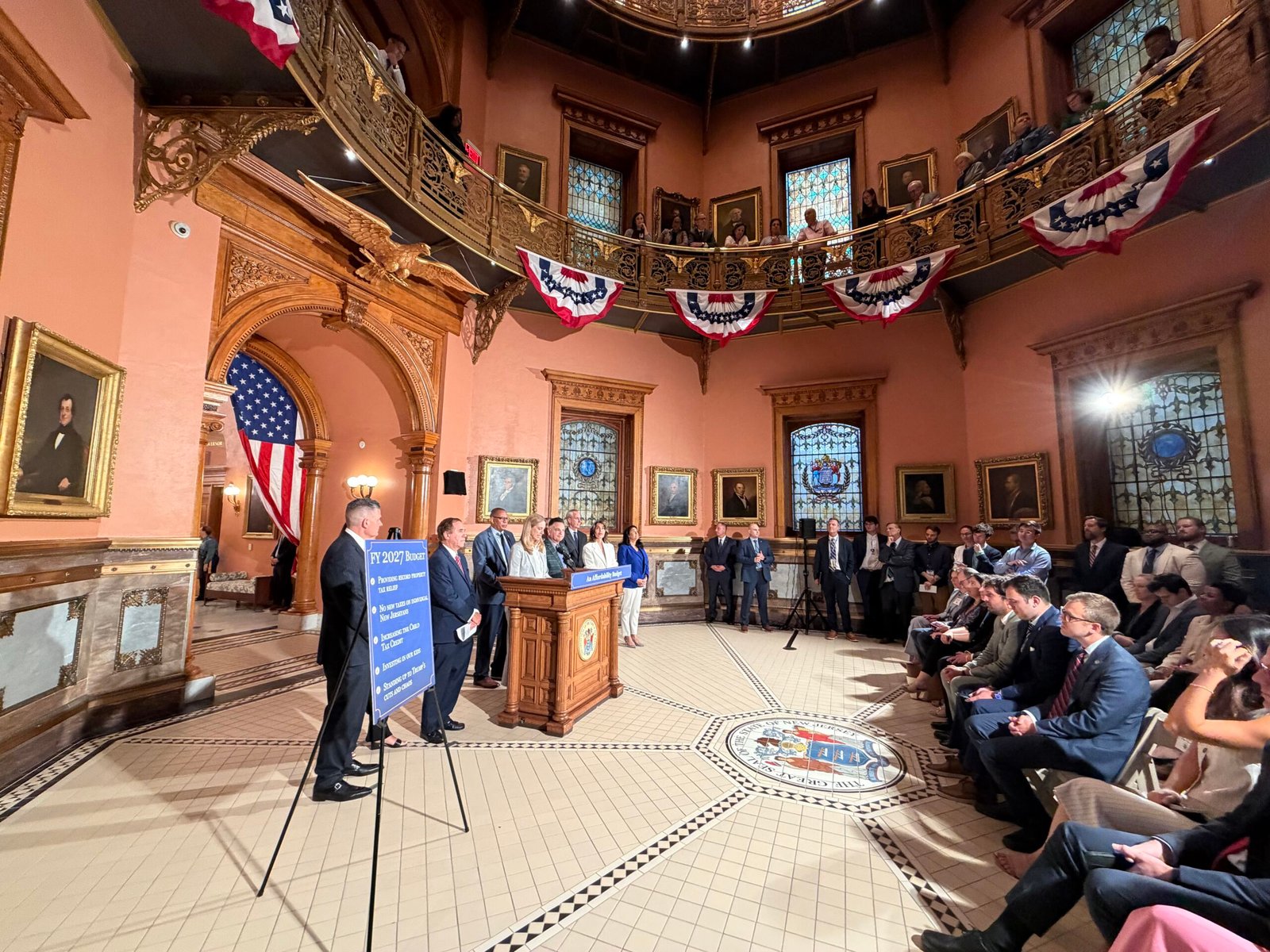
Sherrill signed the budget bill late Tuesday, saying in a social media post that it “builds a future for your kids and your family.” A first-term Democrat in her inaugural budget process, she had until midnight to act and avoid a constitutionally mandated government shutdown. She held a news conference Tuesday evening with Democratic legislative leaders to celebrate passage of what she called her affordability budget.
The budget bill’s delivery to Sherrill capped a weekend legislative flurry of bill releases from committees. Marathon voting sessions on the $60.7 billion budget Tuesday led to approvals for record annual spending that increases direct property tax relief and K-12 school aid and temporarily expands the New Jersey child tax credit.
The fiscal year starts Wednesday.
The last-minute supplemental appropriations bill tacked on the additional spending, including money for FIFA World Cup soccer tournament-related costs and a more than $100 million loan to ease Jersey City’s municipal budget shortfall. Such line items, inserted for local projects at the behest of lawmakers, are known in Trenton as “Christmas tree” spending, or pork.
“This budget puts affordability first,” Sherrill said at the news conference.
Surplus cut
Republicans took issue with the Democrats’ approving that measure separately. Its success, the GOP argued, allowed Sherrill to portray her first budget as fiscally responsible, at least on paper.
“We’re getting the same smoke and mirrors,” Assemblyman Brian Rumpf (R-Ocean) said of Sherrill, who took office in January. “Different governor, but apparently it doesn’t make a difference.”

The two spending bills together add to more than $61 billion, or 3.7% higher than the $58.8 billion budget enacted last year during then-Gov. Phil Murphy’s final months in office. That year-over-year increase is less than the rate of annual inflation measured by the federal government in May.
The overall boost in appropriations ensures that state government spending once again will easily outpace tax collections during the next fiscal year. And the budget surplus once again will be tapped to help finance the gap, according to a score sheet prepared by nonpartisan legislative staff.
As a result, a nearly $7.7 billion opening surplus will be reduced to $6.05 billion within a year, according to the score sheet.
Several other pieces of legislation moved this week, including measures involving what’s expected to be hundreds of millions of dollars in new revenue from business tax changes.
That legislation, which many Republicans characterized as thinly disguised tax increases, calls for tweaking existing deductions and credits. Also to be established is a fee for some employers whose workers are covered by Medicaid rather than company benefits.
No major tax increases
None of the major taxes paid by New Jersey residents, including the sales and income taxes, will increase during the 2027 fiscal year.
Some senior homeowners, though, will lose a degree of property tax relief as part of Sherrill’s efforts to shave Stay NJ, a costly and generous program. The fine print inserted into the spending bill was the result of an agreement between Sherrill and Democratic legislative leaders: The Stay NJ income limit for benefits will drop to $200,000 from $500,000.
Full funding was preserved in the budget agreement for other direct property tax relief programs, including Anchor and Senior Freeze. A separate piece of legislation calls for a temporary 25% expansion of New Jersey’s child tax credit.
The total allocation for aid payments to K-12 public schools will increase year over year to more than $12 billion. Sherrill and lawmakers, though, did not heed calls from both parties to address broader concerns about the state’s school funding formula. Some districts receive less aid, even as the total pot is rising.
Overall state funding for New Jersey Transit was also set to increase, though not by enough to avoid a pending fare increase. The governor and lawmakers agreed to cover state government’s annual pension obligation fully, a more than $7 billion expense counting funding from the state Lottery.
Left out of the budget was a restoration of retiree cost-of-living adjustments. New Jersey has frozen such adjustments for well over a decade to save on the state’s own costs, enraging many retirees.
Democrats praised their fiscal year 2027 spending bill during Tuesday’s voting sessions. Among them was Assembly Budget Committee Chair Eliana Pintor Marin (D-Essex), who highlighted the increased public school aid and the pension payment. She also pointed to the higher child tax credit.
“We accomplished all of that without losing sight of the people we serve,” Pintor Marin said.



