
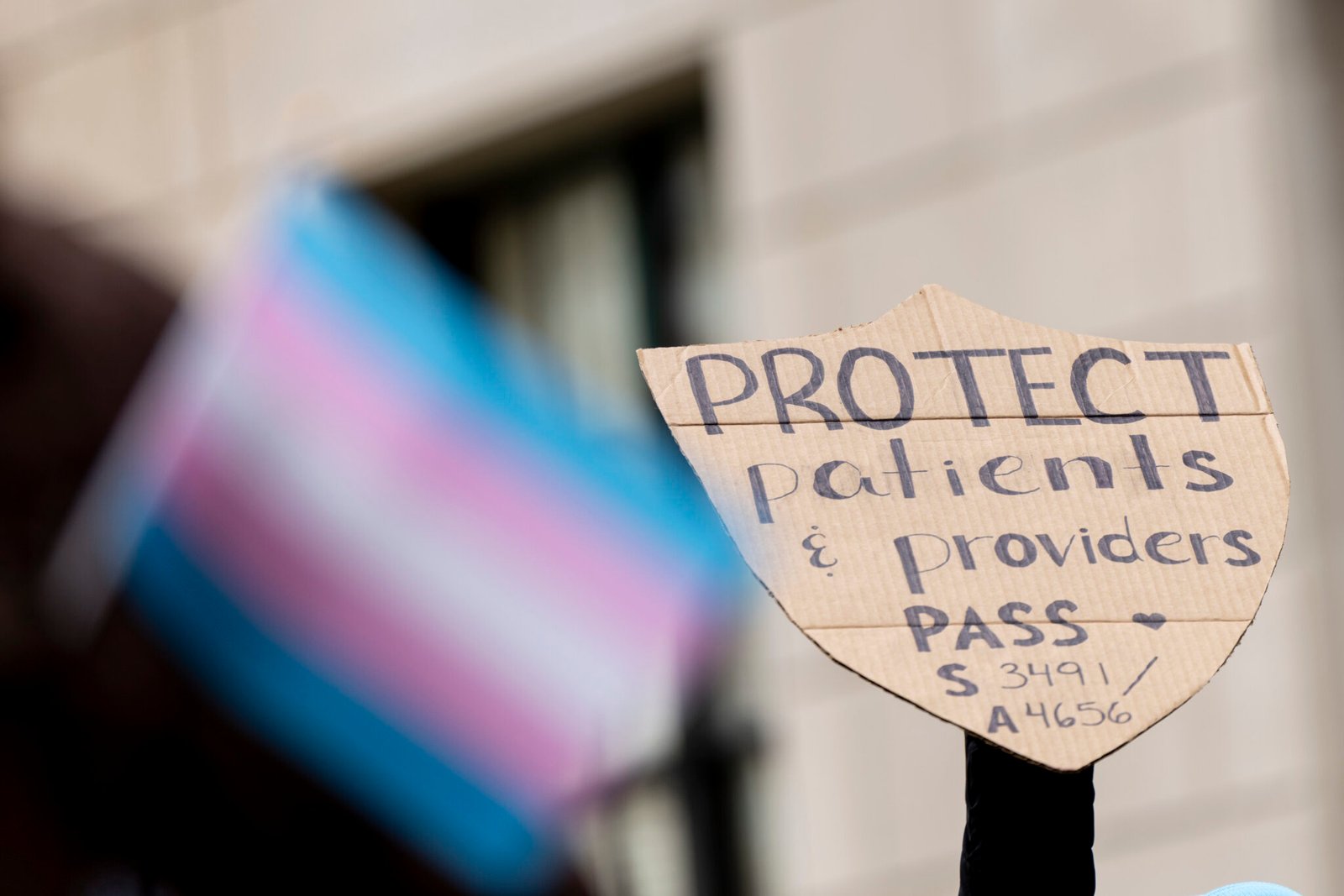
State legislation intended to shield transgender patients and their healthcare providers from prosecution is moving forward in Trenton, but the two-year old bill was amended in recent days to delete all references to the phrase “gender-affirming” care.
Instead, the amended version of the bill, which is also intended to protect abortion patients and providers, redefines reproductive services to include treatments used by transgender patients. The legislation is scheduled to be heard by the Assembly’s health committee on Thursday.
NJ lawmakers advance bill aimed at curbing deadly sepsis cases
The original version of the bill included dozens of references to gender-affirming care, which refers to medication, mental health treatment, and in rare cases surgical interventions used to treat gender dysphoria. The amended version approved by the Senate’s health committee on Monday includes zero reference to the phrase.
Louise Walpin, an LGBTQ advocate who has lobbied for lawmakers to advance the bill, appeared unfazed by the change.
“It’s not the word — gender-affirming care — that we need to protect. It’s the healthcare,” Walpin told the New Jersey Monitor.
Khadijah Silver, an attorney working with the Trans Equity Coalition who contributed to the bill’s drafting, said there are no “magic words” for protecting access to care. The initial bill sought to codify protections outlined in a 2023 executive order from former Gov. Phil Murphy, which focuses on gender-affirming care, but Silver said the revision builds on a 2017 law that requires health insurance companies to cover services related to gender identity.
“What’s important here is that we get the work done, not that we get the words,” Silver told the New Jersey Monitor.
The bill’s sponsors include Senate President Nicholas Scutari (D-Union) and Sen. Teresa Ruiz (D-Essex), the body’s majority leader.
Dan Cassino, a professor of government and politics at Fairleigh Dickinson University, said the language change may provide a level of political protection for supporters in the Legislature, even though there’s little evidence that supporting the concept of gender-affirming care would harm Democrats. The way the bill has been amended also allows supporters to frame their vote for the bill as support for reproductive rights, he said.
“Protecting access to abortion is broadly popular in the state, and within the Democratic Party. Protecting access to gender-affirming care is believed to be a wedge issue, so it makes sense that they might want to get some plausible deniability,” Cassino told the New Jersey Monitor.
The bill’s supporters say the protections it would provide are necessary given the Trump administration’s efforts to curtail access to care for gender dysphoria and to abortions. It would create a crime of “interference” with those services, which under the bill would include accepted treatments “to support a person’s alignment with their gender identity or expression.” Violators could face as many as ten years in prison and a fine of $150,000 if someone is injured through their interference.
Interference would include harming or seeking to harm a patient, provider, or volunteer; obstructing someone from trying to access a healthcare facility; damaging the facility or property; or seeking to intimidate or otherwise cause suffering to a patient, provider, or volunteer.
Someone who is harmed under the law would be able to sue their attacker for civil damages, and the state Office of the Attorney General could also impose civil fines of up to $25,000.
Since the U.S. Supreme Court in 2022 overturned the landmark Roe v. Wade case that protected abortion access federally, reproductive healthcare providers in New Jersey have seen an influx of care-seekers from states that restrict the procedure, with some Planned Parenthood locations treating more than 100 out-of-state patients a month.
The Trump administration has also pushed to punish doctors and hospitals that treat gender dysphoria in minors. Nationwide, these clinicians have also seen a rise in patients from states that ban this type of care, according to an April 2025 report from the UCLA School of Law’s Williams Institute. Three-quarters of the providers surveyed said patients were increasingly worried about their access to care and 1 in 4 had been threatened online, by phone, or at their workplace, it found.
The New Jersey measure would also enhance privacy of patient records and prohibit government officials here from assisting other states in obtaining information about abortion providers or patients and about transgender people receiving certain health care and their providers.
GET THE MORNING HEADLINES.



