
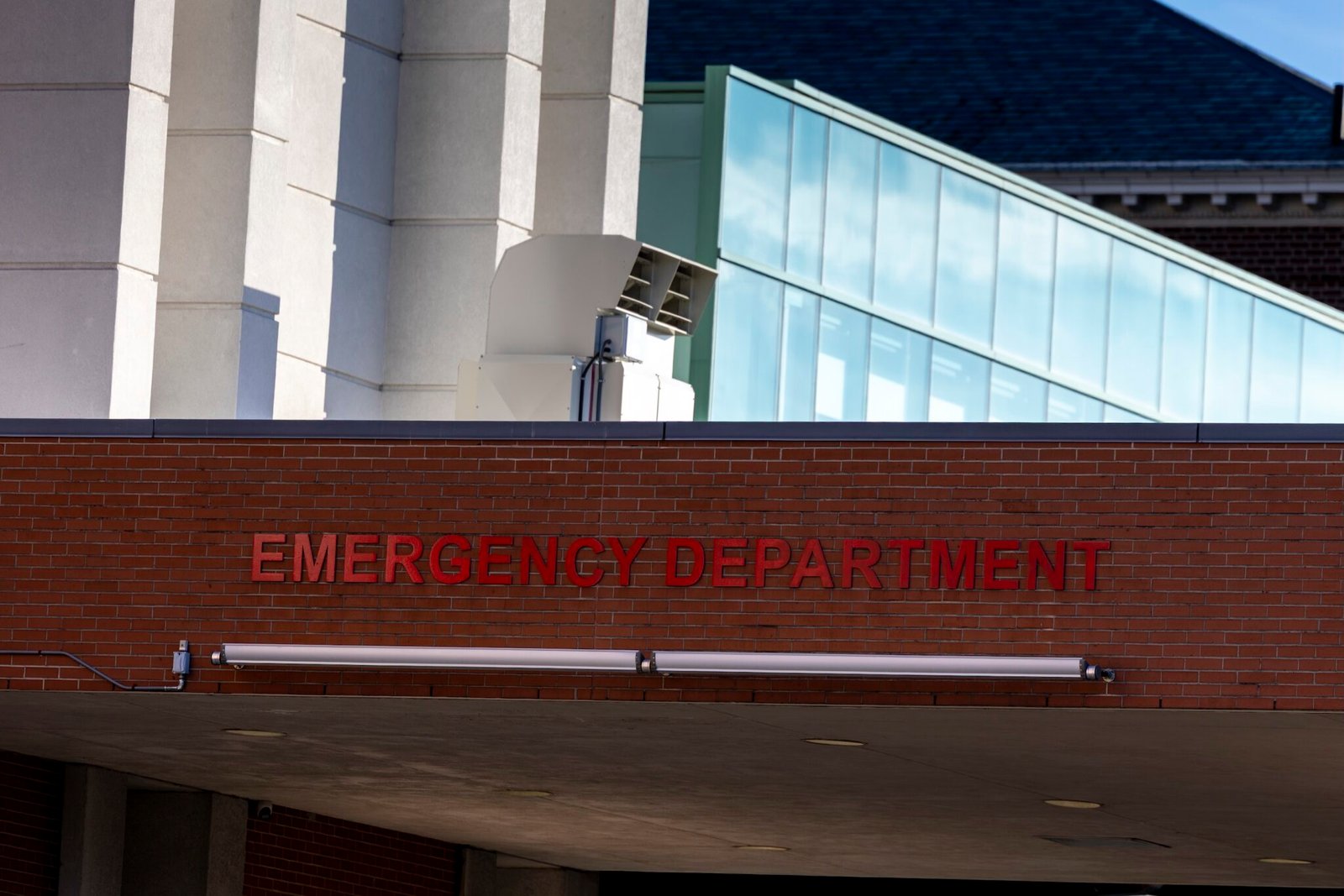
Hospitals in New Jersey could continue to hold emotionally unstable patients against their will for up to six days under a bill advancing in the Statehouse, a move even supporters called imperfect but necessary given the lack of appropriate inpatient options for people in a psychiatric crisis.
The state used to limit involuntary civil commitments to 72 hours, but approved doubling it to six days by law three years ago. The Senate’s health committee voted unanimously Thursday to approve a bill to extend the six-day limit through mid-April 2027, a move opposed by mental health advocates.
Sen. Joe Vitale (D-Middlesex), the committee chairman and bill sponsor, said he disliked passing a stop-gap measure, but he noted when hospitals are treating people who could harm themselves or others they sometimes have few choices. He said he is working with hospitals to expand inpatient treatment options, but funding to create additional psych beds is a challenge.
“We have to find a more permanent solution. Certainly a fairer solution for some people who end up in the hospital,” he said.
Former Gov. Phil Murphy signed a law in 2023 that doubled the 72-hour hold limit for three years, a move he said was needed to give the state time to increase inpatient mental health treatment capacity, which has been lacking for years. The American Civil Liberties Union of New Jersey was among the 50 groups that urged Murphy to veto the measure, saying it infringed on patients’ civil rights.
Hospital leaders said Thursday they still struggle to find beds for some patients, particularly those that lack commercial insurance or are disabled, pregnant, or need hospital-level medical care. Sometimes the only option is in a different county, far from family and friends, and less conducive to recovery, the said.
The Health Care Quality Institute of New Jersey also flagged the lack of inpatient psychiatric beds for children in a recent report, a problem advocates raised in testimony Thursday.
Dr. Jay Case, behavioral health director at Virtua Hospital in South Jersey, said emergency staff does not want to commit patients, a complicated process that can be disruptive for others and does not guarantee the individual gets the best psychiatric treatment.
“We only do it when we really, really have to. And when we have to is when patients are an imminent danger to themselves and others. And unfortunately, we see quite a lot of patients in that situation,” Case said.
Hospital leaders testified that some 44,000 patients were involuntary committed over a two-and-a-half-year period following the law’s initial passage, data the state was required to collect, and less than 2% were held beyond the first 72 hours.
While most patients are held for shorter periods, mental health advocates said any prolonged exposure to the emergency room — with its chaos, noise, and lights — can cause their condition to deteriorate and may lead them to distrust the medical system in the future. Little is done to address the underlying conditions when patients are stuck in this limbo, they said.
Heather Simms, deputy director of the Collaborative Support Programs of New Jersey, a peer-led group that provides a range of mental health services, said patients have described hospital holds as “frightening, dehumanizing, and traumatizing.” Extending this experience just makes it worse, she said.
“The answer to placement delays isn’t longer holds. The answer is creating a system that responds quickly, humanely, and effectively when people are in crisis,” she said.
Mary Ciccone, policy director at Disability Rights New Jersey, said continuing the six-day maximum takes the pressure off hospitals and the state to find solutions. She and others said they are waiting for a report from the state Department of Health, required as part of the original law.
“This law places the burden of the lack of appropriate treatment placements on the individuals who are suffering, rather than the hospitals and the Department of Health, who have much greater ability to provide solutions to the gaps in mental health,” Ciccone said.
The Senate panel also passed a bill that aims to find solutions through a voluntary pilot program that would allow hospitals to be more flexible in how they can list psychiatric beds as available. The measure could be extended after two years.
Nicole Moore, clinical director of social work at Inspira Health, also in South Jersey, said the bill would not solve the problem, but it would be a step forward.
“This bill represents a practical and immediate tool to better utilize existing capacity while longer-term solutions continue to be developed,” she said.
GET THE MORNING HEADLINES.



