
The Tijuana River watershed between southern California and northern Mexico has been the epicenter of an environmental and public health crisis for more than two decades. Since October 2023 alone, more than 31 billion gallons of raw sewage and polluted water have flowed into the U.S. and, eventually, the Pacific Ocean.
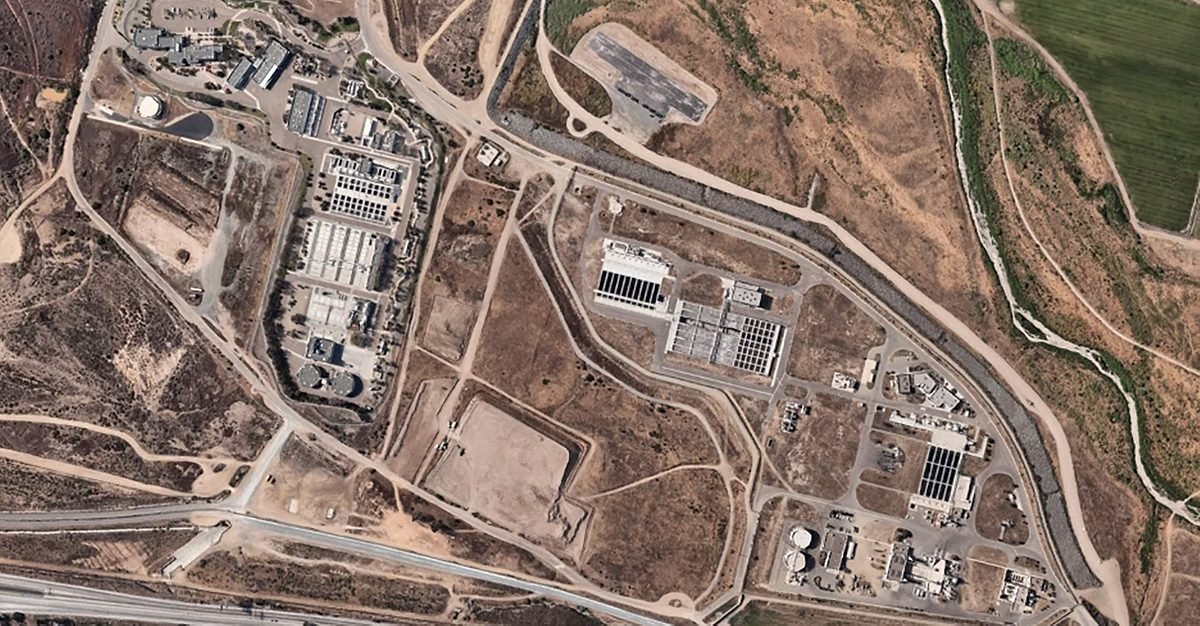
Emergency response procurements from the U.S. Section of the International Boundary and Water Commission, the treaty-defined agency charged with managing binational water issues, have been issued in reaction to the crisis since 2023—including expansion of the South Bay International Wastewater Treatment Plant in San Diego County by a design-build team of Stantec and PCL Construction.
The pollutants fouling water and air in county communities such as Nestor and Imperial Beach are experiencing water-to-air transfer of hydrogen sulfide—a toxic gas and sewage tracer. Other hazardous gases, volatile organic compounds and industrial waste from Tijuana, Mexico’s growing manufacturing sector are also crossing the border, but the noxious hydrogen sulfide is the main culprit for taking pollution airborne, creating headaches and illnesses and many indoor days for residents.
A team from the Scripps Institution of Oceanography at the University of California, San Diego, studied the air and water in 2023 and 2024. Before this analysis, very little was understood about how waterborne pollution is transferred to the air. Pollutants causing malodors and adverse health effects had never been identified or quantified, and the responses from utilities, public health authorities and the engineers they hired was typically to follow parts-per-billion analysis to determine if the air is safe.
The solution to dealing with pollutants such as hydrogen sulfide in badly fouled rivers has often been to seal off and never dredge these river bottoms, but the problem of the foul-smelling off-gassing compound has never been studied with such a large amount of pollution as what the Scripps team undertook.
“I‘m an atmospheric chemist,” explains Kimberly Prather, Scripps distinguished professor and chair in atmospheric chemistry who led the team that researched air quality of South Bay communities from 2023 to 2025. “Our original hypothesis was that all this pollution is coming out of the water, the ocean or the river, [and] we thought the main concern was the ocean. Now we know it’s the river. We had National Science Foundation funding to look at what was affecting air quality and that’s what we were looking at, overall standard air quality.”
Nearly 1,300 days of beach closures in the South Bay area had affected residents by the time the Scripps researchers took a look at what was causing the air to be so bad. They found that surging wastewater flows in 2024 enhanced water-to-air hydrogen sulfide transfer at a turbulent Tijuana River hot spot, leading to nighttime atmospheric peaks thousands of times greater than regular levels. The scientists also identified other hot spots of off-gassing where rivers became turbulent and hydrogen sulfide levels outpaced normal levels.
What the Scripps team found is changing the way scientists look at water pollution.
Looking for quick answers on construction and engineering topics?
Try Ask ENR, our new smart AI search tool.
Ask ENR →
GET STARTED
“Looking at wastewater treatment plant analogies,” if you put wastewater over a steep drop, these gasses, especially hydrogen sulfide, will be preferentially, like almost 100% very effectively released into the air,” Prather explained. “That’s how you clean the water in a wastewater treatment plant, aerating it over levels. You’re not supposed to do that in the middle of a community. So, I keep saying, remove these [steep] drops … because other parts of the river are the quiescent parts.” The data to support this observation changes the entire thinking about the issue, she said. “The belief was, if you read the literature, it always said it’s hydrogen sulfide that comes out of these stagnant pools. But that’s not what we’re seeing. We see the highest levels at this one spot, the hot spot.”

River sampling stations were identified by the Scripps research team in the community of Nestor and city of Imperial Beach.
Map courtesy of the Scripps institute/UCSD
Fresh Research Drives New Thinking
The Scripps research team’s paper “Heavily Polluted Tijuana River Drives Regional Air Quality Crisis” was published in the journal Science last August. Prather was lead author supported by university PhD candidate Benjamin Rico. Since then, the boundary commission U.S. Section, county supervisors and Mexican officials have all adopted more aggressive approaches to dealing with the air quality crisis.
Before the research was published, there was pushback from officials who based their assumptions on older models of determining air quality. “We knew that the air was what’s making people sick,” Prather said, noting research from the federal Centers for Disease Control and Prevention Agency for Toxic Substances and Disease Registry. “Now the county admits it. Now everybody’s admitting it. Now, they believe our numbers,” she added.
Eliminating hot spots by eliminating waterfalls and other vertical drops in a river won’t be an easy infrastructure fix, but the Scripps research suggests it is necessary to improve air quality.
“You just shouldn’t be sending water through pipes and making it drop. That’s pretty simple,” Prather said. “When I gave this talk at a recent engineering conference, an engineer, head of a major firm, came to me and said: ‘Yeah, it would be better to just flatten it out and put a bridge over the top, but that’s going to take longer as an extra level of work.’ But the truth is they need a bridge there anyway.”
Prather said that anywhere raw sewage is being dumped or there is a pollution runoff into the ocean, a river or an estuary, “that polluted water can and will impact your air quality, and people just are not looking at that.”
The research demonstrates that poor water quality from regular sewage releases into bodies of water can substantially affect air quality—although it is rarely included in air quality models and health assessments—with far-reaching implications as polluted waterways increase globally. While there is no volume of data as rich as the research into the Tijuana River watershed, flushing sewer systems into rivers and lakes is still done regularly by some water and sewer authorities with combined sewer systems as a treatment method of last resort during storm events.
The $600-million expansion of the South Bay International Wastewater Treatment Plant (above) will involve a new headworks, chemical system, two new primary sedimentation tanks, 10 new secondary sedimentation tanks and more.
Rendering courtesy of the U.S. IBWC
More Work to be Done
The work is not done when it comes to research. The Scripps team is still monitoring gas levels and the Tijuana River hot spots. Conditions have worsened since publication of the study in 2025—with 2026 peaks at the Nestor site reaching about 4,500 parts per billion against California’s 30 parts per billion standard, more than 1,100 hours over the standard in the past year.
Beyond the debate about how much hydrogen sulfide constitutes a threat to humans breathing the air, the county Board of Supervisors voted unanimously last October to authorize legal action against Veolia Water West Operating Services Inc, the engineering consultant that runs the South Bay plant, and its parent Veolia North America Inc.
Prior to that, a group of residents also filed a lawsuit against Veolia over the 1,300-plus days of beach closures and the overall poor air quality. Veolia responded firmly at the time, saying the “root cause of the environmental crisis … is the decades-long failure” of U.S. and Mexican authorities to address more sewage and pollution flow from Tijuana that exceeded the plant’s treatment capacity.
As new administrator of the U.S. Environmental Protection Agency, Lee Zeldin said in April 2025 that Mexico must stop the flow of raw sewage and toxic chemicals into the Tijuana River. He committed $250 million to an overall $600-million project to expand the South Bay treatment plant. For years, Imperial Beach Mayor Paloma Aguirre and other mayors have called for EPA to declare the entire South Bay in San Diego County a Superfund site. Those requests have so far been denied, but the agency has focused on fixing the water situation in the first year of the second Trump administration.
In April, Mexican officials of the International Boundary Commission repaired a pumping station that had failed.
Photo courtesy of the U.S. IBWC/PBCILA
Last June, the Stantec-PCL team detailed the planned $600-million South Bay plant expansion. Michael Watson, senior vice president and major projects lead for water, and Jeff Newman, PCL operations manager, told a public meeting at the time they had validated that 50 million gallons per day could be processed by the plant once upgrades were completed, and that a first 100-day incremental increase of plant capacity from 25 mgd to 35 mgd could be accomplished. Work on this particular milestone was completed in August.
The commission also secured new binational agreements that require Mexico to build and operate critical sanitation infrastructure to reduce cross-border sewage flows. The agency “exists to protect people, property, and water resources along the U.S.-Mexico border,” said Chad McIntosh, who became lead agency commissioner in April 2025. “Over the past year, our staff have moved quickly to strengthen wastewater treatment, secure fair water deliveries for U.S. farmers and communities, and reduce flood risks in both countries.”
Formerly assistant EPA deputy administrator in the first Trump administration, McIntosh said he took the commission job because he wanted to have a direct role in dealing with this particular public health crisis. Over the last year, he said the agency has advanced design work to expand the South Bay plant to an eventual 50 million gpd, with design almost 90% complete and expected to be finished by the end of the year.
While some work began under the boundary agency’s previous U.S. section commissioner, Maria-Elena Giner, its spokesperson noted a commitment to aggressively and quickly advancing sanitation infrastructure improvements on both sides of the border to protect residents from exposure to raw sewage. “We achieved a 40% increase in treatment capacity at the South Bay [plant] in just 100 days, and we are bringing that same sense of urgency to a permanent solution to the Tijuana River pollution crisis, he said.
The U.S. and Mexico signed Minute 333, an agreement that obligates the latter to construct new sanitation infrastructure in Tijuana, properly operate and maintain existing and new facilities and adopt best practices for wastewater and stormwater management consistent with U.S. standards.
McIntosh also participated in a Memorandum of Understanding among the U.S. section of the commission, EPA and Mexico’s Secretariat of Environment and Natural Resources to set out coordinated steps to stop sewage flows through the Tijuana River Basin and its estuaries.
EPA has also conducted a pilot project using ozone nanobubble technology to kill bacteria and reduce odors from sewage in portions of the Tijuana River recognized by Scripps and university research as high hydrogen sulfide pollution centers. The Mexican section of the commission has made progress on its wastewater infrastructure projects, as reflected in EPA’s latest quarterly update in implementing the 2025 agreement.
Relative dispersion and spatial intensities across the Tijuana River Valley and surrounding area are shown for (A) period 1 (Sept. 1 to 5, 2025), (B) period 2 (Sept. 6 to 10), and (C) period 3 (Sept. 1 to 23).
Graph courtesy of the Scripps Institute/USCD
Treatment Plant Work Still Ongoing
Immediately after the border commission issued the notice to proceed last July for the 10-mgd treatment plant expansion, Stantec design professionals and PCL construction teams mobilized to the site. After a week of preliminary planning, they agreed to the temporary design concept that included four main components. A chemically enhanced treatment system increased the primary treatment capacity of the plant and improved treatment efficiency. Additional sludge thickening capacity from temporary gravity belt thickeners supplement the existing dissolved air flotation system.
The Mexican government has committed to miles of piping system work.
Map courtesy of the U.S. section of the International Wastewater and Boundary Commission
Adding New Components
Meanwhile, there is added solids dewatering capacity from a temporary screw press to supplement the existing belt filter press for the temporary increase in solids. Also, discharge of treated effluent through the South Bay Ocean Outfall will require additional diffuser ports to be opened to accommodate the greater flow.
The first component of this plan, a chemically enhanced treatment system, has already been added to the primary settling tanks. This has increased the plant’s primary treatment capacity and improved its efficiency. Crews also installed two chemical tanks, as well as pumps, distribution piping, instruments and a temporary electrical service. The increase in flow from 25 to 35 mgd and improved primary treatment efficiency results in added solids production.
The second major component of the expansion has been to procure and install additional sludge thickening capacity. Gravity belt thickeners were connected to the existing system to supplement the plant’s dissolved air floatation system. There were limited gravity belt thickeners available to meet the project’s aggressive 100-day delivery schedule.
As a result, Stantec’s design specifies for units that can be modified and shipped to the site in six weeks or less. The specialized equipment arrived there in early August 2025, and the team managed to install, start up and place the thickeners into service within weeks.
“It’s been a busy time for the whole team—boundary commission staff, PCL and Stantec worked to deliver a 10 mgd capacity increase in 100 days,” said Mike Watson, the latter’s director of alternative project delivery for the water team.
“In addition to designing, procuring and constructing the expansion, we also obtained approvals and input from multiple stakeholders. Our combined team worked diligently to deliver facility upgrades that treat more wastewater, which in turn benefits the community and surrounding ecosystems,” he added. Because the boundary commission is now treating greater volumes of wastewater, more treated effluent has been discharged to the South Bay Ocean Outfall. To address this knock-on effect of the plant upgrade, Stantec conducted a hydraulic analysis to determine the number of additional diffuser ports that need to be opened to accommodate the added flow.
A common problem with older water systems is that they can be overwhelmed in rain events, and the team wants to get in front of that problem.
The increased outflow from the additional diffusers also required an update to the outfall’s dispersion model, and the project team had to conduct a reasonable potential analysis so the San Diego Regional Water Quality Control Board could issue a permit for the additional flow. The board, along with the City of San Diego and EPA, worked collaboratively to support the project’s 100-day goal.
By August 28, 2025, the San Diego treatment plant “achieved the additional 10 mgd treatment capacity,” said Jeff Newman, project director at PCL. The boundary commission “started incrementally increasing” treatment up to 35 mgd by Sept. 4, he said. “We designed, procured and installed temporary equipment for the incremental 10-mgd increase and increased flow gradually over several weeks to optimize the temporary systems,” Newman added.
According to Newman, the team plans to replace the centrifugal blowers with turbo blowers, and existing belt filter presses for dewatering also will be replaced by centrifuges in coming months.
Source: www.enr.com



