
This article is part of the Guardian’s 2026 World Cup Experts’ Network, a cooperation between some of the best media organisations from the 48 countries who qualified. theguardian.com is running previews from three countries each day in the run-up to the tournament kicking off on 11 June.
The plan
Where to start? Perhaps towards the end of April when Hervé Renard was fired as head coach and then replaced by Georgios Donis. The Greek winger, formerly of Blackburn, picked his squad without overseeing a game.
Renard was in charge from 2019 to 2023 and oversaw the famous win against Argentina at the Qatar World Cup, but broke football’s “never go back” rule in October 2024, succeeding his successor Roberto Mancini, who never looked like the right fit. The Frenchman’s second spell was underwhelming and without the tournament’s expansion the Green Falcons would not have made it, and only scraped through as it was.
“That’s football … Saudi Arabia have qualified for the World Cup seven times, including twice with me,” Renard said as he left. “And there’s only one coach who has led them through both the qualifiers and the World Cup; that’s me, in 2022. At least there will be that sense of pride.”
Quick GuideSaudi Arabia: Group H fixtures
Show
15 June v Uruguay, Miami (6pm local, 11pm BST, 16 June 8am AEST)
21 June v Spain, Atlanta (noon local, 5pm BST, 22 June 2am AEST)
26 June v Cape Verde, Houston (7pm local, 27 June 1am BST, 27 June 10am AEST)
That sense had taken a bit of a battering with a 4-0 home defeat against Egypt in March. “It could have been 6-0 by half-time,” the 1994 hero Saeed Al-Owairan said. There were already mutterings about Renard, intensified by reports that he had talked to Ghana about their vacant position and soon it was all over. In Saudi Arabia it is the timing of the sacking, more than the decision itself, that has been criticised.
Donis is likely to go with a 4-2-3-1 and, with time limited, making the team hard to beat could be the best bet as there were no clean sheets in Renard’s final eight games. Goals are an issue too. Only seven were scored in 10 games in the main round of qualification and none from recognised strikers.
There is talent and, now, perhaps a little less pressure. There are also other things to think about. Saudi Arabia are hosting the Asian Cup for the first time in January and seeking a first continental title since 1996 and this is where preparations for hosting the 2034 World Cup really start.
The coach
Giorgios Donis’s first competitive game as head coach will be against Marcelo Bielsa and Uruguay and the Greek doesn’t have much time to get ready. Donis has coached four Saudi Pro League clubs and knows the league and players, which is why he got the job. He did a decent job in taking Al-Khaleej to mid-table this season, about as high as they were going to get, playing some decent football along the way.
Star player
Salem Al-Dawsari. The Asian Player of the Year scored the winning goal against Argentina in 2022 and has consistently been one of the stars of Al-Hilal, cutting in from the left to maximum effect. That he is still the main man despite approaching 35 is a cause for concern and while he hasn’t been at his best for the national team of late – and has also missed a few penalties that would have made Mancini’s time much easier – he can still make things happen, especially on the biggest of stages.
One to watch
Musab Al-Juwayr is 22, but has already made more than 30 appearances for the Green Falcons. More is still expected of the creative midfielder who won the Saudi Pro League’s Most Promising Player award last season for his vision, passing skills and ability to slow things down when others are rushing around. He moved to Al-Qadsiah and has been given more playing time by Brendan Rodgers helping the club to a top-four finish. He’s just getting started.
Unsung hero
Firas Al-Buraikan. Saudi strikers get a bad press. As well as being constantly compared to famous foreign forwards, they also tend to be the subject of angst-ridden conversations about a lack of playing time. Al-Buraikan is 26, but it feels as if he has been around for a decade. At club level he has scored goals when given time and opportunities. He hasn’t quite become the undisputed No 9 for his country that many expected, but never stops working or running and the winning goal in the Asian Champions League final in April should have him full of confidence.
Probable starting XI
What to expect from fans at games
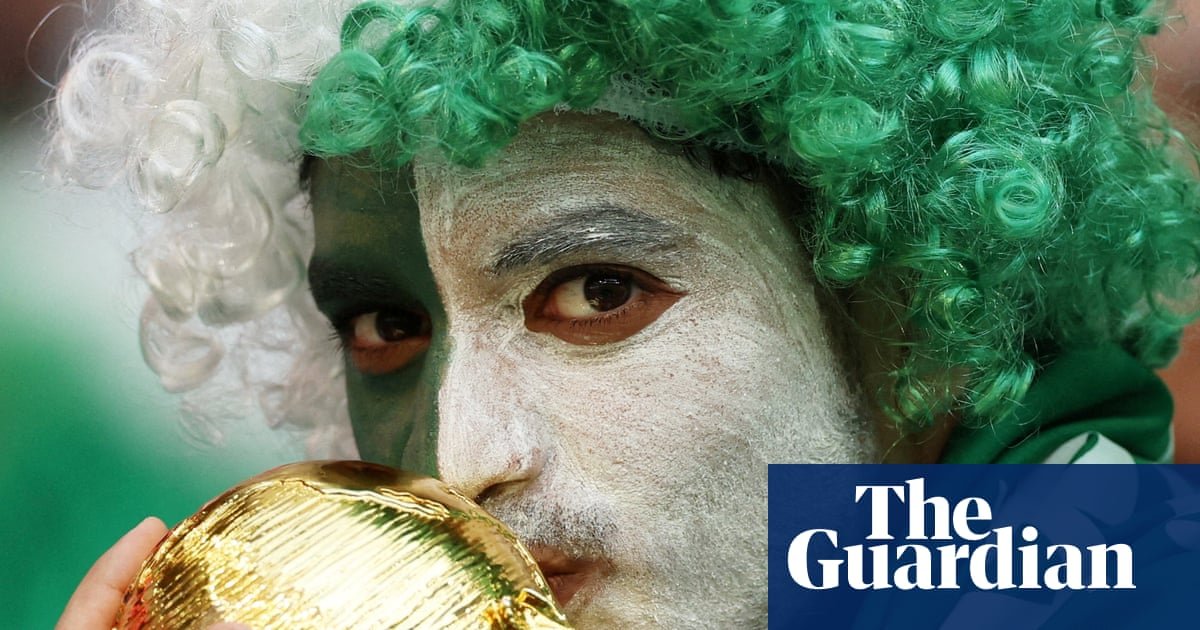
Well-represented at the Club World Cup when Al-Hilal impressed, ticket sales have been “steady” from fans in the country and with the Saudi community in the United States. There should be a few thousand in Miami, Atlanta and Houston. In the Saudi Pro League at least, fans are often young, enthusiastic and vocal and are famous in Asia for their elite-level tifos. They also create an atmosphere of their own that doesn’t just mimic the European ultras.
Relationship with the US/Trump?
It’s a little complicated, but Saudi Arabia is perhaps one of President Trump’s favourite countries and he seems to like the leader, Mohammed bin Salman. Saudi Arabia is a longstanding and close American ally and buys more military equipment from the US than anyone else. The US and Israeli war on Iran has caused consternation in Riyadh due to the retaliation from Tehran and the instability it has created around the region. However, Saudi Arabian players and staff don’t make political statements as a matter of course and that is unlikely to change.



