
FORT HUACHUCA, Ariz. — Imagine the clock displaying 3 a.m. in the year 2040 at a forward power projection platform in a highly contested Indo-Pacific theater. Sensors detect an adversary’s hypersonic missile targeting the installation’s primary munitions depot. Simultaneously, the installation’s cybersecurity architecture detects malicious traffic targeting the power grid. Instantly, the cybersecurity architecture isolates substations and reroutes power through redundant pathways to keep defensive missile launchers fully energized.
As the threat approaches, an integrated air and missile defense system driven by artificial intelligence calculates the optimal intercept. The missile interceptor succeeds. Within seconds, the automated logistics system of the Army’s Organic Industrial Base assesses the expended inventory and initiates a 3D printing process to fabricate a replacement guidance component for a new missile interceptor.
This imaginary scenario illustrates a future where an Army installation is not just a passive piece of real estate. Instead, the installation is a fully realized, intelligent weapon system platform known as a “sentient fortress.”
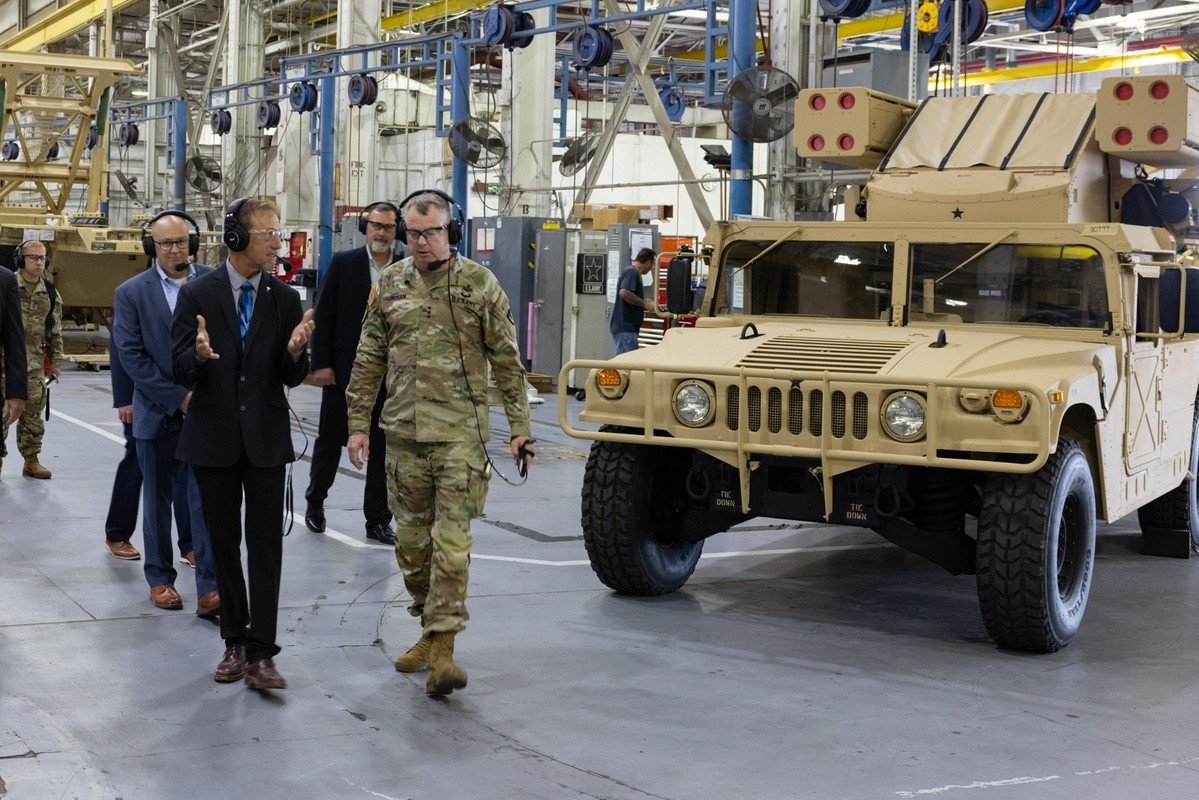
Dale McClanahan, chief, Future Systems Integration Office, Letterkenny Army Depot, briefs Lt. Gen. Chris Mohan, Army Materiel Command deputy commanding general and AMC acting commander, on the depot’s Avenger overhaul capabilities during a visit June 6, 2024.
VIEW ORIGINAL
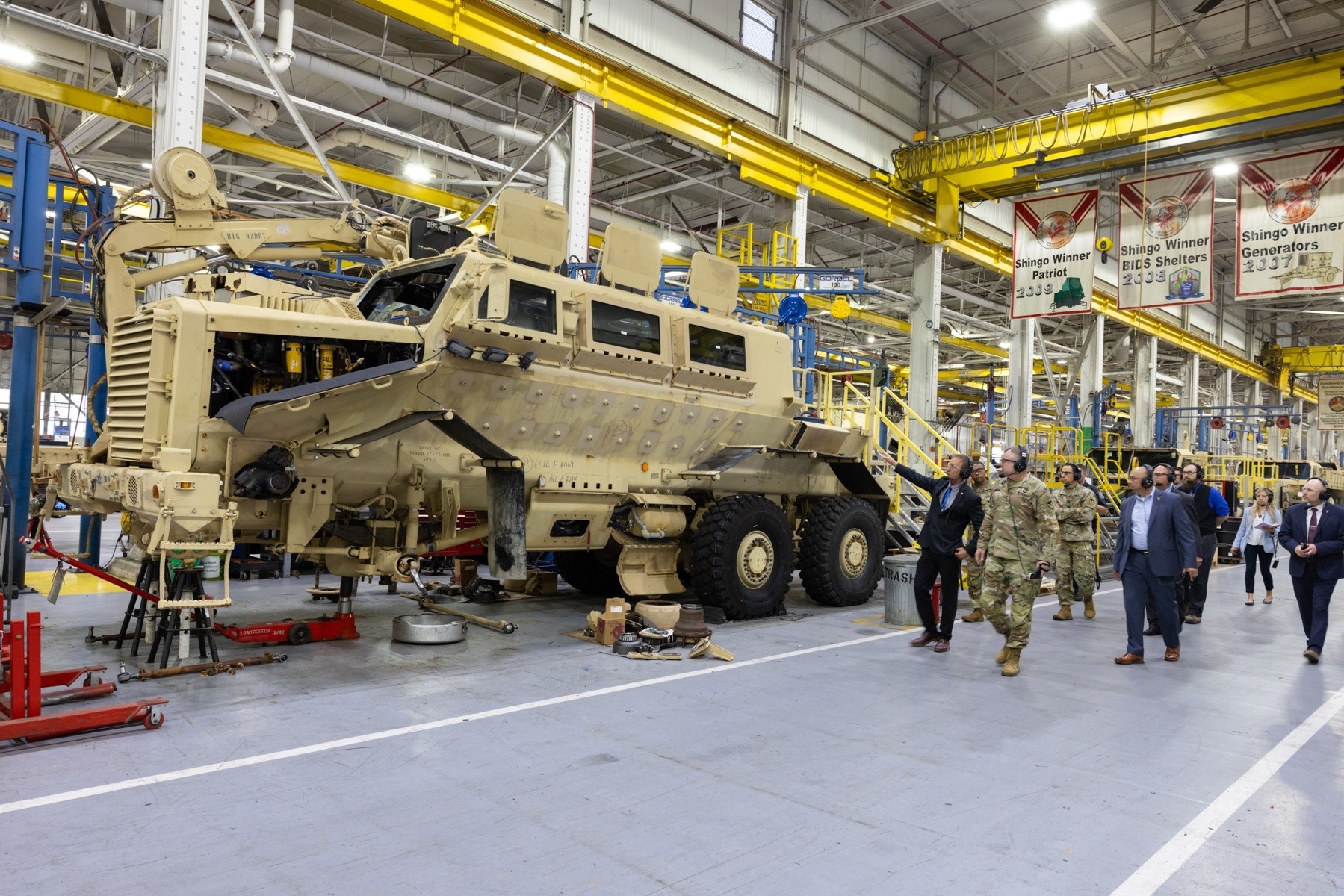
Dale McClanahan, chief, Future Systems Integration Office, Letterkenny Army Depot, briefs Lt. Gen. Chris Mohan, Army Materiel Command deputy commanding general and AMC acting commander, on the depot’s Buffalo hull repair program during a visit June 6, 2024.
VIEW ORIGINAL
Achieving this vision is the driving force behind the Army’s 15-year OIB Modernization Strategy and Modernization Implementation Plan. As part of the Communications-Electronics Command, the U.S. Army Information Systems Engineering Command is dedicated to realizing the Army’s OIB Transformation to ensure a 21st-century OIB capable of sustaining readiness, supporting modernization efforts and remaining postured to meet wartime requirements.
The vulnerability of a bygone era
To appreciate the resilient installation of the future, one must understand the critical vulnerabilities of legacy infrastructure. For decades, Army installations relied on a fractured technological foundation with a complex seam between information technology and operational technology. IT encompassed data and enterprise networks, while OT referred to the physical world, including industrial control systems, power grids, and the complex machinery of the OIB. The critical nature of these systems has made the seamless convergence of the IT and OT worlds inevitable for the security efficacy and operational efficiency of Army installations.
In the future, a compromised IT network could allow adversaries to access OT systems, effectively weaponizing the infrastructure against itself by manipulating power grids, disabling heating, ventilation, and air conditioning systems, or introducing subtle manufacturing defects on a munitions assembly line. Addressing this existential threat would demand a holistic, systems-engineering approach capable of unifying the physical and digital worlds.
Forging the Future Weapon System Platform
Transforming the Army’s installations into resilient weapon systems requires a strategic, systems-level perspective. USAISEC achieves this by applying its core capabilities to support the Army’s OIB Transformation. By leveraging comprehensive engineering expertise, USAISEC bridges the complex seam between IT and OT environments, laying the foundation for the sentient fortress of the future.
USAISEC’s core capabilities drive this transformation by ensuring installations can detect, adapt and respond to threats seamlessly. These capabilities include:
- Systems engineering: Delivering end-to-end systems engineering, integration and technical oversight for Army and Joint C5ISR-M information systems. From concept through sustainment, this ensures all systems within an installation operate cohesively.
- Network and infrastructure engineering: Designing, modernizing, and implementing secure, resilient IT/OT network infrastructures. This provides the critical communication backbone required for installation, campus, and tactical environments.
- Cybersecurity: Providing essential cybersecurity engineering, integration, and compliance. This protects assigned systems, environments, and operational domains against advanced adversaries seeking to disrupt OIB operations.
- Communications security: Delivering services to ensure the safeguarding, management, and compliance of critical cryptographic systems across the Army, securing sensitive communications.
- Risk Management Framework as a Service: Providing Risk Management Framework as a Service support to the Army, Joint Services, and Department of War organizations. This ensures rigorous compliance with risk management processes and policies for system owners and security managers lacking dedicated personnel.
- Installation and facilities engineering: Planning, designing, and delivering IT/OT solutions for Army installations. This includes military construction, air traffic control, classified communications, and facilities modernization, which physically shape the resilient infrastructure of the future.
- Data science and AI solutions: Collecting, cleaning, and analyzing structured and unstructured data utilizing AI and machine learning techniques. Through scenario-based modeling and simulations, existing datasets are analyzed to forecast the future, using agent-based modeling and prescriptive analytics to develop wargame scenarios and support quick decision-making.
- Media and information distribution: Managing, producing, and distributing Army publications, forms, and multimedia products to support readiness, training, and global operations.
By synchronizing these core capabilities, USAISEC directly enables the Army’s OIB Transformation. Instead of passive real estate, this holistic systems engineering approach ensures that future installations can serve as fully integrated, intelligent weapon-system platforms capable of sustaining readiness and lethality in any contested environment.
The path forward
Realizing this futuristic vision requires a unified effort; strategic commitments from Army leadership are needed to formally adopt the installation as a weapon system platform in doctrine and to prioritize long-term funding. This vision also requires the accelerated implementation of a zero-trust architecture and a holistic OIB modernization, moving beyond pilot programs into full-scale engineering.
Transforming Army installations into intelligent, sentient fortresses relies heavily on the diverse engineering expertise embedded within USAISEC’s core capabilities. For this reason, USAISEC prioritizes the recruitment, training, and retention of highly skilled systems engineers, OT cybersecurity specialists, and AI data scientists. To modernize the OIB successfully, the Army must employ these highly qualified professionals to engineer resilient infrastructure networks that meet 21st-century demands. The specialized knowledge USAISEC engineers possess is critical to eliminating single points of failure, executing rigorous risk management, and ensuring that future installations have the technological foundation to detect, adapt,, and respond to emerging threats seamlessly. The future is calling, and USAISEC is ready to help the Army answer the call with engineering ingenuity.
For more information about USAISEC’s IT/OT services, email us at USAISEC@Army.mil.



