
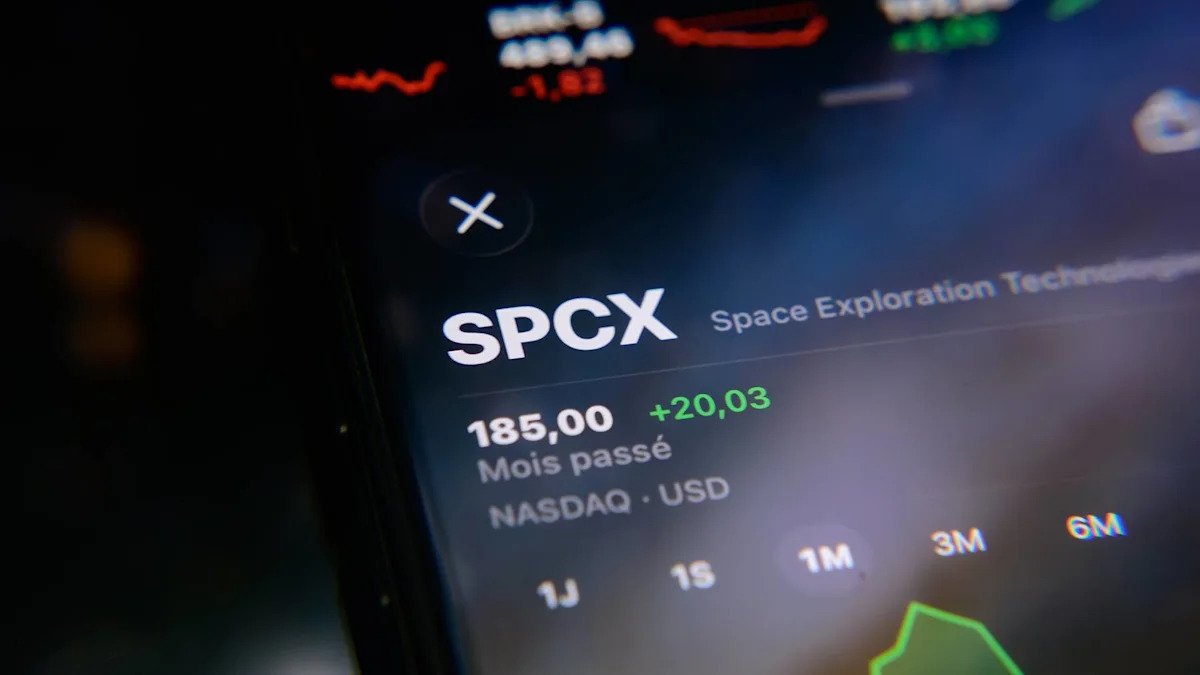
Broad-market index funds in U.S. retirement accounts are poised to increase their holdings in SpaceX at the next rebalancing. That comes despite a 31% decline in July 2026 and insiders recently gaining permission to sell shares, according to a Morningstar report.
When lockup restrictions began lifting on August 6, 2026, 911.5 million SpaceX shares became eligible for sale for the first time.
That wave mechanically expands the company’s float-adjusted market capitalization, the metric major indexes use to size positions.
The next scheduled rebalance is the Nasdaq-100’s September 2026 quarterly rebalance, which TD Securities projects could lift SpaceX’s weight in that index from about 1% to above 3.5%.
FTSE Russell’s next scheduled reconstitution is on December 11, 2026.
How unlocking insider shares forces index funds to buy more SpaceX
SpaceX was added to the Russell 1000 and Nasdaq-100 within weeks of its June initial public offering (IPO), and the December rebalance will decide how much more of it those index funds hold.
The eligible shares that were unlocked represent 143% of the 639 million shares available to public investors shortly after SpaceX’s IPO, Morningstar reported.
If those shares enter the public float, SpaceX’s float-adjusted market cap would increase 2.43 times with no change in the stock price.
That expansion would push SpaceX into the Russell 1000’s top 100 holdings at roughly 0.20% of the index, alongside CVS Health and Pfizer.
For context, SpaceX’s $1.4 trillion market cap carried the same 0.08% Russell 1000 weight as Delta Air Lines’ $57 billion valuation, analyzed by Morningstar. The disparity reflected the relatively small number of SpaceX shares available for public trading.
“Index funds will be forced to buy more SpaceX stock just as insiders are selling,” the firm warned in the report. Buying is triggered by float expansion, which is why passive demand can rise in the same quarter the stock falls by 31%.
How SpaceX entered retirement accounts in weeks
SpaceX debuted on Nasdaq on June 12, 2026, raising approximately $75 billion at $135 per share in the largest IPO in Wall Street history. Underwriters held an over-allotment option that could have pushed the total toward $86 billion, but it was not fully exercised.
Within 15 trading days, Nasdaq’s new fast-entry rule placed the stock inside the Nasdaq-100, triggering about $4.3 billion in forced buying from funds tracking the index alone, JPMorgan estimated.
More SpaceX:



