
Stay informed with free updates
Simply sign up to the Oil & Gas industry myFT Digest — delivered directly to your inbox.
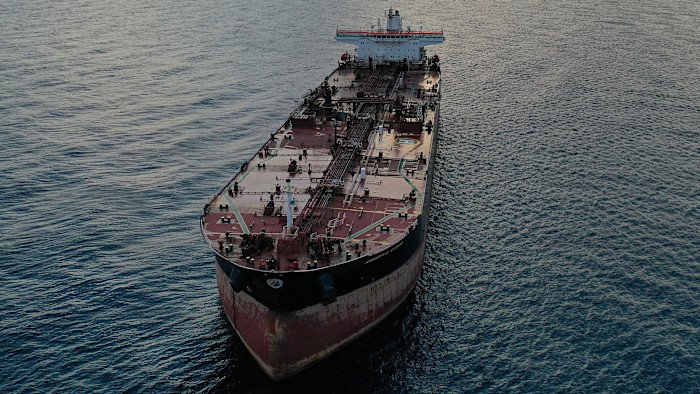
A flotilla of supertankers is steaming towards Saudi Arabia’s Red Sea coast as the kingdom rushes to reroute oil exports trapped in the Gulf by the Iran war.
About 30 so-called very large crude carriers, each capable of carrying more than 2mn barrels of oil, are headed to the kingdom’s western port of Yanbu over the coming days, according to shipbrokers, compared with a long-term average of roughly two a month.
The voyages come after Iranian strikes on vessels and infrastructure brought traffic to a near standstill in the Strait of Hormuz, the narrow waterway through which almost all the Gulf’s oil exports flowed before the war.
But the new route carries its own dangers. To enter the Red Sea from the south, the tankers will need to brave the Bab al-Mandab strait, where ships have been struck in recent years by Yemen’s Houthi militants — and which is also within range of some Iranian missiles.
“Given the disruptions in the Strait of Hormuz, there is no other choice,” said John Ollett, a freight specialist at price-reporting agency Argus. “There have been no Houthi attacks in several months [and] Yanbu remains the only option for crude exports.”
While the likes of Iraq, Kuwait and the United Arab Emirates have cut oil production as their Gulf storage facilities reach capacity, a pipeline linking Saudi Arabia’s crude-producing east to Yanbu in the west offers the kingdom an export lifeline.
The vast majority of the country’s roughly 7mn barrels a day usually departs from its east coast into the Gulf but state oil company Saudi Aramco this week outlined a plan to export roughly 5mn b/d through the Red Sea.
“Yanbu has exploded in popularity and for the time being that’s going to remain the case,” said Matthew Wright, lead freight analyst at data platform Kpler.
He added that after the Houthis paused strikes last year, ships had “bit by bit” started to travel through the Red Sea, while a flurry of attacks on tankers this week served as “cast iron evidence . . . that Iran can and is hitting vessels” around the Strait of Hormuz.
Ship owners sending tankers to the Red Sea port include Dynacom Tankers and Minerva Marine, which are respectively owned by Greek billionaires George Prokopiou and Andreas Martinos, and have both sent vessels through the Strait of Hormuz this month, according to ship brokers. Norwegian-born tycoon John Fredriksen’s Frontline and Chinese state-owned group Cosco are also among the group.
The brokers said many of the ships were fulfilling so-called “contract cargoes”, long-term agreements to move crude oil from Saudi Arabia to Asia, and that parties involved had renegotiated agreements so oil could be moved from Yanbu instead of ports in the Gulf.
The majority of the shipments were destined for China, with a “handful to India and a couple to Korea”, according to one broker.
The brokers’ assessments of ships headed to Yanbu were based on transponder signals and deals that had been signed this month to lift crude out of the Red Sea port.
Dynacom, Minerva, Frontline and Cosco did not immediately respond to requests for comment.

In the two years after the October 7 Hamas attacks on Israel in 2023, Houthi militants reduced traffic through the Red Sea to a trickle by striking ships passing through the Bab al-Mandab, from their perch on the south-west tip of the Arabian Peninsula.
The group, which had claimed to be acting in solidarity with Hamas, in November signalled an end to its attacks on commercial vessels after a ceasefire was agreed in Gaza.
However, tankers were still taking a “huge risk” passing through Bab al-Mandab, said Martin Kelly, head of advisory at maritime intelligence group EOS Risk.
In theory vessels loading in western Saudi Arabia could sail north through the Suez Canal, but that would add weeks in transit time — and significant costs — to their journeys to Asia.
The more present danger, said Kelly, was the risk of Iranian strikes, which could reach the Red Sea and beyond.
“Everything is on the table when it comes to energy assets in the Middle East,” said Wright. “You just have to keep going: every load port that can take a cargo is being maximised.”



