
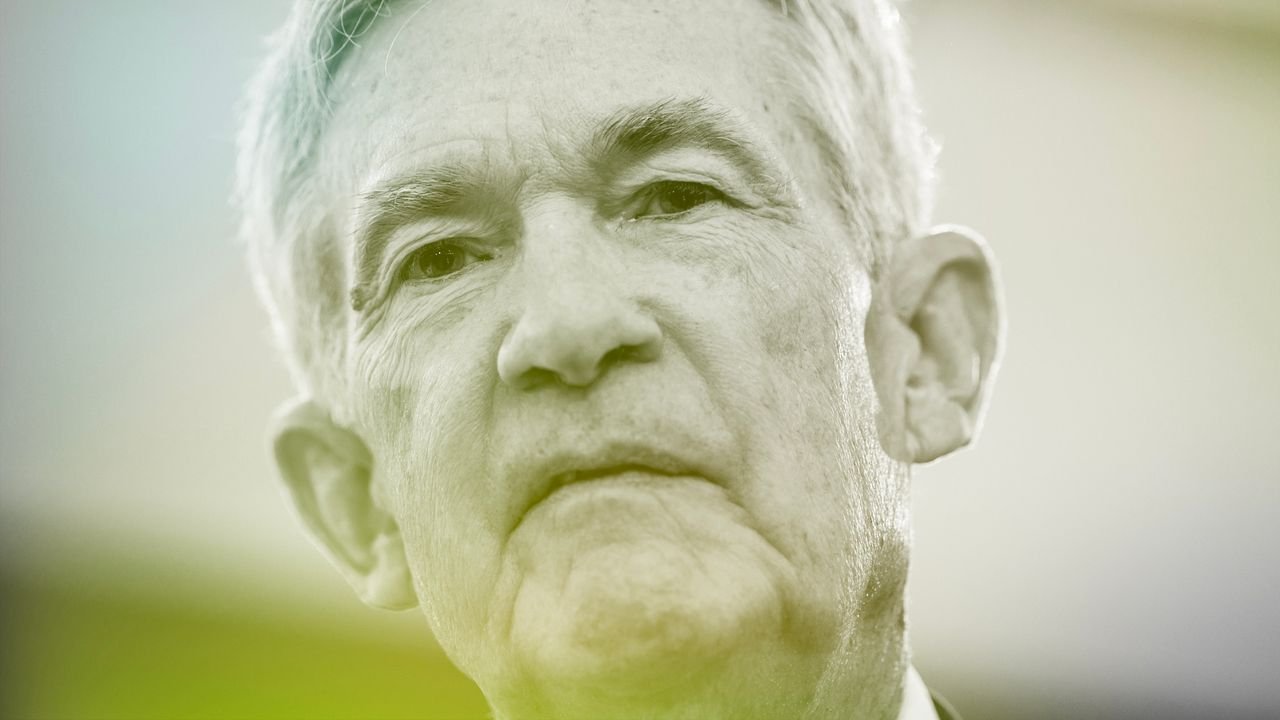
In March, a federal judge quashed a pair of subpoenas that Pirro’s office had obtained from a grand jury and sent to the Fed. “There is abundant evidence that the subpoenas’ dominant (if not sole) purpose is to harass and pressure Powell either to yield to the President or to resign and make way for a Fed Chair who will,” the judge wrote. “On the other side of the scale, the Government has offered no evidence whatsoever that Powell committed any crime other than displeasing the President.” The Justice Department appealed, to no avail.
These weren’t the only legal setbacks that Trump encountered. Last August, he tried to fire one of Powell’s colleagues, Lisa Cook, citing allegations of mortgage fraud which emanated from one of his political allies, Bill Pulte, the director of the Federal Housing Finance Agency. A federal judge temporarily blocked the dismissal, saying that the charges against Cook, who hadn’t been given the chance to contest them, were likely insufficient to justify her firing. After a federal appeals court confirmed this rebuff, the case went to the Supreme Court, which hasn’t yet issued a ruling. But, at an oral hearing in January, liberal and conservative Justices both expressed deep skepticism about the government’s case. Accepting the President’s view that he had the right to fire Cook would “weaken, if not shatter, the independence of the Federal Reserve,” Justice Brett Kavanaugh said.
On a Republican-run Capitol Hill, capitulation to Trump has replaced active oversight as the general rule. In this instance, Tillis broke away from the cowed G.O.P. pack. From his perch on the Banking Committee, where his party holds a majority by just two seats, Tillis vowed not to let Warsh’s nomination proceed to the Senate floor until the Justice Department dropped its investigation of Powell and the Fed. Last week, he reaffirmed this stance and described the probe as “bogus.” Since Tillis had already made clear that he isn’t running for reëlection, Trump couldn’t use his normal bullying tactic—threatening to endorse an opponent.
For once, the division of powers appeared to be working as designed. But it’s worth noting that the pushback against Trump rested on two things that are time-limited: Powell’s leadership and Tillis’s presence. When it comes to protecting the independence of the Fed for the rest of Trump’s term, much will depend on the outcome of the midterms, and on Warsh’s willingness, to stand up to a President who nominated him for a job he has long coveted and whose desire for rock-bottom interest rates Warsh has cynically indulged. (“Interest rates should be lower,” he told Fox Business last year.)
The case for Warsh is that he has prior experience at the central bank, where he was a governor from 2006 to 2011. “I have every expectation he’s gonna take the job really seriously. He cares about the Fed,” Austan Goolsbee, an economist who served in the Obama Administration and is now president of the Chicago Fed, told the Financial Times. Earlier this month, Jamie Dimon, the head of JPMorgan Chase, called Warsh “a great candidate” for Fed chair.
Throughout his career, which saw him go from Stanford to Harvard Law School to Morgan Stanley to the White House of George W. Bush, all by the age of thirty-five, Warsh has certainly proved to be an effective networker and self-advancer. After leaving the Fed in 2011, he worked for the hedge-fund billionaire Stan Druckenmiller and accumulated holdings that the Wall Street Journal estimated could be worth more than two hundred million dollars, based on his financial disclosure forms. That doesn’t necessarily disqualify him—Powell, too, had amassed riches before he became the Fed chair. But the question relates to his judgment and independence. At last week’s hearing, Senator Catherine Cortez Masto, a Nevada Democrat, reminded Warsh that in 2007, the year before the financial crisis erupted, he downplayed the systemic risks posed by subprime lending. He also hailed the expansion of derivative markets. After the market for subprime mortgages and the derivatives associated with it blew up, bringing down Bear Stearns and Lehman Brothers, Warsh acted as Ben Bernanke’s intermediary to Wall Street as the Fed participated in an unprecedented bailout of the banking system. Subsequently, Congress tightened up the regulatory system and forced banks to retain more capital in case of emergencies—an initiative that the second Trump Administration is now rolling back on, with Warsh’s support. In an op-ed last November, he hailed Trump’s deregulatory agenda as “the most significant since President Ronald Reagan’s.”



