
Subscribe here: Apple Podcasts | Spotify | YouTube
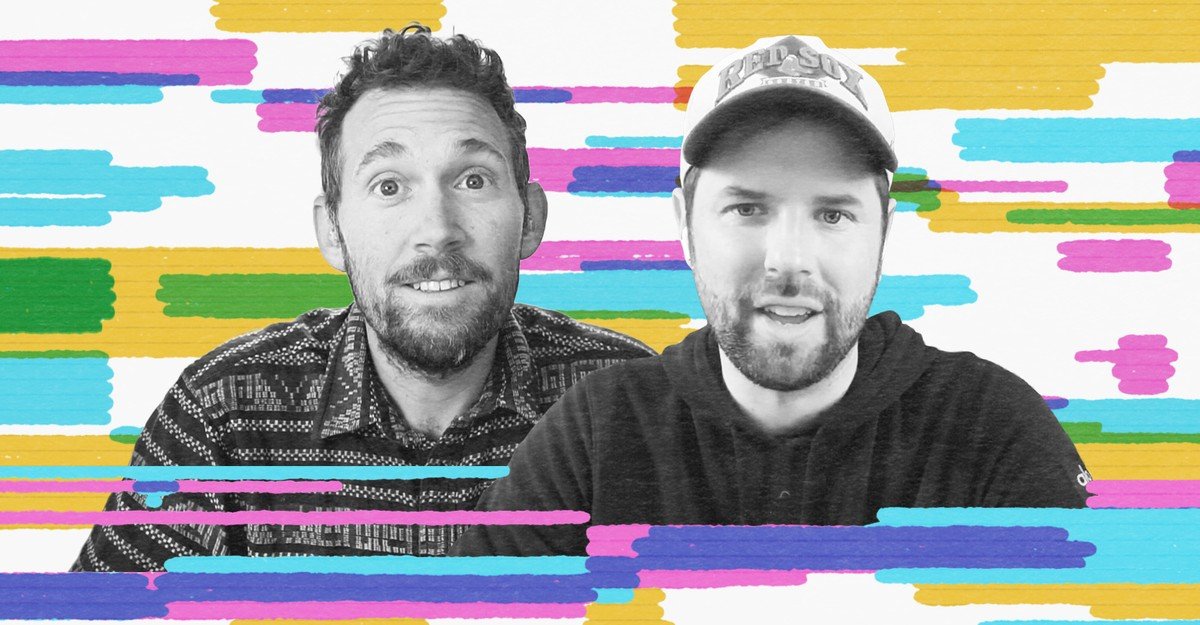
How do you build a winning campaign for the era of AI? In the aftermath of the 2024 race, Democrats have been struggling to adapt to the new logic of the attention economy. On this episode of Galaxy Brain, Rob Flaherty, the deputy campaign manager for Kamala Harris’s campaign, joins Charlie Warzel to talk about what went wrong and how Democrats need to embrace a new theory of attention. They discuss AI’s collision course with electoral politics ahead of the midterms and how to identify candidates who can use the internet to their advantage.
The following is a transcript of the episode:
Rob Flaherty: Digital content is how people consume the brand of your campaign. And I think people in politics traditionally—establishment politics—miss that all the time.
[Music]
Charlie Warzel: I’m Charlie Warzel, and this is Galaxy Brain, a show where today, we’re going to talk about how to win elections in the attention economy.
In the aftermath of the 2024 election, during their online victory lap, right-wing influencers started repeating the same phrase: You are the media.
“The legacy media is dead. Hollywood is done. Truth telling is in. No more complaining about the media.” That’s what the right-wing activist James O’Keefe posted shortly after the election.
A lot of this was just gloating. But behind it is the truth that the media dynamics of the 2024 race were just different. Influencers and podcasts played this outsized role in directing the conversation arguably more than traditional media did—2024 was the first election of the [Elon] Musk–owned era of Twitter or X, and Musk did his best to try to turn the platform into a political weapon.
In the weeks after the election, Democrats began arguing among themselves about asymmetries between the parties in harnessing this new media environment. There were concerns about Harris’s campaign’s brand, her leaning into the “brat summer” memes, and her general cautiousness to put people like vice-presidential candidate Tim Walz in front of the cameras more. Now, there were the usual recriminations, and there were new ones too, like how much the war in Gaza and the Biden administration’s stance affected younger voters.
But more broadly, there was just this sense that Democrats left something on the table when it came to communicating with voters. “Where is the Joe Rogan of the left?” became a meme of its own.
Now, trying to tease out what really moved voters in an election year is often fraught. But most Democrats agree that the party has had trouble navigating this current media landscape. It’s not that Democrats are necessarily ineffective communicators, but that a lot have this different, and perhaps outdated, theory of attention. The idea is that there’s an old theory of politics: one where a candidate or a campaign can effectively buy attention through splashy events or ads. And a new theory: one where attention must be earned, through constant, authentic performance and drafting off of viral and extremely digestible, internet-packaged moments.
Since the 2024 race, I’ve been preoccupied by the idea of what makes a successful politician in this world. And so I was struck by this lengthy essay by Rob Flaherty last month in The Bulwark. Flaherty was Kamala Harris’s deputy campaign manager, with a specific focus on the digital elements of the campaign. Now, the entire piece is worth reading, and we’ll get to parts of it here. But one line of it really stood out to me.
“We’re running campaigns built for a world that doesn’t exist anymore.”
So then, what world are we living in now? How do you win an election in a post-truth, AI-slop information hellscape? How do you structure a campaign when YouTube is one of the main battlefields? How much is AI and the backlash to AI going to determine the next elections? And, most importantly, how does all of this change who runs and who wins? These conversations are going to determine what happens in the years to come—and so I asked Rob to come on and talk about it all.
[Music]
Warzel: Rob, welcome to Galaxy Brain.
Rob Flaherty: Thanks for having me, Charlie. Thrilled to be here; fan of the show.
Warzel: Thank you. So we’re recording this on the heels of the DNC having released their 2024 autopsy. And I want to get into that in a little. But as we’re watching the primaries across the country—you know, heading into the midterm elections—I’m thinking about something specifically you’ve written, which is about having a candidate who is very invested in the process of being everywhere online. In this piece you wrote for The Bulwark, you mentioned how someone like AOC [Alexandria Ocasio-Cortez] is so obsessive about her strategy and story that she’s telling online that she will sit down and talk to you about it. Not the campaign managers or her people, but her. Does that change who can run for office now? Like, should a campaign be choosing somebody who’s just naturally good at creating content?
Flaherty: I think so. But I also think that it’s like a good candidate will rise to the top in this environment. You know, you think about what used to be the kind of thing that a candidate would be optimized for. Being a good communicator was always a plus. But to be a good communicator in the past, it meant being able to do a cable hit; it meant being able to do three quick minutes, stall on the question, wait for the next one. You know, deflect and pivot or whatever. And that just isn’t the way people get their information now, and isn’t the way people engage. And so it’s a different style of talking.
So I do think it’s trainable, but it’s really generational. You have to be native to the platforms. You have to be native to understanding social media. And that is how you get better outcomes. And so, in many ways, I think it is going to be deterministic insofar as a person who does well at that is going to do better, and it’s going to kind of incentivize those kinds of folks to succeed.
Warzel: And part of why I asked this question, I think, is because you do have candidates who are good at attracting attention, who are good communicators. But there’s also this idea, I think, that Democrats maybe struggle with more than Republicans who are terminally online—which is the idea that attention, it’s not something you can go out and get really without earning it, right? Like, it has to be earned. Is there a difference in structural thinking there with Democrats? Or is it really just generational, you think?
Flaherty: I think it’s a little bit generational, but it’s also like a little bit who Democrats are, in terms of the way that we operationalize messaging. And so I talked about this a little bit in the autopsy piece. But what the right does is they’ve got, you know, tons and tons of influencers who make money doing what they’re doing. They will all take a gazillion swings. They’ll see what’s working. They’ll all start talking about what’s working for other people.
Then, that works its way up to like Fox News, and then that makes its way to its politicians. And they’re sort of reading what’s happening on the internet and what has heat and reacting to it, and then making it the persuasive thing.
Democrats go the other way. We say: This is the message that tests well. This is what I think you should think. And I’m gonna force it at you. And what I think that that does is: We’re talking at people rather than talking with people. And you do sort of see that. And I agree with the “attention being earned” piece being really important.
Gavin Newsom’s crazy social-media voice, you know, his like press-office voice—that only works because he has an offline brand. He was going to be the guy who’s going to, you know, destroy MAGA or whatever. And because of that, his social media could match that, because that’s the perception people had about him. He earned the ability to do that. And I think very often you see this disconnect between people who just try to do like a viral trend on the internet to get attention without having the offline substance behind them. It’s one of these places where, you know, offline is online, online is offline, and the internet is real life.
Warzel: Do you like that Newsom strategy of tweeting like Trump? Like, being unhinged?
Flaherty: So I do. I like it because it is backed up by actions he has taken, to the point I was making earlier. But I do think that the question now for Newsom is going to be: How do you inject Newsom back into it? You know, because that account is a character. And it’s certainly a little bit what we had with Kamala HQ, where, you know, the candidate was over here; we had this like really, you know, wacky social account that was doing a lot.
This is the question he has to make in running for president. Not just in how he does well on the internet; is how do you translate “I’m the MAGA slayer” into “I have a real affinity for Gavin Newsom.” And he’s got to work on that from a social perspective, but he’s also got to work on that from a “How do you win an election?” perspective.
Warzel: Yeah, and you’ve talked about this before, but that broader idea, right, of “You have to be explicitly clear.” Like, the only thing you need to be clear about is why I’m running. If you can’t answer that specific thing, then you are kind of dead in the water. None of it means anything. All the attention you gather sort of just sloughs off of you, as opposed to like sticking.
Flaherty: A hundred percent. You know, it’s attention in service of something. It’s funny. So D.C. politics is very … I’m voting right now in the D.C. election, and I’m a low-information voter. Like, vaguely mad at the mayor; don’t know who anybody is. And so I just earlier today went to vote, and I didn’t know who anyone was. And so I just started Googling people to be like, Who are these people? And what was remarkable is most people kind of all said the same thing: I’m for housing and affordability and ba ba ba. And the folks who were most interesting to me were the people who were like, No, no; I believe this thing. I am doing this thing. I am in this race for this thing.
And to me, I was like, Oh, that is way more resonant. And it’s like, you don’t actually see that when your job is to just be like, “I’m for all the stuff on the campaign.” You almost don’t see how that feels on the other side. I don’t know; it’s like you’re just saying a bunch of nice stuff that people will broadly agree with, you know? You have to have something that you’re for.
Warzel: One of the examples when we talk about a good candidate online or, you know, for this media environment where we live now, is [Zohran] Mamdani—the campaign using a lot of “man on the street”–style stuff, the joyfulness. The clear online-ness and understanding of Mamdani himself and his team. That’s obviously been discussed a lot.
But there’s this part that I wanted to talk to you about, which is the thing I see about Mamdani that is probably most wild. And some of this is, you know, mayoral elections versus national politics. But it’s how he came out of nowhere so quickly. And, to me, that feels a little bit like it rhymes with the dynamics of algorithmic social media now, right? Stuff is not linear anymore. Like, you can be a creator on TikTok. You take a thousand at bats, but like every 20th one you hit a grand slam, and so it comes into people’s feeds. Do you see that maybe algorithmic social media is not gonna lead to that slow burn as much? And now we’re just gonna get these people coming out of nowhere?
Flaherty: I think it’s possible. It’s going to be interesting to see this dynamic in the context of the ’28 primary, which is very spiky, right? The way that primaries work are: Candidates have their two-week, three-week rise and their fall. And so it is possible to pick up attention and reach a lot of people kind of coming from nowhere.
But the thing is, there is like method to the madness, right? Like, Zohran took a lot of swings, made really interesting content—but at the same time was building a community in his campaign offline. And those things, you know—over time in a race where Andrew Cuomo was heinously unpopular, there wasn’t really a great alternative sitting anywhere—that sort of put him in this position where he had interesting content, he had something interesting to say, he had really tangible policies. And so it did sort of give him this ability to build from, yeah, basically obscurity into being this hugely national figure.
Warzel: Your answer leads me to wonder a little bit: Are we overstating the impact of Mamdani’s online strategy in this? Like, you talk about—this is a person who was on the grassroots level, organizing in the community. A lot of those videos reflected the fact that he was out in the streets, having one-to-one personal relationships with people. That he was invested. So I’m wondering: Do we overstate, as people who pay a lot of attention to this stuff, how much the digital strategy, or like the nativeness, matters?
Flaherty: We’re overstating in some ways, and understating in other ways. I think that digital content is how people consume the brand of your campaign. And I think people in politics traditionally—establishment politics—miss that all the time. And I think that because [Mamdani’s team] had a tight brand, they got all the little things right, and the candidate was super involved in the content. It felt like him. It, like, matched with the ethos of the campaign. But at the end of the day, content is marketing. It’s marketing. And a bad product will be found out, you know, even with good marketing at a certain point. And so you just need to have both things to make it work.
Warzel: I want to jump a little to this DNC autopsy report. You spoke to them for that at some point in the process. What did you make of reading that?
Flaherty: You know, here’s the thing. It’s the Democratic Party, and you should never ascribe malice to what could be more easily ascribed to incompetence. You know, there’s a few things about it. Which is one, like, it’s not that if you read it, the takes are bad—I mean, there’s like factual errors, and there’s like funny annotations, and, you know, “he didn’t talk to the right people”—and all that is true. There are things in there that are genuinely interesting.
Like, he talks about the digital spend across the Democratic Party, and how weighted our ad spend is toward traditional media. He had interesting things about brand, and the way that we need to talk to rural communities, and things like that. But it was one guy’s opinion. I mean, it was a 100-page op-ed, basically. And so an autopsy is never going to give you, Here’s exactly what happened. Unimpeachably, these are the facts.
And so what I actually think was going to be useful was a facilitated conversation about: All right, these were kind of the big issues in the campaign. What did the campaign decide to do? What did the outside groups decide to do? What did other people who were unaffiliated think they should do? How do we have that conversation out loud in a way that is productive?
That’s what’s useful to practitioners, because everybody wants this thing to say, “Oh, it was my thing, that was the reason”—and it just never was going to. So that was how I reacted to it. I mean, overall, it’s an embarrassing episode for the DNC. It’s an embarrassing episode for the party. But you know, it is what it is.
Warzel: In your piece that you wrote, looking back at the ’24 campaign, you did kind of just lay out a lot. I mean, it’s very detailed. I wanted to focus, though, on something that you wrote that is just a very kind of short aside in it. You said that in 2020 and 2024, “We had a theory of the case about the internet close to right, with a couple of things missed in both elections.” Can you tell me what was the theory of the case of the internet in 2020? What was it like in ’24? How did it differ in those two micro, but also really big, eras of the internet?
Flaherty: In 2020, we had a general theory that was like: We were getting pushed to win the last war. We were getting pushed to do Donald Trump again, but for Joe Biden. So, I would take these meetings of “Why isn’t Joe Biden all-caps posting, rage tweeting about whatever is going on?”
Warzel: Classic Joe.
Flaherty: Classic Joe. I mean, oh my God, the amount of meetings I took in 2020 with—this is not a joke—hologram people. People who were like, “You need to ship a hologram machine to every voter’s house.” And I was like, “What’s a hologram machine?”
Warzel: What?
Flaherty: Anyway, crazy stuff. That literally happened. And it was sort of like—that’s not what Joe Biden is. Like, we have to use the internet, despite what it is, in the spirit of the campaign. Which was the battle for the soul of the nation; we called it “the battle for the soul of the internet.” It was sort of like, we’re gonna be, you know, the videos of the veterans coming home. We’re gonna be the puppy videos. Like, we’re gonna be boring. We’re gonna be who Joe Biden is. And we’re gonna try to use the campaign to build a community to bring people together. Because I think that’s what people were like looking for in that moment. Sort of like—all right, let’s like slow this thing down.
I think that campaign was sort of the first general-election campaign to really touch creators. And it was really focused on social video, and how do we leverage social video from a content perspective.
We got to 2024. And the basic theory—it was kind of based in some Ryan Broderick thinking, which was “public internet versus private internet,” the idea that social content was sort of interest based. But the real thing we were going to have to try to figure out was: People are moving their social conversations that are potentially the most influential, they’re moving them to what you used to call “dark social.” And how do we figure out how to do that?
And so the interest-based stuff: We put a big premium on creators and influencers. We spent a lot of money on it out of the campaign. And we tried to sort of come up with a theory on how do you do the dark social, organize the internet stuff. I think there are things that we got right in both of those categories. I think there are things that we got wrong in both of those categories.
Warzel: What’s something you got wrong?
Flaherty: We, the campaign, absolutely could not get its head around how you get people to share content on the internet and talk to their friends and organize in digital spaces. And part of that was a scale thing. Part of it was literally the bones of the building. The organizing operations of presidential campaigns since 2000, I mean, since time immemorial, have been based on geography. You have people in neighborhoods. But people’s social communities on the internet are not geographic.
Warzel: Right.
Flaherty: So if your primary volunteering touch point is somebody who’s thinking about “Who are your 10 neighbors?”—they’re not thinking about “What are the 10 groups that you’re in?” And if they are, that’s taking away from the neighbors. And so I think we hit that tension really hard, and we ended up with a program that kind of did neither particularly well.
Warzel: Yeah. You need to be finding the most influential person in the group chat, in everyone’s group chat. Right. Like you need to be hitting that person …
Flaherty: A hundred percent.
Warzel: Which is then, if you like reverse-engineer that, it’s like: Okay, who’s the person that that person trusts? Who do they have a parasocial relationship with? On whatever thing. It makes me think so much about “the left needs a Joe Rogan” debate kind of thing. And the idea of creating a person like this. And it’s like: Joe Rogan started talking about MMA stand-up comedy, and he did it for seven years before he ever really uttered a word about politics other than, like, Let’s legalize weed. There was such a history of people. And then you can Trojan-horse the politics into this guy’s, you know, larger cinematic universe. That, to me, is like: That’s how you influence people now.
Flaherty: A hundred percent. I tell people: Joe Rogan is an audience. You know, Joe Rogan is a bunch of people who think what Joe Rogan has to say is really interesting. Yes, he influences that audience, and over time changed their thinking. But his thinking was changed over time, too, which then changed their thinking. And it’s this thing of like—I think trying to cook up, you know, a Joe Rogan in a lab who’s gonna become woke over time, you know, or make a woke sports show? It’s like, That is not gonna work.
But it’s: How do you find people who have authentic connections with their audiences, big and small, and change their opinions over time through what they are consuming and who they are talking to? And there is not a good model on how to do that in politics. Like, high and low we’ve looked, and people are trying to develop them. But that is, I think, the wall. The sort of buzzsaw we ran into with some of the stuff on the campaign.
Warzel: The broad theme that you kind of get to at the end is: We’re running campaigns built for a world that doesn’t exist anymore. Say you’re running a campaign in ’28, and you have supreme authority here. What broadly are you doing from first principles here as campaign dictator?
Flaherty: Yeah. I think you’ve got to work your way down from the top of the super-tactical pyramid to the very, very bottom. So the high level: Have a clear story about what you’re in the race for that doesn’t sound like anybody else. Like, be for a thing. Be for a couple of things. Have a reason why you’re doing it that connects with who you are. All the tactics will fall apart without that. You can do a million podcast interviews—but if you’re not about anything? Doesn’t matter. So, gotta resolve that.
Then the candidate. What does the candidate do with their time? How are they thinking about their involvement with their own presence and their own brand? You know, it needs to be the sort of regular engagements. And planning about what they want to say, and how they want to talk about things, and how they address their audience. That is: regular time engaging in producing content, without a script that isn’t sort of put on them. It’s time working with their team on like—what actually are they going to do on social? And what’s that actually going to look like.
Warzel: Are you saying, “You’re wearing a microphone all the time”? And “We’re going to clip—”
Flaherty: All the time. Every minute, every day.
Warzel: “—we’re going to just be clipping what you say. We’re not going to make you look bad, but you’re not going to have control necessarily over it. Just go out and do you.” And that’s like how it’s going to go?
Flaherty: Cameras on all the time. I would trade …, because what you get, normally, is you get like these like one-hour, not even 15-minute, 10-minute blocks where you get to do a video with a politician. You hand them a piece of paper. They look at them. They go, Okay. And then they do it, and they leave. I would trade all of that time away if it meant that I could have a camera and a microphone on the principle at all times.
And that’s the cheat code. It’s the shortcut. It’s the shortcut around like, you know, “I need to get briefed and look really stiff and read a teleprompter.” It’s like, it’s the way to make the unrelatable person look a little more relatable is the clips. You know, we do events, and we do rallies, for two reasons. One: local earned media and volunteer data. You should still do those, but you need to be doing things that reach interest areas on the internet. You know, what niches add up to your coalition? So you have to spend time thinking about that, and doing a lot.
And then there’s the paid-media layer. Which, like: I am a radical, because I think that you should spend as much, if not just a little bit more, of your media on digital than you should in television. But like, that makes me insane. That makes me crazy in this space. But you need to spend your money to reach voters where they are.
And then, I think from an operational perspective, you have to think about how you are maximally generating content from the various stakeholders of the campaign. Like, campaigns have a thing that brands and all these people don’t have—which is tons of enthusiastic volunteers who live in a certain geography. And you should be training them to make content and to post stuff and having your staff do it, and having people whose entire volunteer or fellow experience with the campaign is producing clips or producing fan cams or whatever. Like, you need a lot of that stuff.
And some of the stuff we tried on the campaign, and it was hard to operationalize. Some of it we did, and it worked great. Some of it in retrospect we should have done. But I think that’s what the toolkit is gonna look like as, you know, 2028 rolls around.
Warzel: I am just curious, as we’re talking about this, it all makes sense to me. Like, we did an episode about clipping a couple weeks ago. There is this new media environment. It is just the reality. You need to be where eyes are. You need to be where people are. You need to be doing a thing in a way that is legible to the people who are actually going to go vote for you. Does this new media environment excite you in that way? Or are you just like, Jesus Christ, this is not how we should be messaging politics?
Flaherty: I think the answer is both. You use the clipping; you use the stuff to get something started, but it really only takes off and reaches a lot of people if people want it. And those people only convert to action if people want to engage with it in one way or another. And so there is a little bit of a sense of legitimacy about it.
Working through this, particularly in the context of the ’28 presidential, is going to be really hard. It’s going to be really challenging. The rules are going to change in real time.
I found, I will say, it’s pretty hard to get a creator or a new-media property to totally change their position just because you pay them money. Usually it’s: “I agree with this, but you need to pay me to agree with it publicly.”
Warzel: I want to talk a little bit about AI as it relates to, you know, the politics—but I also want to talk a bit about AI and how it’s going to change campaigns. In some ways that’s obvious. In other ways, I think it’s a little less obvious because campaigns are about, you know, being on the ground, having this relationship, but they are structurally, organizationally complex. How is AI going to change, you think, the way that campaigns operate and run in that sense in the next cycle?
Flaherty: I think it’s going to be pretty big. There’s a couple of things. If you think about the economics of a political campaign: Political campaigns pay young people terrible money because they can get away with it. And because people will do it, because they’re young and idealistic. And so you get a lot of young people to achieve disproportionate scale. A lot of those entry-level jobs are kind of AI-able right now, and by the time these models really advance and people are getting in the race, I mean, you’re going to see really significant advancements in their ability to do that stuff.
Warzel: Let me spin it the other way, though. You could end up having like a mobilized situation where there’s a lot of young people who are super frustrated that they don’t have a thing and just are like: “Give me something to do. Pay me to do this.” And you may have a larger pool of people who are like super activated to work on these campaigns.
Flaherty: A hundred percent. And so the question is going to be, like, in Democratic campaigns, traditionally, the primary sort of drives innovation, right? Different campaigns try different things, but different campaigns are broke. I mean, when you’re a primary campaign, if you’re not one of the top two, I mean, you don’t have that much money.
And so I think it’s going to back people into these really interesting questions about: What do you do with AI? You know, do you hire fewer people and scale with AI? Do you hire the same amount of people and don’t use AI? Do you hire the same amount of people and scale up, and they do 20 times the work?
I think there are some parts of campaigns that that human touch is going to matter. And I think that ultimately, AI is going to put a premium on human connection. And so you don’t want to throw the baby out with the bathwater. But do you need eight people on a research team when you might need three? Do you need the press assistant who does the clips every morning at 4 a.m.? Those are going to be the questions that campaigns have to grapple with as they make budgetary decisions and as AI advances.
Warzel: To that point, I’ve seen you very activated online on X, also like writing op-eds for The New York Times, about Democrats needing to really get in and take a position on the AI stuff. And you’re framing it as a generational issue.
Flaherty: Yes.
Warzel: If Democrats do not do it, it’s a generational fumbling of the bag here. And in the Times op-ed, you wrote: “The ’28 campaigns set against the backdrop of discontent with AI will provide an opportunity to campaign against big techs, excesses, and a Republican Party that’s enabled them.” Are you saying here that you want Dems to be the AI-populism party?
Flaherty: A hundred percent. And I think it is the pathway forward. I think it is the key to a coalition that can win a presidential. I think it is the key to advancing progressive policies that people want. And it may not be visible right now, although you can kind of see the clouds starting to gather. But by the time ’28 rolls around, this is gonna be the white-hot top issue. And right now it’s a jump ball. I mean, you look at it; voters don’t know which party to trust more on this. But when you ask them what they want in response to AI, they say higher taxes on the wealthy. They want universal healthcare and portable benefits; they want federal-jobs guarantees; they want regulations on child safety.
To me, that is telling you that this is a once-in-a-generation opportunity for the party to really jump on this and to own this, just as voters are getting really worried about it.
Warzel: In a previous episode, we talked to Jael Holzman, who’s a reporter at Heatmap, who’s been covering the data-center fights specifically. Do you worry about the fact that there is that weird sort of coalitional horseshoe there? That it might be hard for Democrats to grab onto the more reasonable parts of that without having to, you know, get in bed with Tucker Carlson? You know, stuff like that?
Flaherty: Yeah, I mean, here’s the thing. If we don’t grab this issue, Tucker Carlson is going to grab it. I mean, you know, Steve Bannon is talking about this in ways that are not that distinguishable from the way I’m talking about it. I think it’s going to expand out from the horseshoe.
And I think that is—if you are a person who cares about AI regulation—that’s sort what you need to have happen. It needs to move from Steve Bannon and Bernie [Sanders] and AOC and freaks like me, and move to the mainstream of both parties. A lot of people get it. There’s a lot of different approaches here. Bernie and AOC are for a data-center moratorium. That is probably a less … like, you’re not going to be able to stop data centers, I don’t think.
And what lies beyond that, I think, is a real opportunity to build a progressive agenda that makes people’s lives materially better. And so I think it’s getting the party to see the opportunity that exists with the technology. But I do think that means having, you know, really tight regulations on what data centers can do. And it means like not letting the White House totally run roughshod on states being able to regulate these things and prevent data centers from being in places that they want them to be and all those kinds of things.
Warzel: What is, specifically, what are some of the positions you think Democrats should be taking with regards to this?
Flaherty: So I think a couple of different things. One: Voters are pissed off at this. They are really mad. Like, they are so mad. And the solutions that they’re asking for are economically populist. But there’s a through line of like, What am I in this world? Right? So the example I always give is universal basic income—which the Silicon Valley guys love—is insanely unpopular. And that kind of makes sense, because voters are like, I don’t want to just be handed a check for the rest of my life while you keep getting richer. Like, they want a job guarantee. They want something that gives them some sense of purpose and meaning in the world. That that thing’s not gonna go away.
If the basics of a middle-class life are going to become harder and harder to get, if having a job is going to become more precarious, we need to be doing more to protect people. And that is before you get to the child-safety implications, the sort of limits on super-intelligence and how far it can go and making sure the government has, or some agency has, some ability to, you know, check to make sure that these models are aligned. But the economic stuff, I think, is going to be really, really important for the political fight that lies ahead.
Warzel: So is there a candidate out there right now that is doing it right? Or, who is doing it the best?
Flaherty: I would say that it’s still bit of a jump ball. You know, I think Bernie has had interesting stuff when it comes to catastrophic risk.
Warzel: He’s doing a lot of interviews with Claude.
Flaherty: Yeah, he’s doing the talking into the phone, being like, “Are you scary?” And it’s like, yeah. But I do think, you know, it runs the risk of being so lefty-coded that it’s not relatable to other folks. I think what’s interesting to watch, actually, is Rahm Emanuel on this. Because Rahm Emanuel is like a very … his finger’s in the wind on where the political winds are blowing. And you see him coming out and talking about really strong regulations on social media, but also on AI.
And so when you see someone like Rahm Emanuel, who is sort of a moderate’s moderate, start to see where that wind is blowing, that tells me that there’s broader stuff there. But I think that Democrats are still afraid of this issue, and they’re afraid of the big tech money that is flying in. And they’re afraid to talk about it, and I think that’s a huge mistake.
Warzel: Well, the Rahm Emanuel thing, to me, highlights again these tensions about authenticity and stuff. I could see some real risk there that the pushback is not authentic, and it’s just like, Oh man, this person is just, you know, talking a big game because that’s what they think we want to hear. And maybe we do want to hear it, but we want to hear it from someone who’s got skin in the game or actually cares, right?
Flaherty: Yeah. I think it’s totally possible, right? I think this gets back at the like: Why are you actually in it? Like the story of AI, actually, I don’t think is to sell it to voters. It’s not necessarily just a story about artificial intelligence. It’s a story about how the corrupted nature between the money that’s coming in from the tech industry, the government that they’ve totally captured, and this technology that’s gonna make them rich and make your life worse. Like to me, that is the through line. And being able to tell that story, and tell it from an authentic place that you actually care about, I think is very important.
Warzel: What do you see the role as bringing these Silicon Valley people into these conversations? Not suck up to, not court, but, you know, bring them along. So that it is not just driving all of their money toward, you know, making sure that Democrats don’t get elected.
Flaherty: My position is that we’re saving these people. Because at the end of the day, their right to do business from a societal respect and societal-buy-in perspective, I think, is pretty tied to their ability to come to the table with some real solutions here. When you see OpenAI—who I think is a relatively untrustworthy actor here—but they’re putting out industrial policy that wouldn’t seem out of place in an Elizabeth Warren policy paper. They kind of see that, Okay, the smart people are seeing we have to get on board with some kind of societal structuring that makes this fairer.
And so I do think that conversation is important. But at the end of the day, this is a conversation about: How do we make sure that this technology that could be really transformative and, I think, really beneficial for a lot of people? And create abundance and create prosperity. Doesn’t get used for what it’s currently being used for—which is making a couple of people in Silicon Valley a lot richer.
And so I think that discussion sort of meets up with the business and political end, which is like: Silicon Valley is meeting the public for the first time on this in a real way. And how do we give them the productive off-ramps to, you know, make society better, not worse?
Warzel: It feels like such a difficult tightrope to walk. In the sense of, you know, you just said Democrats need to be the party of AI populism, right? And then you have this idea of like, that means to some degree butting some heads. And that can be productive headbutting. It doesn’t have to be, you know, like World War III kind of headbutting. I find it really interesting. And I think it’s why, to my mind, if that’s going to be the role for Democrats, you’re going to have to have a candidate that also Silicon Valley believes is authentic about this.
Flaherty: Yeah; I agree with that. And you need to be able to have that discussion. Purely attacking Silicon Valley just for the sake of attacking Silicon Valley? Not productive. But this story of not making this a technology that is concentrated in the hands of a few people, I think, gives you the latitude to be able to have that discussion. Because I think the pure accelerationist, David Sacks view is actually kind of a minority view. It’s a rich view, but it’s kind of a minority view.
Even when you talk to folks in the Valley, I think the people who are working on this are in many ways the most concerned. But also, the voters are going to answer this question a little bit. Voters are mad. They’re really mad about this stuff. And at the end of the day, yes—they vote with their ballot, but they vote with their money. And companies that may be thinking about using enterprise AI may have to think twice if there’s people who are really pissed about this. And so it is in their interest to create a governance structure to give people some agency over this. And I think that’s the discussion here.
Warzel: I want to wrap up here by talking a little bit about the media environment we’re headed into. You started a livestream politics-show podcast, whatever podcast means these days. First question is: Why did you decide to do that?
Flaherty: I just sort of thought there was a market space for this. Of like, being able to shape these conversations and have smart people on who might be a little bit below what might go on the bigger podcast, but might have something interesting to say about what’s happening that’s relevant to a lot of people here. And the basic theory is like: You build out from a niche. You know, you find a type of influential niche, and you kind of grow out from there. And I think that that’s how a lot of media works, and was our sort of theory that in this moment, super-insider stuff can play with a broader audience than just super insiders.
And we’re still figuring out the balance of that. I wouldn’t say we’re nailing it, but we’re working on it in real time.
Warzel: Do you think that legacy media can still play the same role? Not just as like the gatekeeper—but do you think it has to sort of move, especially in politics, toward kind of like what you’re doing? Or does it still serve a purpose in politics?
Flaherty: I think the mainstream media has two core functions, legacy media. One, it still sets—to your point about gates—it still sets the agenda, right? Like, the journalism that The Atlantic is doing, the journalism that The New York Times is doing, are still the things that everyone else is reacting to. And so they’re very important.
I do think two things that are true for the money-making element of traditional, or legacy media, is as many revenue streams as possible means as many types of content as possible. Which means as much content as possible. And I think that that’s a challenge that a lot of folks have to kind of adjust to. So I think like traditional reporting still matters for setting the agenda, and all those kinds of things. But there’s a huge market for takes and interesting insights about the things that are being reported.
Warzel: Yeah; it strikes me as what you are potentially maybe building is one of those nodes that someone else can activate, right? That an important thing if you’re thinking about media—especially as it relates to politics. Not journalism necessarily, but like doing politics, you know, activist media, whatever type of thing.
It’s needing to build the node that the most influential person in the group chat cares a lot about, right? And that seems, to me, to be a weird way that the media, like political media, is changing very explicitly. I think it used to be like implicitly there were influencers and people like that—but it seems very explicit now in going forward.
Flaherty: Yeah, 100 percent. And look: Our theory is, if we’re kind of a show that is interesting to the 10,000 political staffers that are out there—because politics, everybody cares about it—it can extend outward and to your point, cascade down. We’re still building that.
But the way I know that the show is starting to reach its audience is: We’re getting yelled at after every single episode by somebody. So people are watching. I’m sorry, if a press secretary has ever called you and yelled at you. Terrible. Totally terrible.
Warzel: It has happened to me before, believe it or not. Well, you can yell at Rob in the comments below here. You can yell at me. Rob, thank you so much for coming on and talking about this brave new world that we’re in.
Flaherty: Thanks for having me. This was so much fun.
[Music]
Warzel: That’s it for us here. Thank you again to my guest, Rob Flaherty. If you liked what you saw here, new episodes of Galaxy Brain are dropping every Friday, and you can subscribe on The Atlantic’s YouTube channel, or on Apple or Spotify or wherever it is that you get your podcasts. And if you want to support this work and the work of my fellow colleagues, you can subscribe to the publication at TheAtlantic.com/Listener. That’s TheAtlantic.com/Listener. Thanks so much, and I’ll see you on the internet.
This episode of Galaxy Brain was produced by Renee Klahr and engineered by Miguel Carrascal. Our theme is by Rob Smierciak. Claudine Ebeid is the executive producer of Atlantic audio, and Andrea Valdez is our managing editor.



