
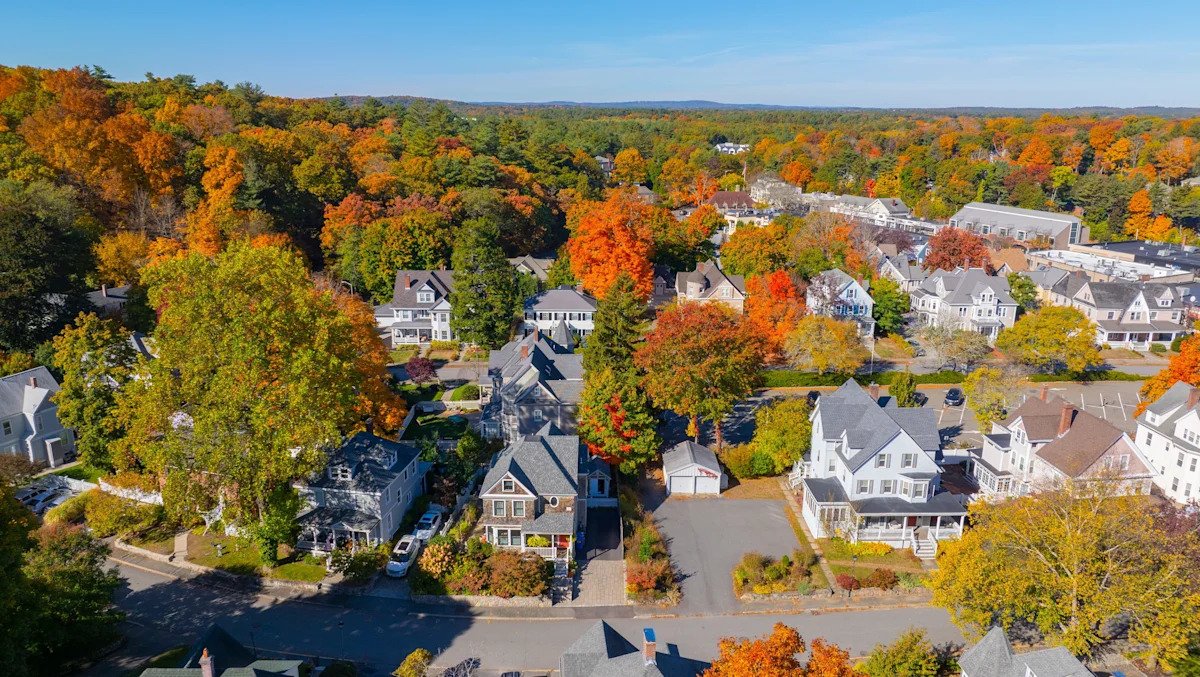
America’s wealthiest suburbs are concentrated in a handful of places — and one New York town has now topped the list three years running.
Scarsdale, tucked into Westchester County about 25 miles north of midtown Manhattan, ranked first in MoneyLion’s 2026 analysis of the nation’s 50 most affluent suburbs (1), with an average household income of $612,591 in 2024. Home values there average $1,673,358 as of April 2026.
Must Read
Eight of the top 10 wealthiest suburbs are in just three states — New York, California and Texas — with the last two each placing three suburbs in the top 10. California also led all states with 16 of the top 50 entries.
The hidden cost of affluence
The appeal of these communities is obvious: top-ranked schools, limited housing supply and proximity to major metro areas.
But Rudri Patel, a certified financial expert at MoneyLion, flagged a less-discussed downside in a USA Today report (2): “Where you see affluence, you also see risk of identity theft and wire fraud and the potential for scams.”
It’s a warning backed by federal data. According to the FBI, white-collar crimes (3) — which include identity theft, wire fraud, investment fraud and corporate schemes — are not victimless and can “destroy a company, wipe out a person’s life savings, cost investors billions of dollars and erode the public’s trust in institutions.”
According to Huntington Bank’s private wealth security guidance (4), “high-net-worth individuals are specifically targeted due to their diverse and deep holdings.” Their complex financial lives — often involving multiple accounts, properties and business interests — can create more potential entry points for fraudsters than the average household.
The FBI’s 2025 Internet Crime Report recorded an all-time high of roughly $20.9 billion in cybercrime losses (5) — a 26% increase from 2024. Investment fraud was the single largest category at $8.6 billion in losses, followed by business email compromise at $3 billion and tech/customer support scams at $2.1 billion — all schemes that disproportionately target people with significant assets and complex financial lives.



