
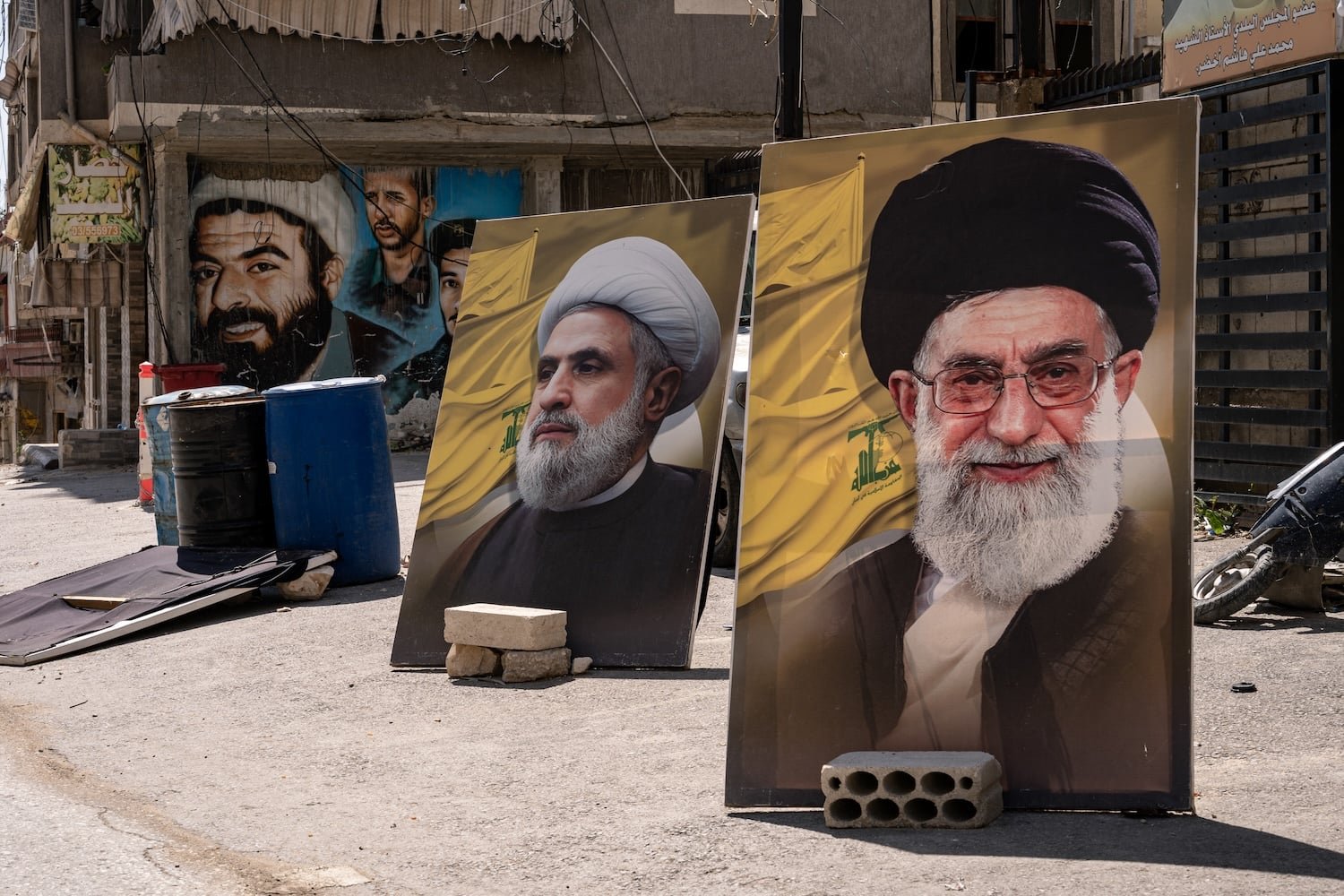
Tehran’s new leaders are riding high, with the initial memorandum of understanding offering Iran significant short-term financial relief—and the potential for far more over time—without demanding immediate concessions on its nuclear or missile programs. Indeed, all Iran must do is allow traffic to flow through the Strait of Hormuz, and even there Tehran is working on a way to extract tolls by another name. Iran’s successes, however, mask a key change: The country is now far less dependent on proxy forces like Hezbollah to intimidate its enemies.
Proxies remain useful to Iran, but they are no longer the centerpiece of its deterrent strategy. Instead, Iran is learning that threats to global energy markets and vulnerable U.S. partners can generate pressure on the United States more quickly and reliably than Hezbollah rockets or militia attacks. That does not make Hezbollah, Hamas, or the Houthis irrelevant, but it does change their role: They are now part of a broader coercive portfolio rather than Iran’s main shield. Indeed, Tehran is now riding to their rescue, rather than the other way around.
Tehran’s new leaders are riding high, with the initial memorandum of understanding offering Iran significant short-term financial relief—and the potential for far more over time—without demanding immediate concessions on its nuclear or missile programs. Indeed, all Iran must do is allow traffic to flow through the Strait of Hormuz, and even there Tehran is working on a way to extract tolls by another name. Iran’s successes, however, mask a key change: The country is now far less dependent on proxy forces like Hezbollah to intimidate its enemies.
Proxies remain useful to Iran, but they are no longer the centerpiece of its deterrent strategy. Instead, Iran is learning that threats to global energy markets and vulnerable U.S. partners can generate pressure on the United States more quickly and reliably than Hezbollah rockets or militia attacks. That does not make Hezbollah, Hamas, or the Houthis irrelevant, but it does change their role: They are now part of a broader coercive portfolio rather than Iran’s main shield. Indeed, Tehran is now riding to their rescue, rather than the other way around.
Before Hamas’s Oct. 7, 2023, attack on Israel and the wars that followed, Iran relied on regional proxies to deter and threaten its opponents. If the United States and Israel attacked Iran, Hezbollah, with its over 100,000 rockets and fighters seasoned by years of war in Syria, could rain down fire on all of Israel and threaten cross-border raids. If Israel invaded Lebanon, Hezbollah might defeat it or at least fight Israeli forces to a stalemate, as the group did in the 2006 war, when it also attacked Israel with missiles throughout the 34-day conflict. Hamas, too, might join any fray, as might other Iranian-backed groups in the Palestinian territories, Iraq, Yemen, or elsewhere. These groups, along with Iran’s missile program, were the country’s way to strike back at its enemies.
Proxies also offered Iran a cheap form of power projection. Tehran was able to disrupt Israeli-Palestinian peace negotiations in the 1990s—which it saw as a U.S. attempt to isolate Iran—by backing Palestine Islamic Jihad and Hamas. Their attacks helped propel the anti-peace candidate, Benjamin Netanyahu, to his first term as prime minister in 1996. More broadly, these groups offered Iran a form of influence in many Muslim states, even though its conventional military forces and economy were weak.
Tehran also worked with proxies, especially Hezbollah, to conduct terrorist attacks on U.S. and regional targets. In 1983, Hezbollah and an Iranian-backed Iraqi proxy killed six people in a series of coordinated attacks in Kuwait to punish it for supporting Iraq in the Iran-Iraq War. In 1996, Iranian-backed terrorists killed 19 U.S. service members when they bombed Khobar Towers in Saudi Arabia. Iran also worked with Hezbollah to target Iranian dissidents and defectors in Europe.
All this was upended in the aftermath of Oct. 7. Although Hamas remains active and is the strongest Palestinian actor in Gaza, it is militarily weak, with much of its leadership and forces dead and rocket arsenal destroyed after years of war with Israel. In its 2024 campaign, Israel killed or wounded thousands of Hezbollah fighters through airstrikes or clandestine means, such as exploding Hezbollah’s beepers. It assassinated Hezbollah’s secretary-general, Hassan Nasrallah, and numerous other senior military and political leaders—and it has killed many of their successors. Although estimates are rough, Hezbollah’s estimated 150,000 rockets are now down to 25,000 or less.
When Israel and the United States did attack Iran in 2026 and declared their objective to be regime change—a true existential threat—Hezbollah launched missiles and drones at Israel, but it did not launch an all-out attack, and its impact on Israel was limited. The strikes seem to suggest its desire to show solidarity with Iran rather than escalate the war. Hezbollah did not unleash the bulk of its remaining missile arsenal, attempt to infiltrate fighters into Israel, or otherwise fully mobilize what was left of its war machine. Other proxies were largely silent: The Houthis in Yemen confined themselves to a few token missile strikes on Israel.
Although Israel had nothing to do with this, a particularly grievous blow to Iran and its proxies was the overthrow of the government of Bashar al-Assad in Syria in 2024 and its replacement by a government led by former jihadi Ahmed al-Sharaa. Syria and Iran had once worked closely together to back Hezbollah and put pressure on Israel. Sharaa, bitter about Iran’s support for Assad, is hostile to both Iran and Hezbollah.
These proxies persist and will remain active. The Houthis in Yemen have proved to be an important Iranian tool. Hezbollah will attempt to rebuild its power, and the United States accused the Iraq-based Kataib Hezbollah of plotting terrorist attacks in the United States and Europe.
Nevertheless, the proxies did not prove to be an effective deterrent against the United States and Israel. Indeed, if anything, Iran’s proxies became a reason for Israel to strike Iran itself. Almost immediately after Oct. 7, Israeli leaders began to blame Iran for the attacks. Even if Iran did not green light the actual operation, Iran’s efforts to fund, arm, and train its proxies made the clerical regime culpable. For Israel, Oct. 7 flipped the calculus: If proxies were attacking Israel anyway, then there was no need to hold back against Iran.
Iran may also need to pour scarce military and financial resources to get Hezbollah back on its feet. After Hezbollah’s 2024 defeat, Iran helped the group restructure its military. The fear that Iran may use some of its sanctions relief to aid militant groups like Hezbollah is valid, but that would be a diversion of funding that Iran desperately needs.
Perhaps most importantly, Iran needs the proxies less. By showing it can close the Strait of Hormuz, Iran has raised energy prices around the world, including in the United States, where it is alarming Republicans who fear being blamed for high prices at the pump. In addition, the tolls and financial relief offset U.S. financial coercion, which has long been one of the primary forms of pressure on Tehran.
In addition to targeting the strait, Iran can attack U.S. allies in the Gulf. In the latest war, Iran attacked energy facilities, hotels, airports, and U.S. military bases, among other targets. This, in turn, has led some Gulf states to pay Iran to allow their ships to go ahead unmolested. Others will put pressure on Washington, fearing being attacked again if a war resumes.
Thus, Iran believes it is strong enough to defend Hezbollah, not the other way around. As Israel batters Hezbollah in Lebanon, Tehran is threatening to end its participation in peace talks if Israel does not stop its attacks. Iranian leaders seem confident that the United States will cave, but they are willing to risk walking away from a favorable deal and much-needed financial relief.
For many years, Iran relied on proxies for reach, influence, and deterrence at relatively low cost. Today, however, Iran’s proxies are as much an obligation as they are an asset. Even the more capable proxies like Hezbollah require Iranian support but do not offer more security in return. These groups will continue to threaten Israel, the United States, and their partners, but they no longer inspire the same caution they once did. The paradox of the post-Oct. 7 Middle East is that Iran’s axis of resistance still exists, yet it appears less capable of performing the function for which it was originally built: protecting Iran itself.



