
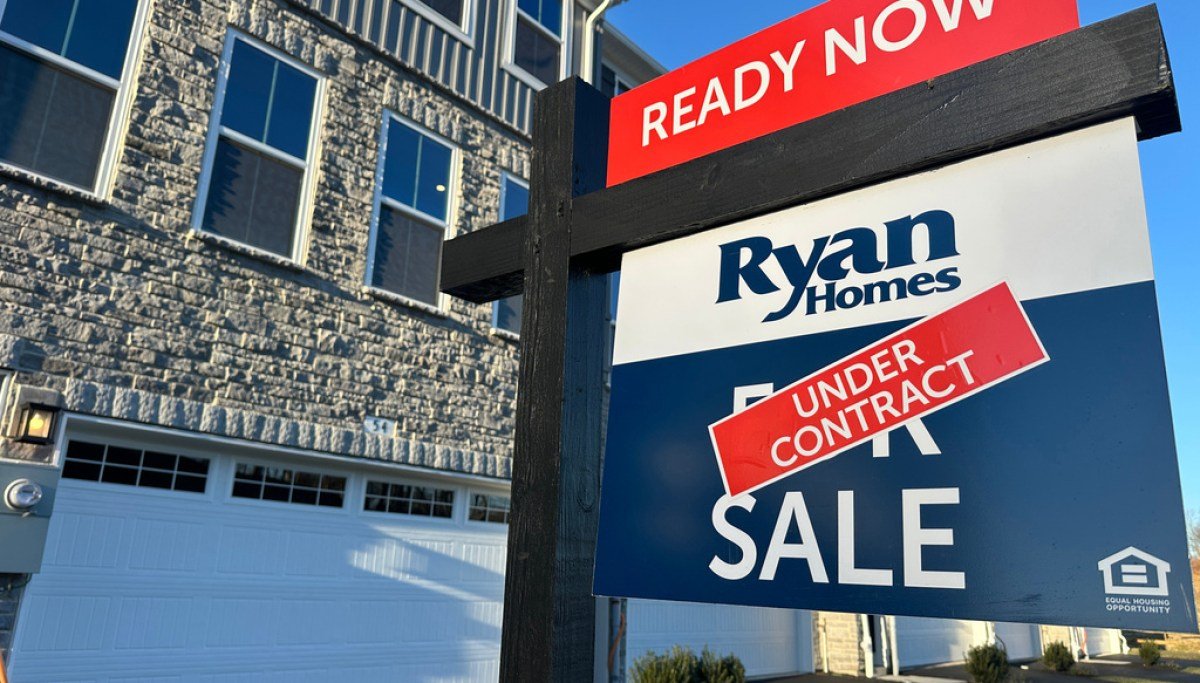
President Donald Trump is reportedly weighing a proposal to cut the capital gains tax on home sales ahead of the midterms. Here is what that effort might look like and how it could affect homeowners.
In an interview with Fox Business host Larry Kudlow, National Economic Council Director Kevin Hassett said this week that Trump is exploring policy proposals ahead of the November midterm elections. Kudlow said he has discussed with the president indexing capital gains to inflation and exempting sales of homes worth $2 million or less from capital gains.
Kudlow said Trump liked the indexing idea and offering bigger exemptions on home sales.
The Washington Examiner reached out to the White House about the matter.
“President Trump is always exploring new ideas to Make America Wealthy Again, but any policy announcements will come from the Administration directly,” White House spokesman Kush Desai said.
The idea isn’t a new one, according to Joshua Rowley, a Gibbs Scholar and Research Fellow at the Mercatus Center at George Mason University. He told the Washington Examiner that Republicans have floated the idea for some time and said some even discussed doing it as part of the second reconciliation bill.
“So there’s been support for it for a while, and it seems to have been building,” Rowley said.
Bipartisan proposals
The capital gains exclusion for home sales is currently at $250,000 for single owners and $500,000 for married couples.
The bipartisan More Homes on the Market Act, sponsored by Rep. Jimmy Panetta (D-CA), has dozens of Republican and Democratic cosponsors and would double those current exclusions, so joint filers would be able to exclude up to $1 million. It would also be adjusted to inflation.
The companion legislation in the Senate also includes several Republicans and Democratic cosponsors, including Sen. John Cornyn (R-TX). Proponents argue that such a move would incentivize homeowners to sell their homes and thus increase market supply.
“The American dream is rooted in owning a home and raising a family, but an outdated tax code not only prevents the next generation from being able to afford a home, but it also prevents seniors seeking to downsize from selling theirs,” said Cornyn. “This legislation would update the tax code to incentivize sellers and make homes more affordable, and I’m glad to support it.”
Proponents also argue that the current exclusion rates haven’t been updated since 1997 and are not indexed for inflation. Home prices have exploded in recent years, giving further momentum to the effort on Capitol Hill.
Lawmakers eye supply crunch
Housing and housing affordability have become major concerns for consumers, with supply being the major focus. And in light of that, Congress recently passed the biggest bipartisan housing bill in recent memory, the 21st Century ROAD to Housing Act.
That legislation streamlines environmental reviews to speed up affordable housing development and makes it cheaper and easier to build manufactured homes. In addition to easing federal regulations, the bill also encourages states and cities to reform their land-use rules, which would mark a significant change in the federalist system with respect to city planning.
Dennis Shea, executive vice president and chairman of the Bipartisan Policy Center’s housing policy center, told the Washington Examiner that a move by Congress to cut the capital gains tax that home sellers face could be helpful.
“I think it could potentially be another piece of the puzzle,” he said. “It’s not the solution, but it could be another piece of the puzzle, yes.”
But there are also opponents to the idea, many of whom argue that it will disproportionately benefit the wealthy and not so much the working and middle class.
Rowley took issue with the idea not because it would represent a reduction in capital gains taxes, but rather because it would only be giving specialized treatment to one asset class — in this case, homeowners.
“And so that distorts the incentive to buy versus rent, right? So it increases demand for home ownership,” Rowley said. “But also it distorts the incentives for what types of investments that you’re making, and so it makes homeownership a relatively more attractive asset to own.”
Rowley said the problem facing the market is too much housing demand relative to housing supply. He said that there might be a slight, temporary jump in housing inventory if the policy were to be made law, but the bigger issue is that housing construction isn’t occurring at the pace it needs to be.
Also, if the administration proposes that Congress pass legislation ahead of the midterms, it could be a challenging ask.
Ryan Young, a senior economist at the Competitive Enterprise Institute, told the Washington Examiner that there might be one more big must-pass bill before the end of the year to keep the government from shutting down, and lawmakers could try to stick it in that.
“So that would be the most likely vehicle because I don’t think a standalone version of that would pass the Senate; it’s not going to get 60 votes,” Young said.
SOFTER INFLATION REPORTS MAY PUSH BACK RATE HIKE
Young also said that he doesn’t think it would really help ordinary voters and the housing market too much. He pointed out bigger issues with constructing housing stock, such as regulatory costs and environmental reviews.
“So I think maybe they’re just trying to get across that they’re at least acknowledging that affordability is something the administration is talking about,” Young said.



