
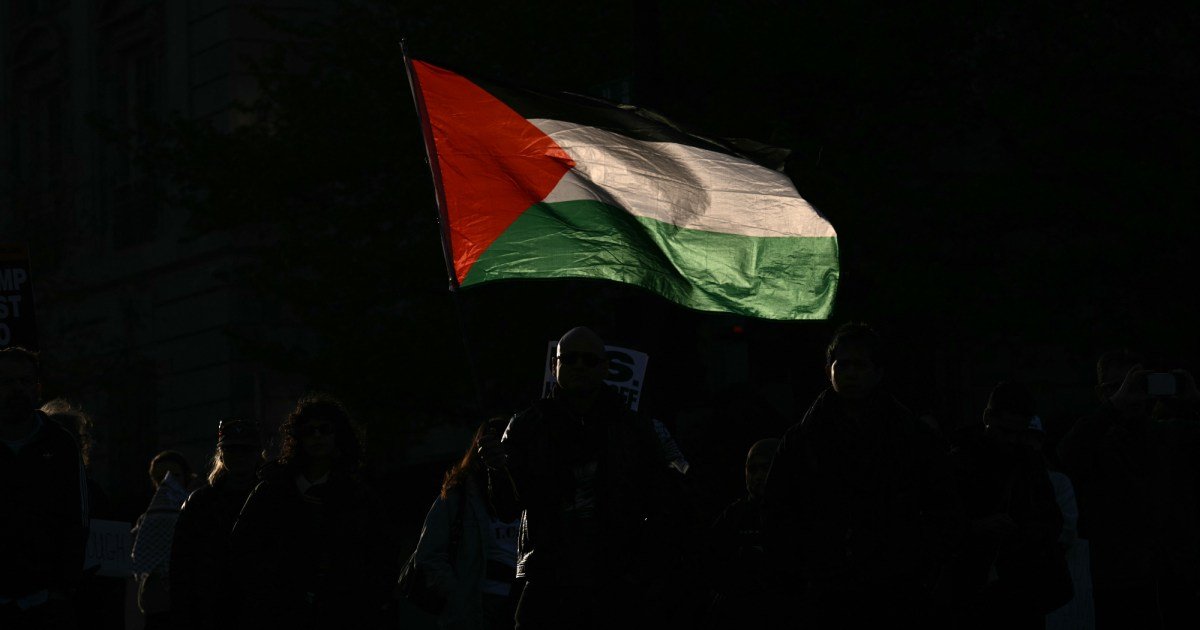
Columbia University graduate student Mohsen Mahdawi received a deportation order Wednesday.Brendan Smialowski/Getty
An immigration judge has ordered the deportation of Columbia University graduate student Mohsen Mahdawi, who is Palestinian, to Jordan in a legal filing published Wednesday. Mahdawi has been targeted by the Trump administration for his pro-Palestinian activism for more than a year, in a high-profile case that saw him abruptly detained by immigration authorities during an April 2025 naturalization appointment.
Mahdawi is one of hundreds of students nationwide who experienced visa revocations, arrests, or threats after participating in protests denouncing Israel. The Trump administration’s crackdown on pro-Palestinian speech, which began in the first days of President Trump’s second term, continues: many protesters are still fighting deportation cases, and in some cases criminal charges. Mahmoud Khalil, abducted as a recent Columbia graduate, was given a temporary reprieve in mid-May after he spent months in custody in 2025, missing the birth of his son—but must now petition the Supreme Court to halt deportation proceedings to Algeria.
Other targeted noncitizen students, like Tufts’ Rümeysa Öztürk and Cornell’s Momodou Taal, chose to leave after facing the American security state. Öztürk, who was detained for weeks over an op-ed in Tufts’ student newspaper, returned to Turkey after graduating.
“The time stolen from me by the U.S. government belongs not just to me, but to the children and youth I have dedicated my life to advocating for,” Öztürk wrote in April. “With them in mind, I am choosing to return home as planned.”
Leqaa Kordia, an undocumented Palestinian woman detained at a Columbia University protest, was held in a notorious Texas ICE jail for a year, until her release last April. She, too, is still fighting deportation. “I mean, to be imprisoned for a whole year simply for practicing my freedom of speech and to be accused of horrific things that I have nothing to do with, it’s outrageous,” Kordia told PBS in May.
Mahdawi will be appealing his case, the American Civil Liberties Union said in a press release Wednesday. “The First Amendment protects all of us from government censorship, citizen or not,” said Nate Freed Wessler, deputy director of the ACLU’s Speech, Privacy, and Technology Project. “The government’s continued persecution of our client for his beliefs should send a chill down the spine of everyone in this country, because once we start allowing exceptions to the First Amendment for speech the current government doesn’t like, there’s no telling where the censorship will stop.” While a separate habeas corpus petition by Mahdawi makes its way through federal court, he cannot be re-detained or deported.
Documents from the AAUP v. Rubio trial, in which the American Association of University Professors sued to stop the US from detaining students on ideological grounds, proved the federal government frequently used spurious sources to target students based on their political opinions. As my colleague Najib Aminy reported in January, those sources included anonymous blacklisting sites like Canary Mission.
DHS and the State Department “acted in concert to misuse the sweeping powers of their respective offices to target non-citizen pro-Palestinians for deportation primarily on account of their First Amendment-protected political speech,” the judge in that case wrote in his court order. “Moreover, the effect of these targeted deportation proceedings continues unconstitutionally to chill freedom of speech to this day.”



