
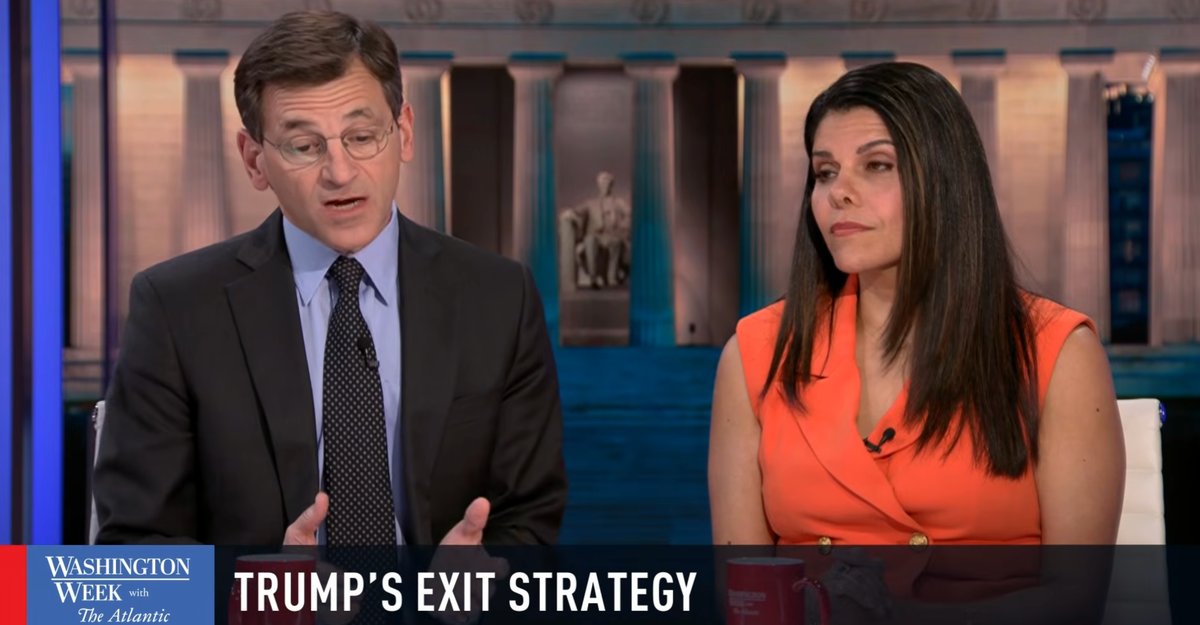
Is the United States still at war with Iran? If the war is over, who won and who actually controls the Strait of Hormuz now? Panelists on Washington Week With The Atlantic joined last night to discuss these questions and whether Trump has an exit strategy from the fighting he initiated.
As the conflict enters its third month, Washington and Tehran are in a standoff over the terms that would enable peace talks to begin. As President Trump ramps up pressure on Iran to accept his conditions, the prolonged crisis in the Strait of Hormuz continues to threaten the global economy.
U.S. forces struck Iranian targets Thursday after two U.S. destroyers were attacked in the strait, but Trump called this response a “love tap” and said that the exchange of fire did not represent a break in the cease-fire. The war remains in a state of “suspended animation,” Jeffrey Goldberg, moderator and editor in chief of The Atlantic, said last night.
Meanwhile, Trump has grown “bored” with the war, an outside adviser told the Atlantic staff writer Jonathan Lemire. But Iran appears comfortable with keeping the conflict going, possibly for many more months, Lemire has reported. He noted last night that Iran has more control over the strait now than it did at the start of the conflict.
Joining Goldberg to discuss this and more: Peter Baker, the chief White House correspondent at The New York Times; Lemire; Amna Nawaz, a co-anchor at PBS News Hour; and Vivian Salama, a staff writer at The Atlantic.
Watch the full episode here.



